Nara
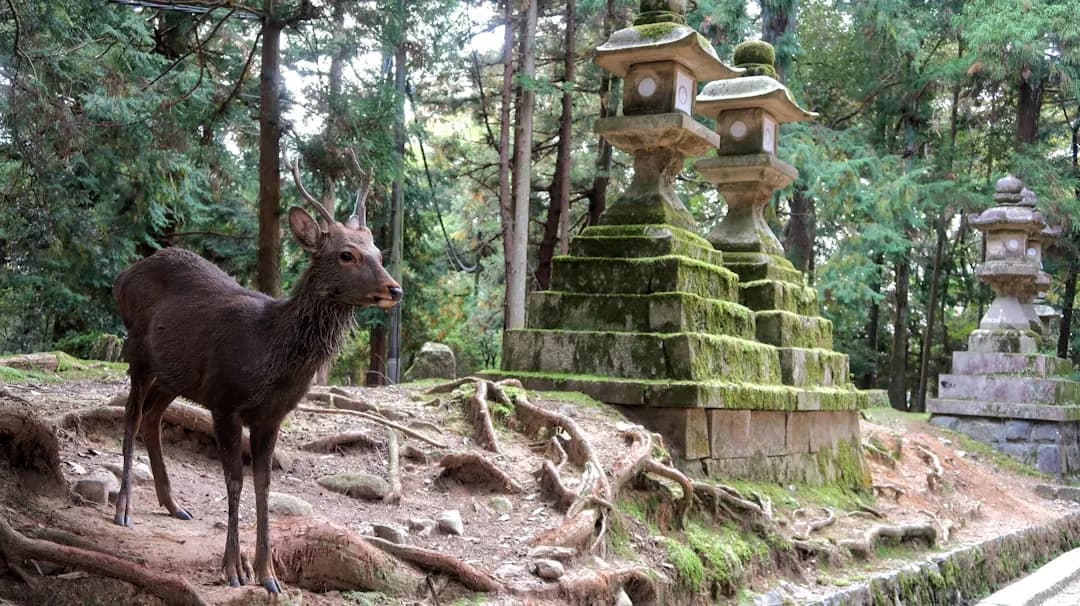
奈良KansaiJapan's first permanent capital is an enchanting city where over 1,000 sacred deer roam freely among ancient temples, primeval forests, and some of the country's most important cultural treasures. Nara offers a more relaxed, intimate experience than nearby Kyoto, with world-class heritage sites that are often less crowded.
Overview
Nara served as Japan's first permanent capital from 710 to 784 AD, during a golden age of art, religion, and scholarship when Japan absorbed and refined cultural influences from China, Korea, and the Silk Road. The Nara period saw the construction of magnificent temples that still stand today, the compilation of Japan's earliest historical chronicles, and the establishment of Buddhism as a major force in Japanese society. The city's most famous residents are its 1,000-plus sika deer, considered divine messengers of the gods in Shinto tradition and designated as national natural treasures. They roam freely through Nara Park, bowing for shika senbei (deer crackers) and posing for photos. Despite its extraordinary historical significance — home to eight UNESCO World Heritage Sites — Nara maintains a pleasantly small-city atmosphere with a population of just 360,000. Most major sights are concentrated in the walkable Nara Park area, making it a popular day trip from Kyoto or Osaka, though an overnight stay allows for a deeper appreciation of the city's tranquil charm, particularly in the early morning before day-trippers arrive.
Neighborhoods
Must-Do Experiences
Meet the Great Buddha at Todai-ji
The Daibutsuden (Great Buddha Hall) at Todai-ji is the world's largest wooden building, and the 15-meter bronze Buddha (Daibutsu) inside is one of Japan's most awe-inspiring sights. Cast in 752 AD using an estimated 437 tonnes of bronze, the Buddha's serene presence has moved visitors for over 1,200 years. Try squeezing through the hole in one of the pillars — said to be the same size as the Buddha's nostril — for good luck.
Feed and photograph the deer in Nara Park
Over 1,000 sika deer roam freely through Nara Park, and they have learned to bow when offered shika senbei (deer crackers, ¥200). The deer are particularly photogenic in spring among cherry blossoms and autumn amid fallen maple leaves. Be aware they can be assertive — hold crackers high and distribute them quickly, and protect paper maps and bags.
Explore Kasuga-taisha Shrine
Founded in 768 AD as the tutelary shrine of the Fujiwara clan, Kasuga-taisha is famous for its thousands of stone lanterns lining the approach path and bronze lanterns hanging in the halls. The lanterns are lit during the Mantoro festivals in February and August, creating an otherworldly atmosphere. The surrounding primeval forest is designated a UNESCO World Heritage Site and has been protected from hunting and logging for over a thousand years.
Wander through Naramachi
Nara's former merchant quarter is a delight of narrow lanes, traditional wooden townhouses, and small discoveries around every corner. Pop into Koshi-no-Ie (free, a restored merchant house), browse craft shops selling Nara ink (nara-zumi) and calligraphy brushes (fude), and stop at a cafe in a converted machiya for matcha and traditional sweets.
Hike to Wakakusayama Hill for panoramic views
This gently sloping grass-covered hill (342m) in Nara Park offers a moderate 30-minute climb rewarded with panoramic views over the city and its temples. Entry to the base costs ¥150. The hill is the site of the spectacular Yamayaki festival in late January, when the entire hillside is set ablaze. Deer often graze on the slopes.
Food & Drink
Nara's cuisine is rooted in its history as an ancient capital and Buddhist center. The food tends to be simpler and more refined than neighboring Osaka's bold flavors, with an emphasis on traditional preparations, local ingredients, and dishes with centuries of history. The Naramachi area has the highest concentration of quality restaurants and cafes.
- •Kakinoha-zushi — Persimmon-leaf-wrapped pressed sushi, a preserved food developed for the landlocked ancient capital. Mackerel and salmon are the traditional toppings
- •Miwa Somen — Thin wheat noodles from Miwa, near Nara, served cold with dipping sauce. One of Japan's oldest noodle traditions, dating back 1,300 years
- •Narazuke — Vegetables (particularly gourd) pickled in sake lees, with a distinctive boozy, sweet flavor. A Nara specialty for over 1,000 years
- •Kuzu (Kudzu) — Nara is famous for kuzu starch used to make delicate sweets (kuzu-mochi, kuzu-kiri) and in traditional medicine. Yoshino kuzu is the finest quality
- •Shika Senbei-shaped treats — Various deer-cracker-shaped sweets and snacks sold as souvenirs, from cookies to rice crackers to chocolates
Getting There
✈ By Air
Nara does not have its own airport. The nearest is Kansai International Airport (KIX), approximately 90 minutes away by JR Haruka Express to Tennoji then Yamatoji Rapid to Nara. Alternatively, take a limousine bus from KIX directly to Nara (85 minutes, ¥2,100). Osaka Itami Airport (ITM) is closer, connected by bus to Nara in about 60 minutes (¥1,510).
🚅 By Train
Nara is easily reached by train from Kyoto (45 minutes by JR Nara Line, ¥720, or 35 minutes by Kintetsu Limited Express, ¥1,280) and Osaka (50 minutes by JR Yamatoji Rapid from Osaka Station, ¥820, or 40 minutes by Kintetsu from Osaka-Namba, ¥680). Kintetsu Nara Station is more centrally located than JR Nara Station, closer to Nara Park.
🚌 By Bus
Highway buses connect Nara to Tokyo (7-8 hours overnight, from ¥5,000) and other cities. Local buses from Kyoto Station take about 70 minutes. The Nara Kotsu bus company operates extensive local services.
Getting Around
Nara's compact size makes it ideal for walking. Most major sights in the Nara Park area are within a 30-minute walk of either train station. Nara Kotsu buses serve more distant temples like Horyu-ji and Toshodai-ji (¥220 per ride, day pass ¥500). Rental bicycles are available near both stations for ¥800-1,200 per day and are excellent for reaching the western temples. The city is mostly flat, making cycling easy and pleasant.
Best Time to Visit
Best months: March to May and October to November
Spring cherry blossoms and autumn foliage transform Nara Park into a fairytale landscape, with deer wandering among pink petals or crimson leaves. The park is beautiful year-round, but these seasons offer the most magical scenery and comfortable temperatures for walking.
spring
March-May: Cherry blossoms peak late March to early April, 8-22°C. The combination of deer, cherry trees, and ancient temples makes Nara Park one of Japan's most photogenic hanami locations.
summer
June-August: Hot and humid, 25-35°C. The Nara Tokae lantern festival in August places thousands of candles throughout Nara Park and Kasuga-taisha. The deer hide in shaded groves during the heat.
autumn
September-November: Comfortable and beautiful, 10-25°C. Autumn foliage peaks in mid to late November. The deer against red and gold maple leaves is one of Nara's most iconic images.
winter
December-February: Cold but clear, 1-8°C. Very few tourists. The Yamayaki (mountain burning) festival in late January sees Wakakusayama Hill set ablaze in a dramatic nighttime ceremony.
Budget Guide
Hostel dorm beds cost ¥2,000-3,500 ($13-23). Guesthouses and budget hotels range from ¥4,000-8,000 ($27-53). A night in a traditional ryokan with meals costs ¥15,000-40,000 ($100-267). Todai-ji entry costs ¥600 ($4). Kasuga-taisha is free to enter (inner shrine ¥500). Deer crackers (shika senbei) cost ¥200 ($1.30). A kakinoha-zushi lunch costs ¥800-1,500 ($5-10). Coffee and cake in Naramachi runs ¥600-1,000 ($4-7).
Safety
Nara is exceptionally safe, even by Japanese standards. The small-city atmosphere and constant flow of families and school groups create a welcoming environment. The only 'danger' is from assertive deer — they can bite or headbutt if they think you have food. Keep food and paper items secured, as deer have learned to snatch maps and guidebooks. Tap water is safe to drink. The city is well-lit and easy to navigate.
Local Tips
- 💡Visit Todai-ji and Nara Park before 9am to experience the deer and temples without crowds. Day-trippers from Osaka and Kyoto typically arrive from 10am onward.
- 💡Kintetsu Nara Station is significantly closer to Nara Park than JR Nara Station. If coming from Osaka-Namba or central Kyoto, the Kintetsu line is more convenient.
- 💡When feeding deer, break the senbei into smaller pieces and distribute quickly. Show empty hands when done by holding them up, palms out — the deer understand this gesture.
- 💡Stay overnight if possible. Nara transforms into a peaceful, almost mystical place once the day-trippers leave, and morning light in Nara Park with deer and mist is unforgettable.
- 💡The less-visited Toshodai-ji and Yakushi-ji temples in the Nishinokyo area offer a quieter, more contemplative experience than the busy Nara Park temples.
Day Trips
Horyu-ji Temple
12km southwest, approximately 20 minutes by JR Yamatoji Line
Home to the world's oldest surviving wooden structures, dating to 607 AD. Founded by Prince Shotoku, this UNESCO World Heritage temple complex contains priceless Buddhist art and architecture spanning 1,400 years. Significantly less crowded than Nara Park sites.
Yoshino
60km south, approximately 1.5 hours by Kintetsu Railway
Famous as Japan's most celebrated cherry blossom viewing area, with 30,000 cherry trees covering the mountainside in four ascending zones that bloom sequentially from mid-April. Even outside cherry season, the mountain offers beautiful temple walks and excellent yoshino-kuzu sweets.
Asuka
25km south, approximately 40 minutes by Kintetsu Railway
The Asuka region was Japan's political center before the capital moved to Nara. This rural area preserves mysterious stone monuments, ancient burial mounds (kofun), and atmospheric temple ruins amid rice paddies. Best explored by rental bicycle from Asuka Station.