Nikko
日光KantoA mountain sanctuary of lavishly decorated shrines set among ancient cedar forests, Nikko offers one of Japan's most stunning combinations of cultural splendor and natural beauty, anchored by the ornate mausoleum of the shogun who unified Japan and surrounded by waterfalls, lakes, and dramatic highland scenery.
Overview
Nikko ('Sunlight') has been a center of Shinto and Buddhist mountain worship for over 1,200 years, but it reached its zenith in 1617 when the Tokugawa shoguns chose this remote mountain setting as the site for Toshogu, the extravagant mausoleum of Tokugawa Ieyasu — the military ruler who unified Japan and founded a dynasty that governed for 260 years. The result is one of Japan's most lavishly decorated shrine complexes, a riot of gold leaf, intricate wood carvings, and vivid colors that stands in dramatic contrast to the restrained aesthetic typically associated with Japanese religious architecture. Together with the older Rinnoji Temple and Futarasan Shrine, the Toshogu complex is designated a UNESCO World Heritage Site. Beyond the cultural treasures, the Nikko area extends into the mountains with Lake Chuzenji, the powerful Kegon Falls, Ryuzu Falls, and the vast Senjogahara marshland plateau offering exceptional hiking, particularly during autumn foliage season when the mountain landscape transforms into a tapestry of red, orange, and gold. The town itself (population 80,000) has a quiet, traditional atmosphere with ryokan, restaurants serving yuba (tofu skin), and the famous Kanmangafuchi Abyss lined with moss-covered stone Buddhist statues.
Neighborhoods
Must-Do Experiences
Marvel at Toshogu Shrine's ornate splendor
The mausoleum of Tokugawa Ieyasu is Japan's most lavishly decorated shrine, with over 500 carvings on the Yomeimon Gate alone — so detailed it was nicknamed 'Higurashi-no-mon' (Twilight Gate) because you could gaze at it until dusk. Look for the famous 'see no evil, speak no evil, hear no evil' three monkeys and the sleeping cat (Nemuri-neko) carved by the legendary craftsman Hidari Jingoro. The approach through towering cedars adds to the drama.
See the Kegon Falls from the observation platform
One of Japan's three most beautiful waterfalls, Kegon Falls drops 97 meters from Lake Chuzenji in a single dramatic plunge. An elevator (¥570) descends 100 meters through rock to an observation platform at the base, where the power and spray of the falls are most impressive. In winter, the falls partially freeze into blue ice columns. Twelve smaller falls cascade down the surrounding cliff face.
Hike the Senjogahara Nature Trail
This 6.3km walking trail across the highland marshland plateau between Ryuzu Falls and Yuno-ko (Lake Yunoko) passes through meadows, forests, and wetlands with mountain views. The well-maintained wooden boardwalk trail takes 2-3 hours and is particularly spectacular in autumn when the marshland grasses turn gold against the forested mountain backdrop. Watch for wild birds, deer, and monkeys.
Walk among the Bake Jizo statues at Kanmangafuchi
This row of approximately 70 moss-covered stone Jizo Buddhist statues along the Daiya River gorge is atmospheric and haunting. Known as 'Ghost Jizo' because legend says their number changes each time you count them, the statues sit in a forested riverside setting that feels timeless. The 20-minute walk from the main shrine area takes you away from the crowds into peaceful nature.
Drive (or ride) the Irohazaka switchback road
The thrilling road connecting Nikko town to Lake Chuzenji consists of 48 hairpin curves — the uphill road has 20 turns, the downhill road 28 — each marked with a character from the Japanese hiragana alphabet. During autumn foliage season, the road itself becomes a main attraction as it winds through blazing mountainside colors. The bus ride up is an experience even without a car.
Food & Drink
Nikko's cuisine is rooted in its Buddhist temple heritage and mountain setting. Yuba (tofu skin) is the quintessential local specialty, prepared in dozens of ways at restaurants throughout the town. The area's pure mountain water contributes to excellent tofu, soba, and sake. Wild mountain vegetables (sansai) and river fish feature in season.
- •Yuba — Tofu skin (the thin layer that forms when soy milk is heated) served fresh, dried, fried, in soups, and in elaborate multi-course yuba kaiseki meals. Nikko yuba is thicker and richer than Kyoto-style
- •Nikko Soba — Hand-cut buckwheat noodles made with cold mountain water. Several traditional soba shops operate near the shrine area
- •Himitsumame — A unique Nikko sweet: sweet beans, agar jelly, and fruit in syrup, served at traditional tea houses
- •Sansai Ryori — Mountain vegetable cuisine using foraged ingredients like warabi (bracken fern), zenmai (royal fern), and takenoko (bamboo shoots) in season
- •Yuba Manju — Steamed buns filled with sweet yuba cream, a popular Nikko souvenir
Getting There
✈ By Air
The nearest airports are Tokyo Narita (NRT, approximately 3 hours) and Haneda (HND, approximately 2.5 hours). There are no direct airport connections; travel via Tokyo.
🚅 By Train
The most convenient route is the Tobu Railway from Asakusa Station in Tokyo. The Tobu Limited Express (Spacia) reaches Tobu-Nikko in about 1 hour 50 minutes (¥2,960). Regular Tobu trains with transfer at Shimo-Imaichi take 2 hours 10 minutes (¥1,390). The Tobu All Nikko Pass (¥4,780, 4 days) includes round-trip train from Asakusa plus unlimited buses in the Nikko area. Alternatively, JR trains run from Tokyo or Utsunomiya (on the Tohoku Shinkansen, 50 minutes from Tokyo) to JR Nikko Station.
🚌 By Bus
Direct highway buses operate from Tokyo (Shinjuku) to Nikko (approximately 2.5-3 hours, from ¥3,000). Within the Nikko area, Tobu buses are essential for reaching Lake Chuzenji, Kegon Falls, and Oku-Nikko.
Getting Around
Within Nikko town, the shrine area is a 30-minute uphill walk from the train stations (or a short bus ride). Tobu buses are essential for reaching Oku-Nikko (Lake Chuzenji, Kegon Falls, Senjogahara, Yumoto Onsen) — the ride up the Irohazaka switchback road is an experience in itself. The Tobu Bus Free Pass or the All Nikko Pass covers these routes. Walking is the best way to explore the shrine complex and Kanmangafuchi Abyss. In the Oku-Nikko area, hiking trails connect the major sights. A rental car is useful for flexibility but not essential.
Best Time to Visit
Best months: Mid-October to early November and May
Autumn foliage is Nikko's greatest spectacle. The colors begin at the higher elevations around Lake Chuzenji in early October and descend to the town level by early November. Late spring (May) offers new green foliage, azalea blooms, and comfortable hiking weather. The Grand Festival at Toshogu on May 17-18 features a spectacular samurai procession.
spring
March-May: Cherry blossoms peak late April to early May (later than Tokyo due to elevation), 5-20°C. Azaleas bloom on the mountains in May and June. The Toshogu Grand Festival (May 17-18) features a 1,000-warrior procession in samurai armor.
summer
June-August: Cool by lowland standards, 15-27°C. The highlands are a popular escape from Tokyo's heat. Lush green forests and flowing waterfalls. Afternoon thunderstorms are common in the mountains.
autumn
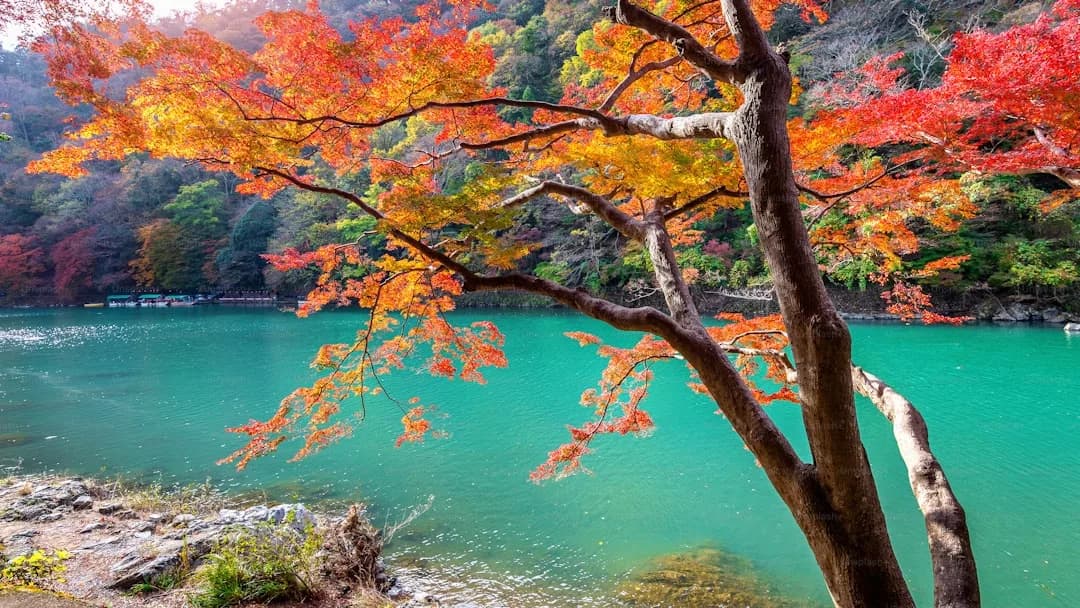
September-November: The prime season. Foliage peaks in Oku-Nikko early to mid-October and in Nikko town late October to early November, 5-18°C. Lake Chuzenji surrounded by blazing autumn colors is unforgettable.
winter
December-February: Cold with snow, -5 to 5°C. Kegon Falls partially freezes, creating dramatic ice formations. Lake Chuzenji and the highlands are snow-covered. The Irohazaka road may close due to snow. Quiet and atmospheric.
Budget Guide
Hostels and budget guesthouses cost ¥3,000-6,000 ($20-40). Mid-range hotels and minshuku (family-run inns) range from ¥8,000-15,000 ($53-100). Ryokan with onsen and meals cost ¥15,000-40,000 ($100-267). Toshogu Shrine entry costs ¥1,300 ($9) for the main shrine or ¥2,100 ($14) including the Sleeping Cat and Ieyasu's tomb. Kegon Falls elevator costs ¥570 ($4). A yuba lunch set costs ¥1,500-3,000 ($10-20). Tobu All Nikko Pass costs ¥4,780 ($32) for 4 days.
Safety
Nikko is very safe with virtually no crime concerns. The main safety considerations are natural: mountain weather can change rapidly, so bring rain gear and layers for the Oku-Nikko area. Trails can be slippery when wet. Bears inhabit the mountain areas — carry a bear bell on hiking trails, especially around Senjogahara and Yumoto. The Irohazaka switchback road requires careful driving. In winter, roads may be icy and the Irohazaka road can close. Tap water is safe to drink.
Local Tips
- 💡The Tobu All Nikko Pass (¥4,780 from Asakusa, 4 days) is excellent value — it includes round-trip train travel plus unlimited Tobu buses in the Nikko area, covering the route to Lake Chuzenji and Kegon Falls.
- 💡Visit Toshogu early in the morning (it opens at 8am April-October, 9am November-March) to see the shrine complex before tour groups arrive. The morning light through the cedar trees is magnificent.
- 💡In autumn, foliage peaks at different times at different elevations: Lake Chuzenji and Senjogahara color first (early October), followed by Irohazaka (mid-October), and finally Nikko town (late October to early November). Plan accordingly.
- 💡For a peaceful experience, walk the Kanmangafuchi Abyss path to see the moss-covered Jizo statues — most tourists skip this and it is one of Nikko's most atmospheric spots.
- 💡An overnight stay is recommended if you want to explore both the shrine area and Oku-Nikko properly. Day-trippers from Tokyo are usually rushed.
Day Trips
Kinugawa Onsen
16km north, approximately 25 minutes by Tobu Railway
A popular hot spring resort town set in a gorge along the Kinugawa River. The area offers outdoor onsen, ryokan, Tobu World Square (miniature world landmarks), and Edo Wonderland (a samurai-era theme park). The Kinugawa River boat ride through the gorge is a scenic highlight.
Oku-Nikko (Lake Chuzenji & Senjogahara)
20km west, approximately 45 minutes by bus
While technically part of greater Nikko, the highland area deserves its own full day. Combine Kegon Falls, a walk along Lake Chuzenji, the Senjogahara hiking trail, Ryuzu Falls, and a soak at Yumoto Onsen for a perfect nature day.
Ashikaga Flower Park
70km south, approximately 1.5 hours by train
Famous for its spectacular Great Wisteria, over 150 years old, creating a purple cascading canopy in late April to mid-May. The park's evening illumination was designated one of the world's top dream destinations. Also features tulips (April), roses (May-June), and winter illumination.