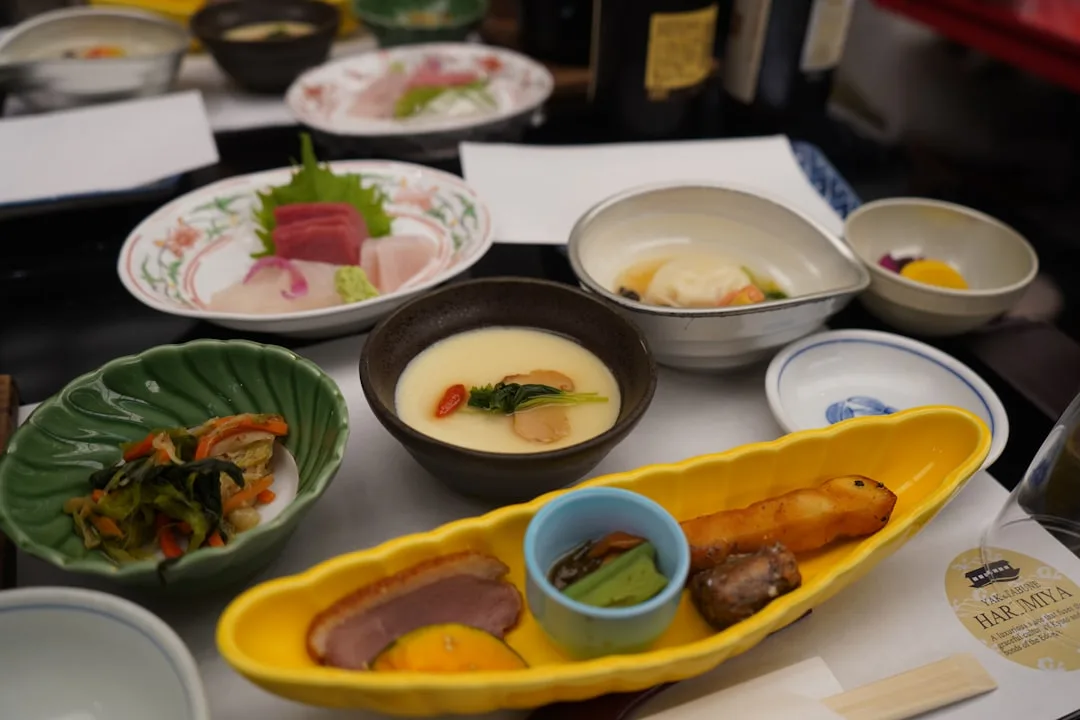
Kaiseki
懐石 / 会席 (かいせき)
The pinnacle of Japanese haute cuisine — an exquisitely presented multi-course meal celebrating seasonal ingredients through a carefully orchestrated progression of tastes, textures, and cooking techniques, served on handcrafted ceramics.
Overview
Kaiseki is the highest expression of Japanese culinary art — a multi-course dining experience that harmonizes flavor, appearance, and seasonality into a meal that engages all five senses. Rooted in the tea ceremony tradition and refined over centuries in Kyoto, a kaiseki meal typically consists of 7 to 14 courses, each showcasing a different cooking technique: raw (sashimi), simmered (nimono), grilled (yakimono), steamed (mushimono), fried, and vinegared preparations. Every element is deliberate: the ingredients reflect the exact moment of the season (not just 'spring' but 'early spring' or 'late spring'), the serving vessels are chosen to complement the food's colors and the season (rough earthenware in autumn, delicate porcelain in summer), and even the garnishes carry seasonal symbolism — a single maple leaf in autumn, a pine sprig in winter. The progression of courses follows a precise structure designed to unfold like a narrative, beginning with light appetizers, building through richer courses, and concluding with rice, miso soup, and pickles. A kaiseki meal is as much a visual and philosophical experience as a culinary one.
Origin & History
Region: Kyoto
Kaiseki has two etymological origins that reflect its dual heritage. 'Kaiseki' (懐石) originally referred to the simple meal served before a tea ceremony, inspired by Zen Buddhist monks who placed warm stones (seki) in their robes (kai) to ward off hunger during fasting — the meal was meant to be modest and just sufficient. 'Kaiseki' (会席) evolved from formal banquet cuisine served at gatherings of poets and aristocrats. Over centuries, particularly during the Edo period, these two traditions merged and were refined in Kyoto, where proximity to the Imperial Court, the tea ceremony tradition, and access to Kyoto's exceptional seasonal ingredients created the ideal environment for a supremely refined cuisine. Kyoto remains the spiritual home of kaiseki, and many of the city's most revered restaurants trace their lineage back hundreds of years.
Ingredients
Main Ingredients
- Seasonal fish and seafood (varying monthly)
- Seasonal vegetables (Kyo-yasai — Kyoto heirloom vegetables)
- Dashi (kombu and katsuobushi — the foundation of flavor)
- Premium short-grain Japanese rice
How to Order
Kaiseki is always served as a set course — there is no a la carte ordering. Reservations are essential, often weeks or months in advance for top establishments. When booking, mention any dietary restrictions or allergies. Courses arrive in a fixed sequence and pace set by the chef. Lunch kaiseki (kaiseki bento or mini-kaiseki) is available at many restaurants for a fraction of the dinner price. At ryokan, kaiseki dinner is typically included in the room rate. Dress respectfully — while a suit is not required, smart-casual attire is appropriate.
Variations
Cha-kaiseki (Tea Ceremony Kaiseki)
The original form served before a tea ceremony — simpler, more austere, and focused on enhancing the tea experience rather than standing alone as a banquet. Typically three dishes plus rice and soup, embodying the wabi-sabi aesthetic of refined simplicity.
Kaiseki Ryori (Banquet Kaiseki)
The more elaborate modern form commonly served at high-end Japanese restaurants (ryotei). Typically 7-14 courses with an emphasis on artistry and luxury ingredients. This is what most people mean today when they say 'kaiseki.'
Ryokan Kaiseki
Kaiseki served as dinner at traditional Japanese inns (ryokan). Often features local seasonal specialties from the region. Multiple courses are sometimes presented together on a tray. An essential part of the ryokan experience.
Modern/Creative Kaiseki
Contemporary chefs who respect the kaiseki structure and philosophy but incorporate non-traditional ingredients or techniques — French influences, molecular gastronomy, or global flavors within the seasonal framework.
Where to Eat
Kikunoi
Kyoto (Higashiyama)
Three-Michelin-star kaiseki restaurant led by Yoshihiro Murata, one of Japan's most renowned chefs. The courses showcase Kyoto's seasonal ingredients with both tradition and creativity. Lunch from 8,000 JPY, dinner from 18,000 JPY.
Hyotei
Kyoto (near Nanzen-ji temple)
Operating for over 400 years (since 1615), originally as a tea house serving visitors to Nanzen-ji. Their morning porridge kaiseki is legendary. One of Kyoto's most atmospheric dining experiences. Three Michelin stars.
Ryugin
Tokyo (Roppongi)
Seiji Yamamoto's three-Michelin-star restaurant blends classical kaiseki structure with modern techniques. Known for innovative presentations that surprise and delight while honoring tradition.
Any quality ryokan
Nationwide
Staying at a ryokan (traditional inn) with kaiseki dinner is one of the most accessible and immersive ways to experience kaiseki. Ryokan in Hakone, Kinosaki Onsen, and Kyoto often feature excellent kaiseki using local ingredients. Rates from 25,000-60,000 JPY per person including dinner and breakfast.
Price Range
Street Food / Casual
Not applicable — kaiseki is a sit-down dining experience
Restaurant
5,000 - 15,000 JPY ($35 - $105) for lunch kaiseki courses
Upscale / Fine Dining
20,000 - 60,000 JPY ($140 - $420) for dinner at top kaiseki restaurants
Tips
- Try lunch kaiseki for the best value — many Michelin-starred kaiseki restaurants offer lunch courses at 30-50% of dinner prices with similar quality
- Book a ryokan stay with kaiseki dinner for the most immersive experience — the meal is served in your private room in many traditional inns
- Eat at the chef's pace — each course is timed deliberately, and rushing disrupts the intended flow
- Admire the serving vessels — each plate, bowl, and cup is chosen to complement the food and season. At top restaurants, the ceramics are museum-quality pieces
- Communicate dietary restrictions when booking, not when you arrive — kaiseki courses are planned and prepared in advance
- Spring and autumn are the peak kaiseki seasons, with the most celebrated ingredients (takenoko bamboo shoots in spring, matsutake mushrooms in autumn)
Cultural Notes
Kaiseki represents the philosophical core of Japanese cuisine. It embodies several key Japanese aesthetic concepts: shun (旬, seasonality — eating ingredients at their peak), wabi-sabi (finding beauty in simplicity and imperfection), ichi-go ichi-e (一期一会, the tea ceremony concept that each encounter is unique and unrepeatable), and mono no aware (物の哀れ, the bittersweet awareness of the passing of things, reflected in ingredients that signal a season's beginning or end). The relationship between chef and guest in kaiseki is also distinctly Japanese — there is no menu to choose from, and the diner places complete trust in the chef's judgment, skill, and sensitivity to the season. This is not passive dining but an active practice of appreciation. In 2013, traditional Japanese cuisine (washoku) was inscribed on UNESCO's Intangible Cultural Heritage list, with kaiseki cited as its highest culinary expression.
Sources
- Japan National Tourism Organization (JNTO)
- UNESCO — Washoku: Traditional Dietary Cultures of the Japanese
- Michelin Guide Kyoto & Osaka
- Yoshihiro Murata, 'Kaiseki: The Exquisite Cuisine of Kyoto's Kikunoi Restaurant' (Kodansha, 2006)