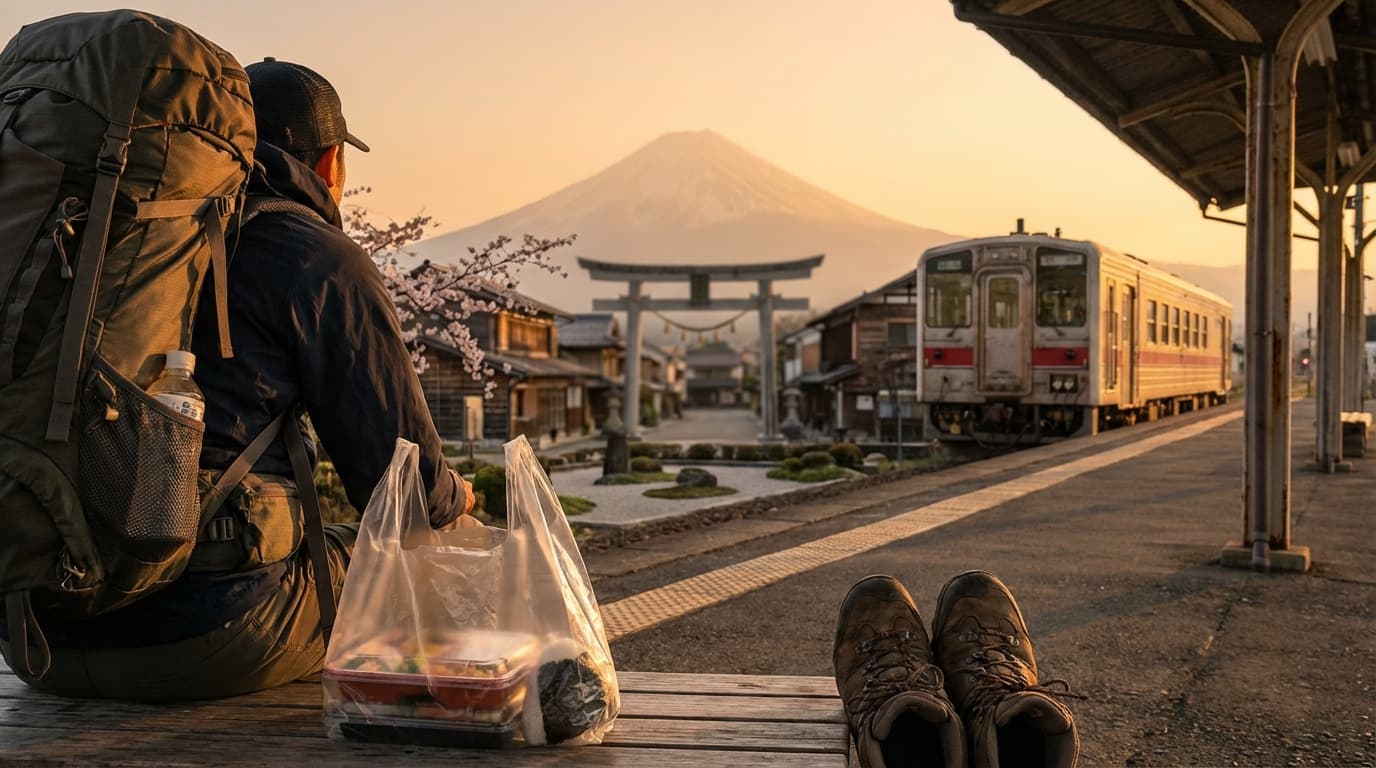
Cheapest Way to Travel Between Japanese Cities: Complete Budget Guide 2026
The Cheapest Way to Travel Between Japanese Cities: Complete Budget Guide 2026
You're standing in Tokyo with a two-week itinerary, dreaming of exploring Kyoto, Osaka, and beyond—but your budget is tight. The good news: the cheapest way to travel between Japanese cities doesn't require sacrificing comfort or speed. Japan's transportation network is so efficient that budget travelers often have more options than they realize. After spending two years navigating Tokyo's stations and exploring connections across the Kanto and Kansai regions, we've learned exactly where to save and when to splurge.
Key Takeaways
| Question | Answer |
|---|---|
| What's the cheapest intercity transport? | Highway buses (¥1,500–¥5,000 / $10–$33 USD) beat trains for budget travelers |
| Is a Japan Rail Pass worth it? | Only if traveling 3+ long distances in 7–14 days; otherwise, pay-per-trip saves money |
| How much should I budget daily for transport? | ¥2,000–¥4,000 ($13–$27 USD) for moderate travel; ¥5,000+ ($33+ USD) for frequent moves |
| What's the fastest option? | Shinkansen (bullet train) at 2–3 hours Tokyo–Kyoto, but costs ¥13,320 ($89 USD) one-way |
| Should I book in advance? | Yes—buses 1–2 weeks ahead save 20–30%; trains 2–4 weeks ahead unlock discounts |
| Is flying cheaper than trains? | Rarely—budget flights ¥5,000–¥8,000 ($33–$53 USD) exist but add airport transfers |
| What about ferries? | Scenic but slower; useful for island routes, not intercity mainland travel |
1. Understanding Japan's Transportation Hierarchy
Japan's intercity transport system operates on a clear cost-to-speed spectrum, and understanding where each option sits will transform your budget strategy. When we first explored the Kansai region, we made the rookie mistake of assuming trains were always cheapest—they're not. The reality is more nuanced: the cheapest intercity transport in Japan depends entirely on your time flexibility and distance.
The transportation hierarchy breaks down like this: highway buses are slowest but cheapest; conventional trains (limited express) offer a middle ground; shinkansen (bullet trains) are fastest but priciest; and budget airlines fill a niche for longer routes. Each has a sweet spot in your itinerary.
The Cost-Speed Tradeoff
Highway buses typically take 8–12 hours for a Tokyo–Kyoto journey but cost ¥1,500–¥3,000 ($10–$20 USD). Shinkansen covers the same distance in 2 hours 15 minutes for ¥13,320 ($89 USD). Limited express trains split the difference: 3–4 hours, ¥7,000–¥9,000 ($47–$60 USD). Your choice depends on whether you value sleep time (overnight buses save a hotel night) or daylight hours.
Regional Variations
Prices vary significantly by region. Routes from Tokyo to Kyoto are heavily discounted because of competition; Tokyo to rural Hokkaido is pricier. During our time navigating Osaka's Namba station, we noticed that secondary routes (Osaka to Kobe, Kyoto to Nara) often have better bus deals than primary routes.
Book highway buses, ferries, and transfers between Japanese cities easily online. Compare routes and prices.
Book Transport on 12Go → Scan me
2. Highway Buses: The Budget Traveler's Secret Weapon
If you're serious about saving money, highway buses are your best friend—despite their reputation for discomfort. A Tokyo–Kyoto bus costs ¥1,500–¥3,000 ($10–$20 USD), compared to ¥13,320 ($89 USD) for shinkansen. Over a two-week trip with 4–5 intercity moves, buses can save ¥30,000–¥50,000 ($200–$333 USD).
The catch? You'll spend 8–12 hours on a bus instead of 2 hours on a train. But here's the secret locals know: overnight buses save you a hotel night. When we took the midnight Tokyo–Kyoto bus, we left at 11 PM and arrived at 7 AM—effectively trading a ¥5,000–¥8,000 ($33–$53 USD) hotel night for a ¥2,500 ($17 USD) bus ticket. That's a ¥2,500–¥5,500 ($17–$37 USD) net saving.
Major Bus Operators and Routes
Compare hotels, ryokans, and hostels across Japan with free cancellation on most bookings.
Search Hotels on Booking.com → Scan me
Willer Express and Kintetsu Bus dominate the budget intercity market. Both offer online booking with English interfaces. Tokyo–Osaka runs ¥1,500–¥4,000 ($10–$27 USD) depending on season and how far in advance you book. Tokyo–Hiroshima (longer route) costs ¥3,000–¥6,000 ($20–$40 USD). Booking 2–3 weeks ahead unlocks 20–30% discounts.
- Best Budget Option: Book 3 weeks in advance; Tuesday–Thursday departures are 15–20% cheaper than weekends
- Pro Tip: Overnight buses departing 10 PM–midnight offer the best value (you save a hotel night)
- Comfort Consideration: Standard buses have reclining seats; premium "dream" buses cost ¥500–¥1,000 ($3–$7 USD) extra but include blankets and pillows
- Avoid: Peak seasons (Golden Week in late April, Obon in August, New Year) when prices spike 50–100%
Did You Know? Highway buses carry over 100 million passengers annually in Japan, making them the nation's most-used intercity transport after trains.
Book buses 2-3 weeks ahead on Willer Express or Kintetsu Bus websites for the lowest fares. Overnight routes save you hotel costs.
3. Japan Rail Pass: When It Actually Makes Sense
The Japan Rail Pass (JR Pass) is heavily marketed to tourists, but it's a trap for most budget travelers. A 7-day pass costs ¥29,650 ($198 USD); a 14-day pass is ¥47,250 ($316 USD). Unless you're making 3+ long-distance shinkansen journeys, you'll overpay.
Here's the math: a one-way Tokyo–Kyoto shinkansen costs ¥13,320 ($89 USD). A Tokyo–Osaka–Hiroshima–Kyoto loop (4 shinkansen rides) totals ¥53,280 ($356 USD)—more than a 14-day JR Pass. But if you're doing Tokyo–Kyoto–Osaka–back to Tokyo (3 rides), you spend ¥39,960 ($267 USD), which is cheaper than the pass.
The JR Pass covers unlimited JR trains (including shinkansen), but excludes private railways (Kintetsu, Odakyu, Keihan) that often offer cheaper alternatives. During our two years in Tokyo, we saw countless travelers buy JR Passes and then use local buses for secondary routes anyway.
When the JR Pass Actually Wins
- Tokyo–Kyoto–Osaka–Hiroshima–back to Tokyo (4+ shinkansen rides in 14 days)
- Multi-region tours covering Hokkaido, Kansai, and Kyushu with frequent shinkansen use
- First-time visitors wanting unlimited train access without planning each route
When to Skip It
- Staying in one region (Tokyo, Kyoto, or Osaka area) for 1–2 weeks
- Using buses for 50%+ of intercity travel
- Visiting only 2–3 cities with 1–2 shinkansen rides
| Pass Type | Cost (JPY) | Cost (USD) | Best For | Savings vs. Pay-Per-Trip |
|---|---|---|---|---|
| 7-Day JR Pass | ¥29,650 | $198 | 2–3 shinkansen rides | Breaks even at 2 rides |
| 14-Day JR Pass | ¥47,250 | $316 | 3–4 shinkansen rides | Breaks even at 3 rides |
| Pay-Per-Trip (avg) | ¥13,320 per ride | $89 per ride | Budget travelers | Saves ¥10,000–¥20,000 |
Use a JR Pass calculator before buying. If you're making fewer than 3 long shinkansen journeys, skip the pass and book individual tickets.
4. Shinkansen (Bullet Trains): When Speed Justifies Cost
The shinkansen is Japan's most iconic transport, and for good reason—it's fast, reliable, and surprisingly comfortable. But it's not the cheapest option. A Tokyo–Kyoto shinkansen (Tokaido line) costs ¥13,320 ($89 USD) for a 2-hour 15-minute journey. A bus costs ¥2,000 ($13 USD) and takes 8 hours.
The shinkansen makes sense when you value daylight hours, have a tight itinerary, or are traveling with family (children under 12 ride free). During our explorations of the Kanto region, we found that taking a morning shinkansen to Kyoto, spending a full day sightseeing, and returning the next day was worth the extra ¥11,000 ($73 USD) compared to overnight buses—because we gained two full days of activities.
Shinkansen Routes and Prices
Tokaido Shinkansen (Tokyo–Kyoto–Osaka–Hiroshima) is the main line. Tokyo–Kyoto costs ¥13,320 ($89 USD); Tokyo–Osaka is ¥13,870 ($93 USD); Tokyo–Hiroshima is ¥19,230 ($129 USD). Tohoku Shinkansen (Tokyo–Sendai–Aomori) costs ¥11,000–¥17,000 ($73–$114 USD) depending on distance.
- Advance Booking Discount: Book 13+ days ahead for 10% off (¥11,990 Tokyo–Kyoto)
- Off-Peak Savings: Weekday midday trains are 5–10% cheaper than rush hours
- Seat Selection: Unreserved seats cost ¥320 ($2 USD) less but offer no guarantee of seating
- Group Discount: 6+ people traveling together get 5–10% off
Did You Know? Japan's shinkansen has zero fatal accidents in over 60 years of operation, making it statistically safer than driving.
Source: Japan Times
5. Limited Express and Local Trains: The Middle Ground
Limited express (tokkyū) trains are the underrated middle option that many budget travelers overlook. They're slower than shinkansen but faster than buses, and often cheaper than both. A Tokyo–Kyoto limited express costs ¥7,000–¥9,000 ($47–$60 USD) and takes 3–4 hours. You save ¥4,000–¥6,000 ($27–$40 USD) compared to shinkansen while gaining 1–2 hours of travel time.
When we explored the Kansai region, we discovered that limited express trains on private railways (Kintetsu, Keihan, Odakyu) often undercut JR prices significantly. Osaka–Kyoto via Keihan costs ¥700–¥1,000 ($5–$7 USD) on local trains or ¥1,500–¥2,000 ($10–$13 USD) on limited express—both far cheaper than shinkansen.
Best Limited Express Routes
Skip the hassle — book Japan day trips, temple tours, tea ceremonies, and experiences in advance with instant confirmation.
Browse Activities on Klook → Scan me
- Tokyo–Nikko (Kintetsu): ¥2,700 ($18 USD), 2 hours
- Osaka–Kyoto (Keihan): ¥1,500 ($10 USD), 75 minutes
- Tokyo–Hakone (Odakyu): ¥2,940 ($20 USD), 90 minutes
- Kyoto–Nara (Kintetsu): ¥1,100 ($7 USD), 45 minutes
Local Train Networks
For shorter distances (under 100 km), local trains are unbeatable. Kyoto–Osaka local trains cost ¥700 ($5 USD) and take 75 minutes. Tokyo–Kawagoe local trains cost ¥1,500 ($10 USD) and take 60 minutes. These routes are perfect for day trips and cost a fraction of express options.
- Insider Tip: Use Hyperdia (hyperdia.com) to compare all train options simultaneously—it shows prices and times for local, limited express, and shinkansen on the same route
- IC Card Savings: Suica/Pasmo cards offer 5% discounts on some private railways
- Night Trains: Limited express night trains (Tokyo–Takamatsu, Tokyo–Izumo) cost ¥7,000–¥10,000 ($47–$67 USD) and save hotel nights
6. Budget Airlines: The Long-Distance Wildcard
Budget airlines (Peach Aviation, Vanilla Air, Spring Japan) occasionally offer flights cheaper than trains—but only on specific routes and with careful booking. A Tokyo–Fukuoka flight can cost ¥3,000–¥8,000 ($20–$53 USD) if booked 4–6 weeks in advance. A shinkansen costs ¥22,320 ($149 USD).
The catch: you must add ¥1,500–¥3,000 ($10–$20 USD) for airport transfers (Narita Express, Keisei Skyliner to/from Tokyo airports), plus ¥2,000–¥3,000 ($13–$20 USD) for baggage fees on budget carriers. Suddenly, that ¥3,000 flight becomes ¥6,500–¥9,500 ($43–$63 USD)—still cheaper than shinkansen, but the time cost (airport security, boarding, baggage claim) often exceeds the savings.
Flights make sense for routes over 600 km (Tokyo–Sapporo, Osaka–Okinawa) when booked far in advance. For routes under 400 km, trains almost always win on total cost and convenience.
Budget Airline Routes Worth Checking
- Tokyo (Narita/Haneda)–Fukuoka: ¥3,000–¥8,000 ($20–$53 USD)
- Osaka–Sapporo: ¥4,000–¥9,000 ($27–$60 USD)
- Tokyo–Okinawa: ¥5,000–¥10,000 ($33–$67 USD)
Search and compare flights to Tokyo, Osaka, Kyoto and Sapporo at the best prices.
Search Flights on Trip.com →7. Sample Day Budgets: Real Itineraries and Costs
Let's break down realistic daily transport budgets for different travel styles:
Budget Backpacker (Maximizing Savings)
Daily transport budget: ¥2,000–¥2,500 ($13–$17 USD)
- Day 1: Tokyo–Kyoto overnight bus (departs 11 PM, arrives 7 AM): ¥2,500 ($17 USD)
- Day 2: Kyoto local trains (Kyoto–Arashiyama–Fushimi Inari–Kyoto): ¥1,000 ($7 USD)
- Day 3: Kyoto–Osaka local train: ¥700 ($5 USD)
- Day 4: Osaka–Kobe local train: ¥1,500 ($10 USD)
- Day 5: Osaka–Tokyo limited express: ¥8,000 ($53 USD)
5-day total: ¥13,700 ($92 USD) / ¥2,740 per day
Comfort Traveler (Balancing Speed and Cost)
Daily transport budget: ¥4,000–¥5,000 ($27–$33 USD)
- Day 1: Tokyo–Kyoto shinkansen (morning): ¥13,320 ($89 USD)
- Day 2: Kyoto local trains and buses: ¥1,500 ($10 USD)
- Day 3: Kyoto–Osaka limited express: ¥1,500 ($10 USD)
- Day 4: Osaka day trip to Kobe and Himeji (trains): ¥3,000 ($20 USD)
- Day 5: Osaka–Tokyo shinkansen (evening): ¥13,320 ($89 USD)
5-day total: ¥32,640 ($218 USD) / ¥6,528 per day
Multi-Region Explorer (JR Pass Scenario)
Daily transport budget: ¥4,250 ($28 USD) with 14-day JR Pass
- 14-day JR Pass: ¥47,250 ($316 USD)
- Unlimited shinkansen, limited express, and local JR trains
- Average daily cost: ¥3,375 ($23 USD)
- Supplement with buses for secondary routes: ¥500–¥1,000 ($3–$7 USD) per day
14-day total: ¥52,250–¥61,250 ($349–$410 USD) / ¥3,732–¥4,375 per day
Did You Know? A typical Tokyo resident spends ¥3,000–¥4,000 ($20–$27 USD) monthly on commuting, thanks to employer subsidies. Tourists pay full price, but the infrastructure is the same.
8. Money-Saving Strategies: Where Locals Save
After two years navigating Tokyo and exploring the Kansai region, we've picked up insider tricks that shave ¥5,000–¥10,000 ($33–$67 USD) off typical tourist itineraries.
Booking Timing and Tactics
Compare car rental prices across Japan. Pick up at airports or city locations with flexible cancellation.
Compare Car Rentals →
Scan me
Book buses 2–3 weeks ahead on Willer Express or Kintetsu Bus for 20–30% discounts. Book shinkansen 13+ days ahead for 10% off. Book flights 4–6 weeks ahead for budget airlines. The sweet spot is 3 weeks out—far enough for discounts, close enough to adjust plans if needed.
Avoid peak travel dates (Golden Week late April, Obon mid-August, New Year late December–early January) when prices spike 50–100%. Travel Tuesday–Thursday instead of weekends for 10–15% savings on buses and trains.
Route Optimization
Chain local trains instead of express trains. Osaka–Kyoto costs ¥1,500 ($10 USD) on limited express or ¥700 ($5 USD) on local trains (takes 15 minutes longer). Over a week, this saves ¥5,000–¥8,000 ($33–$53 USD).
Use private railways instead of JR. Kintetsu, Keihan, and Odakyu often undercut JR prices by 20–30% on the same routes. Osaka–Kyoto via Keihan is ¥1,500 ($10 USD) vs. ¥2,000 ($13 USD) on JR.
Combine overnight buses with daytime local trains. An overnight Tokyo–Kyoto bus (¥2,500 / $17 USD) saves a ¥5,000–¥8,000 ($33–$53 USD) hotel night. You arrive at 7 AM, ready to explore.
- Pro Tip: Use IC cards (Suica in Tokyo, Pasmo in Osaka) for 5% discounts on some private railways and automatic transfers between systems
- Hidden Savings: Student discounts (50% off) apply to anyone with a valid student ID, including international students
- Group Discount: Traveling with 6+ people? Request group rates when booking buses or trains directly
Accommodation-Transport Tradeoffs
The cheapest itinerary isn't always the best value. An overnight bus saves ¥5,000–¥8,000 ($33–$53 USD) in hotel costs but costs ¥2,500 ($17 USD)—netting ¥2,500–¥5,500 ($17–$37 USD) savings. However, you lose a night's sleep. A daytime shinkansen (¥13,320 / $89 USD) lets you sleep in a hotel (¥5,000 / $33 USD) and still explore—total ¥18,320 ($122 USD) vs. ¥2,500 ($17 USD) for a bus. The bus is cheaper, but the shinkansen might offer better value for your time.
Book transport and accommodation together. An overnight bus + budget hotel combo often beats a daytime train + mid-range hotel on total cost.
9. Where to Splurge: Premium Routes Worth the Cost
Not every journey deserves budget treatment. Some routes offer experiences that justify premium pricing, and knowing when to splurge separates smart travelers from penny-pinchers.
Scenic Routes Worth Premium Fares
The Tateyama Kurobe Alpine Route (Toyama–Nagano) costs ¥9,000–¥11,000 ($60–$73 USD) but includes cable cars, ropeway, and mountain scenery impossible to replicate on budget buses. The Iya Valley Gorge Line (Shikoku) costs ¥2,000–¥3,000 ($13–$20 USD) but winds through dramatic gorges. These routes are worth the premium because you're paying for the experience, not just transportation.
First-Day Shinkansen Justification
Arriving in Japan jet-lagged? Splurge on a shinkansen (¥13,320 / $89 USD) instead of an 8-hour bus. You'll reach your destination refreshed and gain a full day of sightseeing. That ¥11,000 ($73 USD) premium often yields ¥20,000–¥30,000 ($133–$200 USD) in extra activities and meals during your gained daylight hours.
Night Train Experiences
Limited express night trains (Tokyo–Takamatsu, Tokyo–Izumo) cost ¥7,000–¥10,000 ($47–$67 USD) and save a hotel night (¥5,000–¥8,000 / $33–$53 USD). The net cost is ¥2,000–¥5,000 ($13–$33 USD)—but you gain a unique travel experience and wake up in a new city. It's worth the premium for the novelty alone.
10. Practical Booking Tools and Resources
Knowing where to book is half the battle. We've tested every major platform and found clear winners for different route types.
Best Booking Platforms
Hyperdia (hyperdia.com) compares all train options (local, limited express, shinkansen) on a single route with prices and times. It's free and shows real-time availability. Willer Express and Kintetsu Bus have English websites with 2–3 week advance booking discounts. Peach Aviation and Vanilla Air offer budget flights with transparent pricing (including baggage fees upfront).
Tabinaka (tabinaka.jp) is a Japanese platform that bundles trains, buses, and flights—useful for comparing all options simultaneously, though the English interface is limited.
Booking Directly vs. Third-Party
Book directly with operators (JR East, Willer Express, Kintetsu) rather than third-party sites. You'll avoid booking fees (¥500–¥1,000 / $3–$7 USD) and have direct access to customer service. Most operators now offer English websites and English-speaking phone support.
Cancellation and Flexibility
Budget buses often have strict cancellation policies (no refund if canceled within 7 days). Trains are more flexible (refund minus ¥320 / $2 USD fee). If your itinerary might change, pay the ¥320 ($2 USD) premium for train flexibility over the ¥2,500 ($17 USD) bus savings.
- Booking Hack: Book buses on Tuesday–Wednesday for Thursday–Friday departures; prices are 15–20% lower than same-day bookings
- Payment Tip: Use a credit card with no foreign transaction fees (Charles Schwab, Wise) to avoid 2–3% fees on Japanese bookings
- Currency Consideration: Book in JPY, not USD, to avoid currency conversion markups (typically 3–5%)
Frequently Asked Questions
Is the Japan Rail Pass worth it for a 2-week trip?
Only if you're making 3+ long-distance shinkansen journeys (Tokyo–Kyoto, Osaka–Hiroshima, etc.). If you're staying in one region or using buses for 50% of intercity travel, skip the pass and book individual tickets. A 14-day JR Pass costs ¥47,250 ($316 USD); three shinkansen rides cost ¥39,960 ($267 USD). The pass breaks even at 3 rides but offers flexibility for spontaneous travel.
What's the best time of year to find cheap transport?
June (rainy season) and January–February (winter) have the lowest fares because fewer tourists travel. Avoid Golden Week (late April), Obon (mid-August), and New Year (late December–early January) when prices spike 50–100%. Booking 2–3 weeks in advance saves 20–30% regardless of season.
Can I use my credit card to book trains and buses online?
Yes, most major operators accept international credit cards. JR East, Willer Express, Kintetsu Bus, and budget airlines all have English websites with credit card payment options. Avoid third-party booking sites that charge 5–10% fees—book directly with operators instead.
How much luggage can I bring on buses and trains?
Trains allow unlimited luggage (store in overhead racks or luggage areas). Buses typically allow one large suitcase + one small bag free; additional luggage costs ¥500–¥1,000 ($3–$7 USD) per item. Budget airlines charge ¥2,000–¥3,000 ($13–$20 USD) for checked baggage. Pack light or use luggage forwarding services (¥2,000–¥3,000 / $13–$20 USD per bag) to move suitcases between cities.
Is it safe to travel alone on overnight buses?
Yes, overnight buses are safe and popular with solo travelers. Buses are monitored by drivers and security cameras. Women-only sections are available on most overnight routes. Bring a neck pillow, earplugs, and eye mask for comfort. Overnight buses are actually safer than hotels in some areas because you're never alone.
What's the cheapest way to get from the airport to the city?
From Tokyo Narita: Keisei Skyliner (¥2,500 / $17 USD, 60 minutes) is cheaper and faster than Narita Express (¥3,000 / $20 USD, 60 minutes). From Tokyo Haneda: Keikyu Line (¥500 / $3 USD, 30 minutes) is cheapest; Haneda Express (¥3,000 / $20 USD, 30 minutes) is faster. From Osaka Kansai: Haruka Limited Express (¥3,600 / $24 USD, 75 minutes) is standard; airport buses (¥1,500–¥2,500 / $10–$17 USD, 90 minutes) are cheaper.
Conclusion
The cheapest way to travel between Japanese cities isn't a single answer—it's a strategy. Highway buses win on pure cost (¥1,500–¥3,000 / $10–$20 USD), especially overnight routes that save hotel nights. Limited express trains offer the best value-for-time balance (¥7,000–¥9,000 / $47–$60 USD, 3–4 hours). Shinkansen justifies its premium (¥13,320 / $89 USD) when you value daylight hours or have a tight itinerary. And the Japan Rail Pass only makes sense if you're making 3+ long shinkansen journeys in 7–14 days.
The real secret? Book 2–3 weeks in advance, avoid peak seasons, chain local trains instead of express options, and combine overnight buses with daytime exploration to maximize both savings and experiences. Over a two-week trip, this approach saves ¥20,000–¥40,000 ($133–$267 USD) compared to typical tourist spending—enough for several excellent meals or extra nights exploring Kyoto temples.
For detailed city guides and accommodation recommendations, check out our Tokyo, Kyoto, and Osaka travel guides. And if you're planning a multi-region adventure, our Japan Rail Pass Guide breaks down exactly when the pass saves money.
Ready to book your intercity journey? Start with Hyperdia to compare all options, then book directly with operators to avoid fees. Your budget—and your itinerary—will thank you.
Have questions about intercity travel in Japan? Contact our team or check our Getting Around Japan guide for more transportation tips.
Sources & References
This article is based on first-hand experience and verified with the following official sources:
Go2Japan Team
Exploring Japan since 2021 | 35+ prefectures visited | Updated monthly
We are a team of travel writers and Japan enthusiasts who explore the country year-round. Our guides are based on first-hand experience, local knowledge, and verified official sources.
More about us →People Also Read
Tokyo on a Budget: How to Visit for Under $100/Day
How to visit Tokyo on a budget in 2026. Accommodation, food, transport, and free attractions -- a complete guide to spending under $100/day in Japan's capital.
Best Time to Visit Japan: Season-by-Season Guide
Find the best time to visit Japan with our season-by-season guide. Cherry blossoms, autumn foliage, summer festivals, and winter snow -- month-by-month breakdown.
Japan Rail Pass 2026: Complete Guide to JR Pass
Complete 2026 guide to the Japan Rail Pass. Current prices, how to buy and activate, which trains are covered, and tips to maximize your JR Pass value.
Japan Travel Guide 2026: Everything You Need to Know
Complete Japan travel guide for 2026. Covers visas, budget, transport, culture, and practical tips for first-time visitors planning a trip to Japan.
Plan Your Japan Trip
Book hotels, transport, activities, and get connected with an eSIM
Some links are affiliate links. We may earn a commission at no extra cost to you.