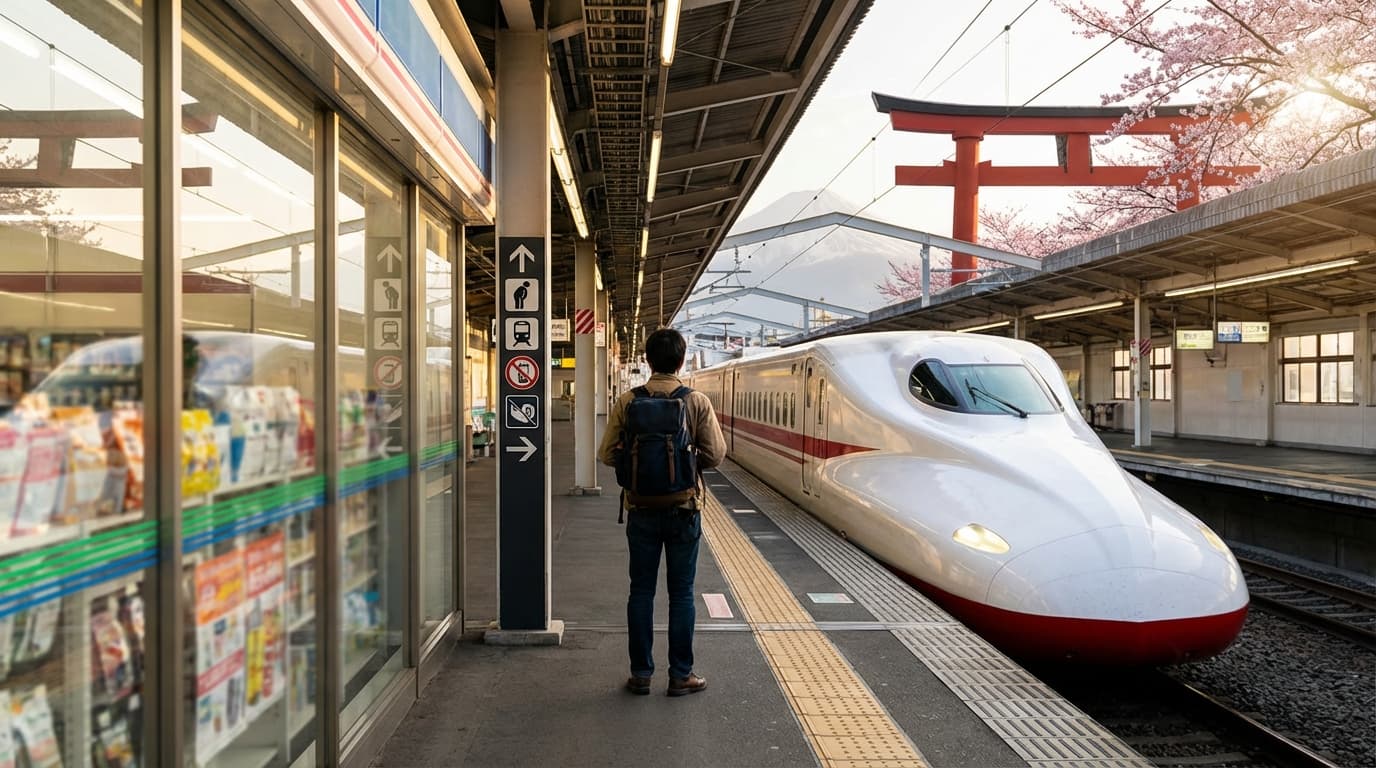
Japanese Etiquette Guide: Do's and Don'ts for Visitors
There's a moment every visitor to Japan experiences: standing in a crowded train car, watching locals navigate the space with silent precision, and realizing that Japanese etiquette is far more nuanced than you expected. Understanding cultural customs isn't just about avoiding embarrassment—it's about showing respect to the people and places you're visiting. During our years living in Tokyo and exploring Kyoto, we've learned that the Japanese value consideration for others (known as wa, or harmony) above almost everything else.
Key Takeaways
| Question | Answer |
|---|---|
| What is the most important etiquette rule? | Remove shoes indoors and respect personal space; harmony (wa) is paramount |
| Should I bow? | A slight nod is fine for visitors; deep bows aren't expected |
| Can I eat while walking? | Generally no—eating is done seated in designated areas |
| Is tipping expected? | No; tipping is not customary and can be considered offensive |
| What should I avoid in temples? | Photography restrictions, loud voices, and pointing at religious objects |
| How do I behave on trains? | No phone calls, quiet conversations, offer seats to elderly/pregnant passengers |
| Are there dress codes? | Smart casual for restaurants; modest dress for temples and shrines |
1. Shoe Etiquette: The Foundation of Respect
Shoes are sacred in Japanese culture. When you enter a home, traditional restaurant, temple, or many accommodations, removing your shoes isn't optional—it's fundamental. During our time living in Tokyo, we quickly learned that shoe etiquette is one of the first things locals notice about visitors, and getting it right sets the tone for respectful interaction.
The rule is simple: remove your shoes whenever you see a genkan (entryway) with a step down or when others have removed theirs. Look for shoe racks or designated areas. In some modern buildings, you'll keep your shoes on, but when in doubt, observe what others are doing.
Where to Remove Shoes
- Homes and traditional ryokans (Japanese inns): Always remove shoes at the entrance
- Temples and shrines: Remove shoes before entering the main hall; many have shoe racks
- Traditional restaurants with tatami mat seating: Shoes come off before sitting
- Some museums and cultural centers: Check for signage or follow other visitors
- Onsen and sento (public baths): Remove shoes in the changing area
Pro Tips for Shoe Etiquette
- Wear easy-to-remove footwear: Slip-on shoes or sandals make transitions smoother than laced boots
- Check your socks: Make sure they're clean and without holes—you'll be showing them to others
- Never step on the threshold: The boundary between shoe and no-shoe areas is sacred; step over it cleanly
- Avoid walking barefoot: Even indoors, wear the provided slippers or keep socks on
Did You Know? In Japanese homes, there are often different slippers for different areas—bathroom slippers stay in the bathroom, and regular indoor slippers are for living spaces. Wearing the wrong slippers in the wrong room is considered poor etiquette.
Source: Japan Guide
2. Temple and Shrine Behavior: Sacred Space Respect
Kyoto alone has over 2,000 temples and shrines, and each year millions of visitors pass through these sacred spaces. Temple and shrine etiquette is about showing reverence for spiritual places and the people who worship there. When we visited Fushimi Inari in Kyoto, we noticed how even crowded spaces maintained a sense of calm because visitors understood the unwritten rules.
Before entering a temple or shrine, you'll typically encounter a torii gate (the red or wooden archway). This marks the boundary between the secular and sacred worlds. Bow slightly as you pass through. Many temples have a water basin (temizuwater) near the entrance where you should rinse your hands and mouth—this is purification, not just hygiene.
Essential Temple and Shrine Rules
Compare hotels, ryokans, and hostels across Japan with free cancellation on most bookings.
Search Hotels on Booking.com → Scan me
- Photography restrictions: Many temples prohibit photography inside main halls; always look for signs or ask
- Keep your voice low: Whisper or speak quietly; these are places of worship and meditation
- Don't point at religious objects: Use an open hand gesture if you need to indicate something
- Respect rope barriers: If an area is cordoned off, it's not open to visitors
- Bow before passing through torii gates: A small nod is sufficient
Proper Purification Ritual
- Rinse left hand: Dip your left hand in the water basin and rinse
- Rinse right hand: Switch and rinse your right hand
- Rinse mouth: Cup water in your hand and rinse your mouth (spit into the basin, not back into it)
- Rinse the ladle handle: Pour water over the handle to clean it for the next person
Skip the hassle — book Japan day trips, temple tours, tea ceremonies, and experiences in advance with instant confirmation.
Browse Activities on Klook → Scan me
3. Restaurant Etiquette: Dining with Respect
Japan's dining culture is intricate, and restaurant etiquette varies depending on the type of establishment. Whether you're eating ramen at a casual counter or enjoying sushi at a fine dining restaurant, there are customs that show respect to the chef and other diners.
When we explored Osaka's food scene, we noticed that even in busy ramen shops, there's an unspoken order to how things happen. You order, you eat, you leave—and you're considerate of the space and time. In our experience, the most important rule is to say itadakimasu (literally "I humbly receive") before eating and gochisousama (thank you for the meal) after finishing.
Do's at Japanese Restaurants
- Say itadakimasu before eating: This shows gratitude to the chef and ingredients
- Slurp noodles loudly: It's not rude—it's expected and shows you're enjoying the food
- Use chopsticks properly: Hold them about one-third of the way down, not like a pencil
- Finish your rice: Leaving rice in your bowl is considered wasteful and disrespectful
- Say gochisousama when done: This thanks the restaurant for the meal
- Pay at the register: Don't leave money on the table; take your bill to the cashier
Don'ts at Japanese Restaurants
- Don't pour soy sauce on rice: Dip each piece of food individually
- Don't stick chopsticks upright in rice: This resembles a funeral ritual
- Don't pass food chopstick-to-chopstick: This also mirrors funeral customs
- Don't eat while walking: Food is consumed seated, in designated areas
- Don't tip: Tipping is not customary and can be seen as insulting
- Don't call staff by snapping fingers: Use the call button or say sumimasen (excuse me) politely
| Restaurant Type | Etiquette Focus | Cost Range | Best For |
|---|---|---|---|
| Ramen Shop | Slurping, quick eating | ¥800–1,200 ($5–8 USD) | Casual, authentic experience |
| Sushi Counter | Respect chef, eat in order served | ¥3,000–10,000+ ($20–70+ USD) | Premium experience |
| Izakaya | Group sharing, modest noise | ¥2,000–4,000 ($13–27 USD) | Social dining |
| Kaiseki | Formal dress, follow chef's pace | ¥10,000–30,000+ ($70–200+ USD) | Fine dining |
| Convenience Store | Eat in designated area | ¥500–1,500 ($3–10 USD) | Quick, casual |
Always check if a restaurant has a "no shoes" policy before sitting. In traditional establishments with tatami seating, you'll remove shoes before entering the dining area.
4. Public Transportation Etiquette: Train and Bus Behavior
Japan's trains and buses are marvels of efficiency, and they work because passengers follow unwritten rules of conduct. During our two years in Tokyo, we learned that rush hour on the Yamanote Line is a masterclass in silent coordination. Everyone knows the rules, and everyone follows them without needing to be told.
The most important principle is wa—harmony. You're sharing space with hundreds of people, and consideration for others is paramount. This means no phone calls, no eating (except on long-distance trains where it's acceptable), and offering your seat to those who need it.
Train and Bus Do's
- Stand on the correct side of escalators: In Tokyo, stand on the left; in Osaka, stand on the right
- Offer your seat: Give up your seat to elderly passengers, pregnant women, and people with disabilities
- Move toward the center: Don't block doors or crowd the entrance
- Use headphones: If listening to music or videos, keep sound private
- Keep bags off seats: Don't take up extra space with luggage
- Queue properly: Wait in designated lines before boarding; don't rush
Train and Bus Don'ts
- Don't make phone calls: Use text or wait until you're off the train
- Don't eat on local trains: Long-distance trains (shinkansen) allow eating; local trains don't
- Don't apply makeup or groom: Save personal care for home or restrooms
- Don't talk loudly: Keep conversations quiet and brief
- Don't block aisles with luggage: Store bags in overhead racks or between your feet
- Don't push or shove: Even during rush hour, maintain composure
Did You Know? Japan's trains are so punctual that the average delay is less than one minute. This efficiency depends on passengers boarding and exiting quickly and orderly—which is why the etiquette rules are so important.
Book highway buses, ferries, and transfers between Japanese cities easily online. Compare routes and prices.
Book Transport on 12Go → Scan me
5. Gift-Giving Customs: Presenting with Purpose
Gift-giving in Japan is an art form, and gift etiquette carries deep cultural significance. The gift itself matters less than how you present it and the intention behind it. When we lived in Tokyo, we learned that giving a gift to a Japanese colleague or friend requires understanding several unwritten rules.
Never give a gift with one hand—always use both hands when presenting or receiving. This shows respect and sincerity. The wrapping is as important as the contents; gifts should be beautifully wrapped, and you should never open a gift in front of the giver unless explicitly asked.
Numbers and Colors to Avoid
Skip the hassle — book Japan day trips, temple tours, tea ceremonies, and experiences in advance with instant confirmation.
Browse Activities on Klook →
Scan me
- The number 4: Sounds like the word for "death" in Japanese; never give four of anything
- The number 9: Can sound like "suffering"; avoid this number
- White flowers: Associated with funerals; avoid as gifts
- Knives or scissors: Symbolize cutting off a relationship
- Clocks: The word for clock (tokei) sounds like "attending a funeral"
Appropriate Gift Ideas
- Seasonal fruits or sweets: High-quality, beautifully packaged
- Tea or coffee: Premium brands show thoughtfulness
- Small luxury items: Scarves, pens, or imported goods
- Regional specialties: Omiyage (souvenirs from your hometown) are appreciated
- Alcohol: Sake or whisky, but not for business relationships initially
Presentation Rules
- Use both hands: When giving or receiving a gift, use both hands
- Don't expect immediate opening: The recipient will likely open it later, in private
- Wrap beautifully: Poor wrapping suggests carelessness
- Include a card: A handwritten note adds personal value
- Avoid excessive modesty: Don't say "it's just a small thing"—present with confidence
6. Onsen and Sento Etiquette: Bath House Behavior
Visiting an onsen (hot spring) or sento (public bath) is one of Japan's most relaxing experiences, but it requires understanding bath house etiquette. When we explored Hakone in the Kanto region, we discovered that onsen culture is deeply rooted in respect for shared spaces and cleanliness.
The fundamental rule is: wash thoroughly before entering the bath. This isn't optional—it's essential. The bath water is for soaking, not washing, and it's shared by many people throughout the day. Cleanliness is a sign of respect for others.
Onsen and Sento Rules
- Wash completely before entering: Use the shower or washing area; scrub your entire body
- Rinse all soap: No soap residue should enter the bath
- Don't submerge your head: Keep your head above water
- No swimsuits: Wear nothing in the bath (unless it's a mixed-gender facility, which may require swimwear)
- Keep towels out of water: Place your small towel on the edge or on your head
- Don't drain or refill the bath: The water is for everyone
- Be quiet: Onsen are places of relaxation and meditation
Tattoo Considerations
Many traditional onsen prohibit tattoos due to historical associations with organized crime. Check ahead before visiting. Some onsen are more lenient, especially newer facilities, but it's always best to ask or research beforehand.
7. Shrine Visits and Prayer Etiquette: Spiritual Customs
Visiting a shrine to pray or make an offering is a common tourist activity, especially in Kyoto and Tokyo. Shrine prayer etiquette doesn't require you to be religious, but it does require respect for the practice and the people around you.
When approaching a shrine, you'll typically see an offering box (saisen) in front of the main building. Toss a coin (¥5 or ¥50 coins are traditional), bow twice, clap twice, bow once more, and make your wish silently. This is the basic nichi-rei (two bows, two claps, one bow) ritual.
Proper Shrine Visit Steps
- Pass through the torii gate: Bow slightly as you enter sacred space
- Purify at the water basin: Rinse hands and mouth (see Temple Etiquette section)
- Approach the offering box: Walk respectfully; don't run or push
- Make an offering: ¥5 or ¥50 coins are standard; larger amounts are optional
- Perform the ritual: Two bows, two claps, one bow while making your wish
- Exit respectfully: Don't turn your back to the shrine; back away slowly
Ema (Wooden Wish Plaques)
Many shrines sell ema—small wooden plaques where you write a wish. This is a lovely way to participate in shrine culture. Write your wish in Japanese or English, tie it to the designated rack, and leave it for the shrine to present to the gods.
If you're unsure about the proper ritual, watch other visitors before approaching the offering box. Japanese people are generally understanding of tourists making honest efforts to show respect.
8. Conversation and Social Interaction: Speaking with Respect
Japanese conversation etiquette is about more than just words—it's about tone, body language, and awareness of social hierarchy. During our time in Osaka, we noticed that even casual conversations follow patterns of politeness and consideration.
The concept of keigo (respectful language) is central to Japanese communication. You don't need to master formal Japanese as a visitor, but understanding basic politeness levels helps. Always use -san when addressing someone (e.g., Tanaka-san), never use first names unless invited to do so, and avoid discussing personal topics with people you've just met.
Conversation Do's
Compare car rental prices across Japan. Pick up at airports or city locations with flexible cancellation.
Compare Car Rentals →
Scan me
- Use -san as a suffix: Shows respect; use for everyone except close friends
- Bow slightly when greeting: A small nod is appropriate
- Listen more than you speak: Japanese culture values listening and observation
- Ask permission before photographing people: Always ask shashin wo totte mo ii desu ka? (May I take a photo?)
- Compliment sincerely: Genuine compliments are appreciated
- Show interest in Japanese culture: Ask questions about customs and traditions
Conversation Don'ts
- Don't use first names: Unless explicitly invited
- Don't point with chopsticks or fingers: Use an open hand gesture
- Don't discuss money, age, or marital status: These are private topics
- Don't interrupt: Wait for natural pauses before speaking
- Don't be overly casual: Even friendly interactions maintain a level of formality
- Don't ask personal questions too quickly: Build rapport before getting personal
9. Street and Neighborhood Etiquette: Public Space Respect
Walking through Japanese neighborhoods, you'll notice an almost eerie quietness and cleanliness. Public space etiquette is about respecting shared environments. During our explorations of residential areas in Tokyo and Kyoto, we saw that this respect extends to how people use sidewalks, parks, and streets.
Never eat while walking on the street—food is consumed in designated areas. Don't litter under any circumstances; Japan has very few public trash cans, so visitors should carry their own waste. Respect quiet hours, especially in residential areas, and keep noise to a minimum, particularly in the evening.
Public Space Do's
- Walk on the left side of sidewalks: In most of Japan, keep left (though some areas follow right-side traffic)
- Dispose of trash properly: Carry waste with you; don't use public bins
- Respect quiet hours: After 10 PM in residential areas, keep noise minimal
- Stand aside for others: Don't block sidewalks or entrances
- Ask before photographing people or homes: Privacy is valued
- Use crosswalks: Even if traffic is light, follow pedestrian rules
Public Space Don'ts
- Don't eat while walking: Consume food seated in restaurants or designated areas
- Don't litter: This is a serious offense; take all trash with you
- Don't play loud music: Even in parks, keep volume respectful
- Don't block entrances or walkways: Be aware of your surroundings
- Don't photograph without permission: Especially of people, homes, or private spaces
- Don't sit on steps or curbs: These are not designated seating areas
Did You Know? Japan's streets are so clean that many visitors are shocked by the lack of trash cans. This is because Japanese people take responsibility for their own waste and carry it home. The practice is called mottainai—a sense of regret over waste.
Source: Lonely Planet Japan
10. Business and Formal Settings: Professional Etiquette
If you're visiting Japan for business or attending formal events, business etiquette follows strict protocols. When we worked with Japanese colleagues during our time in Tokyo, we learned that first impressions in professional settings are crucial and largely determined by how well you follow these customs.
Business card exchange is a formal ritual. When presenting your card, use both hands, offer it with the text facing the recipient, and receive cards with both hands. Study the card you receive; don't immediately put it away or write on it. Bowing is more formal in business settings—a 15-degree bow shows respect, while a 45-degree bow is reserved for apologies or deep gratitude.
Business Meeting Etiquette
- Arrive on time: Being late is disrespectful; arrive 5-10 minutes early
- Dress formally: Business suits are standard; avoid casual clothing
- Exchange business cards properly: Use both hands; study cards you receive
- Use honorifics: Use -san or -sama (more formal) when addressing people
- Listen actively: Don't interrupt; let others finish speaking
- Follow hierarchy: Address senior people first and with more formality
- Avoid direct "no": Use phrases like chotto muzukashii (that's a bit difficult) instead
Formal Dinner Etiquette
- Wait to be seated: Don't choose your own seat; the host will direct you
- Follow the host's lead: Begin eating only after the host starts
- Use proper chopstick etiquette: Never stick chopsticks upright in rice
- Accept drinks graciously: If someone pours for you, accept with thanks
- Pour for others: Show consideration by pouring drinks for those around you
- Finish your meal: Leaving food suggests the meal was inadequate
Frequently Asked Questions
Is it okay to tip in Japan?
No, tipping is not customary in Japan and can actually be considered offensive. Service charges are typically included in prices, and staff are paid fair wages. If you want to show appreciation, a verbal thank you is more appropriate than money.
What should I do if I accidentally break an etiquette rule?
Most Japanese people are understanding of tourists making honest mistakes. A sincere apology (sumimasen or shitsurei shimashita) and an attempt to correct the behavior is usually sufficient. Don't be overly apologetic or self-conscious—acknowledge the mistake and move forward respectfully.
Can I wear shoes in a modern Japanese home?
Always ask your host. In traditional homes and many Japanese residences, shoes come off at the entrance. In some modern apartments, especially those with Western-style flooring, hosts may say it's okay to keep shoes on. When in doubt, remove them—it's always the safer choice.
Is it rude to refuse food or drink?
Refusing politely is acceptable, but try to accept at least something. If you have allergies or dietary restrictions, explain them clearly. Saying itadakimasu before eating and gochisousama after shows respect regardless of how much you eat.
What's the best way to get someone's attention in a restaurant?
Say sumimasen (excuse me) politely or use the call button if available. Never snap your fingers or wave aggressively. Staff will come to you promptly—patience is appreciated.
Are there any gestures I should avoid?
Avoid pointing with one finger (use an open hand instead), beckoning with your palm up (this is considered rude), and the "OK" hand gesture (which can be offensive). Thumbs up is generally fine, but when in doubt, use simple gestures and facial expressions.
Conclusion
Japanese etiquette isn't about rigid rules designed to trap visitors—it's about wa, the harmony that makes shared spaces work beautifully. The Japanese people we've met during our years in Tokyo, Kyoto, and Osaka are remarkably forgiving of tourists who make genuine efforts to show respect. What matters most is demonstrating consideration for others, respect for sacred and shared spaces, and a willingness to learn.
Start with the basics: remove your shoes when appropriate, speak quietly in public spaces, say itadakimasu before meals, and observe what others are doing. These simple acts will open doors and create meaningful interactions with locals. For more practical travel information, check out our Japan Travel Guide 2026 and Practical Info sections.
Japan rewards respectful visitors with unforgettable experiences. By understanding and honoring these customs, you're not just avoiding embarrassment—you're participating in a culture that has refined the art of living together harmoniously for centuries.
Sources & References
This article is based on first-hand experience and verified with the following official sources:
Go2Japan Team
Exploring Japan since 2021 | 35+ prefectures visited | Updated monthly
We are a team of travel writers and Japan enthusiasts who explore the country year-round. Our guides are based on first-hand experience, local knowledge, and verified official sources.
More about us →People Also Read
Best Time to Visit Japan: Season-by-Season Guide
Find the best time to visit Japan with our season-by-season guide. Cherry blossoms, autumn foliage, summer festivals, and winter snow -- month-by-month breakdown.
Japan Travel Guide 2026: Everything You Need to Know
Complete Japan travel guide for 2026. Covers visas, budget, transport, culture, and practical tips for first-time visitors planning a trip to Japan.
Japan Visa Guide 2026: Requirements, eVisa & Entry Rules
Complete Japan visa guide for 2026. Visa-free countries, eVisa process, required documents, Visit Japan Web registration, and entry rules for tourists.
Cheapest Way to Travel Between Japanese Cities: Complete Budget Guide 2026
Save money traveling between Japanese cities. Compare trains, buses, and flights with exact prices in JPY and USD. Expert budget tips from local travelers.
Plan Your Japan Trip
Book hotels, transport, activities, and get connected with an eSIM
Some links are affiliate links. We may earn a commission at no extra cost to you.