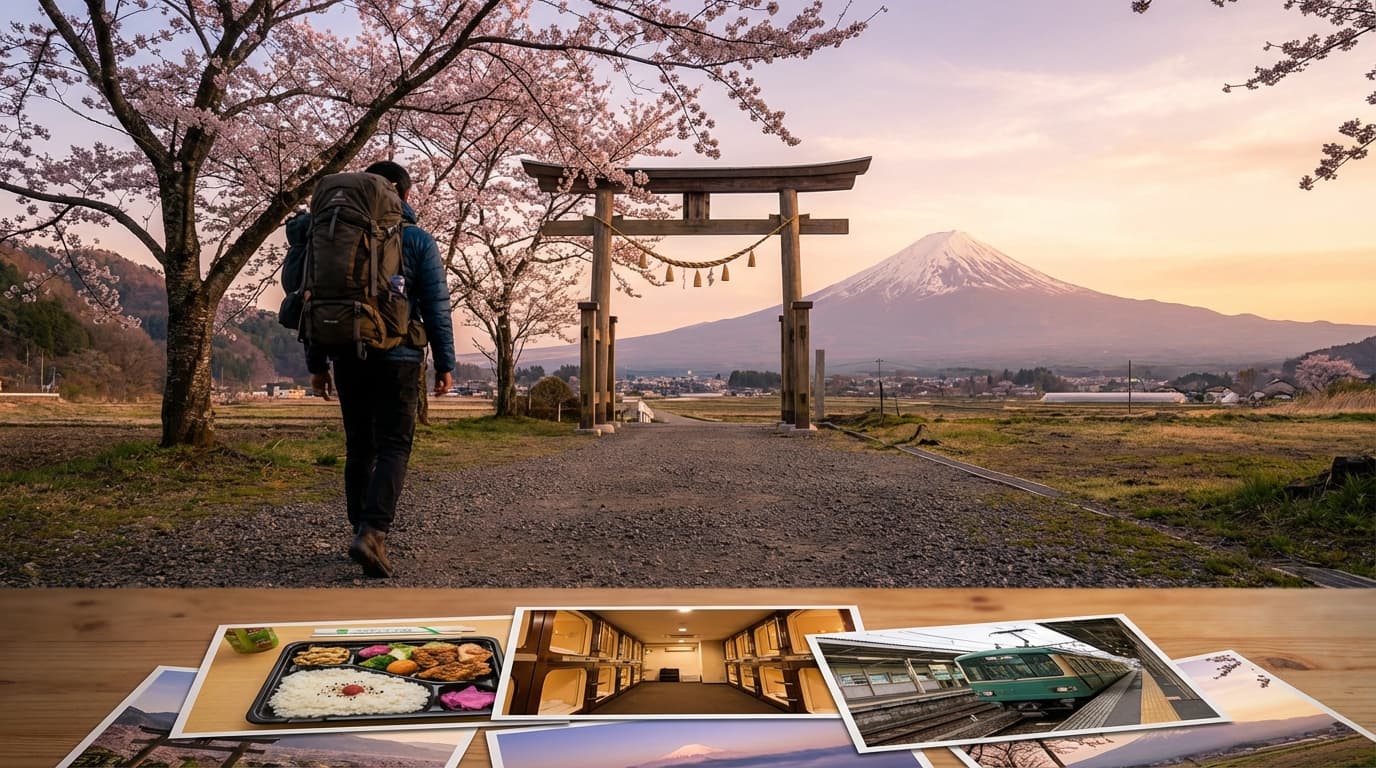
Cheapest Way to Travel Between Japanese Cities: Budget Guide 2026
After spending two years navigating Japan's intercity transport system between Tokyo, Kyoto, and Osaka, we've learned that getting between cities doesn't have to drain your travel budget. The key is understanding which transport option works best for your route, timing, and how long you're staying in Japan. Let us share exactly what we've discovered about the cheapest ways to move around this remarkably connected country.
Key Takeaways
| Question | Answer |
|---|---|
| What's the cheapest transport option? | Long-distance buses (¥2,000–¥5,000 / $13–$33 USD) beat trains for budget travelers |
| Should I buy a Japan Rail Pass? | Only if traveling 3+ cities in 7–14 days; otherwise, book individual tickets |
| How much does a Tokyo-Kyoto trip cost? | Shinkansen ¥13,320 ($88 USD); highway bus ¥2,500–¥4,000 ($17–$27 USD) |
| What's the fastest option? | Shinkansen bullet train (2.5 hours Tokyo-Kyoto); buses take 7–8 hours |
| When should I book in advance? | Buses 2–4 weeks ahead; trains 1–2 weeks for best prices |
| Is overnight travel worth it? | Yes—saves hotel costs; night buses ¥3,000–¥6,000 ($20–$40 USD) |
| What about flying between cities? | Only competitive on long routes (Tokyo-Sapporo); usually more expensive than trains |
1. Understanding Japan's Transport Network
Japan's intercity transport system is one of the world's most efficient, with trains, buses, and flights connecting every major city. During our time exploring the Kansai region and beyond, we found that most travelers overpay simply because they don't know their options. The shinkansen (bullet train) gets all the attention, but it's rarely the cheapest choice for budget-conscious travelers.
The reality is this: Japan has multiple ways to get between cities, each with distinct price points and trade-offs. Understanding these options means you can save hundreds of dollars on a multi-city trip without sacrificing safety or comfort.
The Four Main Transport Options
Shinkansen (Bullet Trains): Fast, comfortable, and iconic—but expensive. The Tokaido Shinkansen from Tokyo to Kyoto costs ¥13,320 ($88 USD) for a standard reserved seat. It's the fastest option at 2 hours 15 minutes, but speed comes at a premium.
Highway Buses: The budget champion. We've taken dozens of long-distance buses across Japan, and they consistently offer the lowest fares. A Tokyo-Kyoto bus runs ¥2,500–¥4,000 ($17–$27 USD), though journey time stretches to 7–8 hours. Night buses are particularly clever—you save a hotel night while traveling.
Regional Trains vs. Express Services
Local and regional trains (like JR conventional lines) are cheaper than shinkansen but slower. A Tokyo-Osaka journey on conventional JR trains costs around ¥8,000–¥9,000 ($53–$60 USD) and takes 6–7 hours. These work well if you're not in a hurry and want to see more of the countryside.
Express trains (limited express, or "tokkyuu") fall between conventional and shinkansen in both price and speed. From our experience, they're rarely the best choice—you're paying more than buses but not getting the speed of shinkansen.
2. Japan Rail Pass: When It Actually Makes Sense
The Japan Rail Pass is heavily marketed to international visitors, and we've seen countless travelers buy one unnecessarily. Let's be clear: it's not always the money-saver it appears to be.
A 7-day JR Pass costs ¥29,650 ($197 USD) for a standard adult pass. Sounds like a deal until you do the math. A single Tokyo-Kyoto shinkansen ticket is ¥13,320. If you only take two shinkansen rides and a few local trains, you've already spent ¥27,000+ without the pass—but you'd need to take specific routes to justify the pass cost.
When the JR Pass Pays Off
The JR Pass makes financial sense only in specific scenarios. If you're planning a classic "Golden Route" itinerary—Tokyo → Kyoto → Osaka → back to Tokyo—within 7 days, the pass saves money. You're looking at roughly ¥40,000+ in individual tickets, so the ¥29,650 pass is worthwhile.
For longer stays (14–21 days) covering more cities, a 14-day pass (¥46,390 / $308 USD) becomes more attractive. During our two years in Tokyo, we watched travelers with 10-day itineraries carefully calculate whether the pass justified the cost. Most found it wasn't worth it.
Did You Know? The JR Pass is only available to tourists on temporary visitor status—you must purchase it before arriving in Japan or at airport offices within 14 days of arrival.
Source: JR East Official
The Hidden Costs of JR Pass Convenience
Here's what guidebooks don't tell you: the JR Pass doesn't cover everything. Private railways (like Kintetsu, Odakyu, and Keihan) aren't included. In Kyoto, you'll likely need the Keihan line to reach temples—that's extra. In Osaka, private lines are essential. These costs add up.
When we calculated our actual spending during a 10-day Kansai trip, the pass saved us roughly ¥3,000 total. We'd have been better off buying individual tickets.
3. Highway Buses: The Budget Traveler's Secret Weapon
If you want to travel cheaply between Japanese cities, highway buses are your answer. We've taken them dozens of times—from late-night runs between Tokyo and Kyoto to daytime routes through the Japanese Alps. They're safe, reliable, and dramatically cheaper than trains.
A typical Tokyo-Kyoto highway bus costs ¥2,500–¥4,000 ($17–$27 USD) depending on the company and how far in advance you book. Compare that to ¥13,320 for shinkansen, and you're saving ¥9,000+ ($60+) per person. On a trip with two people, that's real money.
How to Book Highway Buses
The best platform for booking is Willer Express, which operates most long-distance buses in Japan. You can also use Hyperdia or individual bus company websites. Booking 2–4 weeks in advance typically gets you the lowest fares. Last-minute bookings are possible but pricier.
Budget-friendly routes we've tested:
- Tokyo to Kyoto: ¥2,500–¥4,000 ($17–$27 USD); 7–8 hours
- Tokyo to Osaka: ¥2,000–¥3,500 ($13–$23 USD); 7–8 hours
- Osaka to Kyoto: ¥1,500–¥2,500 ($10–$17 USD); 1.5–2 hours
- Tokyo to Hiroshima: ¥4,000–¥6,000 ($27–$40 USD); 10–12 hours
- Kyoto to Hiroshima: ¥3,500–¥5,000 ($23–$33 USD); 8–9 hours
Night Buses: Sleep Your Way Across Japan
Night buses are the budget traveler's secret weapon. You save a hotel night (¥5,000–¥15,000 / $33–$100 USD) while traveling. A night bus from Tokyo to Kyoto costs ¥3,000–¥6,000 ($20–$40 USD), meaning you're essentially getting transportation and accommodation for less than a budget hotel alone.
During our time in Tokyo, we took a night bus to Kyoto on a Friday evening, arriving Saturday morning. We saved ¥8,000 on accommodation and spent ¥4,500 on the bus—a net savings of ¥3,500 ($23 USD) compared to taking a daytime train and paying for a hotel.
Pro tip: Book night buses with 3–4 seats per row if possible. The extra space makes sleeping more comfortable. Avoid the cheapest options with 4 seats per row unless you're desperate.
4. Shinkansen (Bullet Train): When Speed Justifies the Cost
The shinkansen is Japan's most famous transport, and for good reason—it's fast, punctual, and comfortable. But it's also the most expensive option for intercity travel. We use it strategically, not as our default.
The Tokaido Shinkansen (Tokyo-Kyoto-Osaka corridor) is the most popular route. A Tokyo-Kyoto ticket costs ¥13,320 ($88 USD) for a standard reserved seat. A Tokyo-Osaka ticket is ¥13,870 ($92 USD). These prices are fixed—there's no early-bird discount like with buses.
Shinkansen Pricing Breakdown
| Route | Standard Seat | Green Car (1st Class) | Journey Time |
|---|---|---|---|
| Tokyo-Kyoto | ¥13,320 ($88) | ¥16,320 ($109) | 2h 15m |
| Tokyo-Osaka | ¥13,870 ($92) | ¥16,870 ($112) | 2h 30m |
| Kyoto-Hiroshima | ¥9,280 ($62) | ¥12,280 ($82) | 1h 45m |
| Tokyo-Hiroshima | ¥19,320 ($129) | ¥22,320 ($149) | 4h |
| Tokyo-Nagano | ¥8,560 ($57) | ¥11,560 ($77) | 1h 20m |
When Shinkansen Makes Sense
Shinkansen is worth the premium if you're short on time or traveling during peak seasons when buses are fully booked. If you have a week in Japan and want to visit three cities, the time savings matter. A 2-hour shinkansen ride versus a 7-hour bus ride means you gain a full day of sightseeing.
We took shinkansen when arriving in Japan with limited time, or when traveling during Golden Week (late April) when buses were sold out. For leisurely trips, we chose buses and used the travel time to sleep or read.
5. Conventional Trains: The Overlooked Middle Ground
Regional and conventional trains are often overlooked, but they offer a sweet spot between price and comfort. They're cheaper than shinkansen, faster than buses, and let you see more of rural Japan.
A Tokyo-Osaka journey on conventional JR trains (the Tokaido line) costs around ¥8,000–¥9,000 ($53–$60 USD) and takes 6–7 hours. That's roughly half the shinkansen price with only 3–4 extra hours of travel. If you're not in a rush, it's a smart choice.
Limited Express (Tokkyuu) Trains
Limited express trains are faster than conventional trains but slower than shinkansen. They're rarely the best choice financially. A Tokyo-Kyoto limited express might cost ¥10,000–¥11,000 ($67–$73 USD) and take 4–5 hours—more expensive than buses, slower than shinkansen, with no clear advantage.
During our explorations, we found limited express trains useful for mid-range distances (2–4 hours) when buses weren't available or convenient. But for major intercity routes, they're usually not optimal.
Scenic Train Routes Worth the Cost
Some conventional train routes are worth taking for the scenery alone. The Chuo line through the Japanese Alps, or the Kisei line along the Kii Peninsula, offer stunning views. These aren't budget moves, but they're cheaper than shinkansen and offer experiences buses can't match.
6. Domestic Flights: Rarely the Budget Option
Domestic flights between Japanese cities sound appealing but are rarely cheaper than trains or buses. We've compared prices extensively, and flights only make financial sense on very long routes (Tokyo-Sapporo, Tokyo-Fukuoka) when booked far in advance.
A Tokyo-Sapporo flight costs ¥10,000–¥20,000 ($67–$133 USD) depending on the airline and timing. The shinkansen to Nagano costs ¥8,560 ($57 USD), and buses run ¥4,000–¥6,000 ($27–$40 USD). Flights have additional costs: airport transfers (¥3,000–¥5,000 / $20–$33 USD each way), early arrival requirements, and luggage fees.
When Flights Make Sense
Flights are competitive only on routes longer than 8–10 hours. Tokyo-Sapporo (2.5 hours by flight vs. 8+ hours by train) or Tokyo-Fukuoka (2 hours by flight vs. 12+ hours by bus) are exceptions. Even then, budget airlines like Peach Aviation and Jetstar offer the best prices—expect ¥5,000–¥15,000 ($33–$100 USD) for advance bookings.
We've taken domestic flights only when time was extremely limited or when visiting Hokkaido or Kyushu from Tokyo. For most intercity travel within Honshu, trains and buses are superior.
7. Sample Budget Itineraries: Real Costs Broken Down
Let's walk through actual itineraries we've done, with real costs. This shows you exactly what to expect.
Classic 7-Day Golden Route (Tokyo-Kyoto-Osaka-Tokyo)
Option A: Budget Bus Route
- Tokyo to Kyoto (night bus): ¥4,000 ($27 USD)
- Kyoto to Osaka (local train): ¥600 ($4 USD)
- Osaka to Tokyo (night bus): ¥3,500 ($23 USD)
- Total: ¥8,100 ($54 USD)
- Accommodation saved: ¥10,000+ ($67+) from night buses
- Effective cost: Negative (you save money)
Option B: Shinkansen Route
- Tokyo to Kyoto (shinkansen): ¥13,320 ($88 USD)
- Kyoto to Osaka (shinkansen): ¥3,070 ($20 USD)
- Osaka to Tokyo (shinkansen): ¥13,870 ($92 USD)
- Total: ¥30,260 ($201 USD)
Option C: JR Pass Route
- 7-day JR Pass: ¥29,650 ($197 USD)
- Local transport not covered: ¥2,000 ($13 USD)
- Total: ¥31,650 ($210 USD)
The budget bus route is ¥22,550 ($150 USD) cheaper than shinkansen for the same journey. Over a 2-week trip with multiple city hops, you're looking at ¥100,000+ ($667+) in savings.
10-Day Kansai Deep Dive (Osaka-Kyoto-Nara-Kobe-Hiroshima)
During our time exploring the Kansai region, we tracked this itinerary:
- Osaka to Kyoto (local train): ¥600 ($4 USD)
- Kyoto to Nara (local train): ¥700 ($5 USD)
- Nara to Kobe (local train): ¥1,500 ($10 USD)
- Kobe to Osaka (local train): ¥1,500 ($10 USD)
- Osaka to Hiroshima (highway bus): ¥4,000 ($27 USD)
- Hiroshima to Osaka (highway bus): ¥4,000 ($27 USD)
- Total: ¥12,300 ($82 USD)
A 14-day JR Pass would have cost ¥46,390 ($308 USD) and covered all these routes. The local transport approach saved ¥34,090 ($227 USD) for the same journey.
Did You Know? Japan's bus network carries over 300 million passengers annually, making it the most-used intercity transport method by locals—not tourists.
8. Money-Saving Strategies That Actually Work
After years of traveling Japan, we've discovered specific tactics that consistently save money. These aren't gimmicks—they're practical moves that work.
Book in Advance (But Know the Deadlines)
Highway buses offer the best discounts when booked 2–4 weeks ahead. We've seen ¥5,000 fares drop to ¥2,500 with early booking. Shinkansen prices don't change, but buses reward advance planners heavily.
Train tickets can be purchased up to one month in advance. There's no discount for early booking, but advance purchase guarantees availability during peak seasons. During our Golden Week travels, we booked trains weeks ahead—without it, we'd have been stuck.
Booking timeline:
- Highway buses: 2–4 weeks ahead for best prices
- Shinkansen: 1–2 weeks ahead to guarantee seats
- Conventional trains: 1 week ahead during peak season
- Night buses: 3–4 weeks ahead; they sell out quickly
Travel on Off-Peak Days
Traveling Tuesday through Thursday instead of Friday-Sunday saves 20–40% on buses. We've booked Thursday night buses for ¥2,500 that cost ¥4,000 on Friday. Hotels are cheaper mid-week too, creating a multiplier effect.
Combine Night Travel with Budget Accommodation
A night bus (¥3,000–¥6,000 / $20–$40 USD) replaces a hotel night (¥5,000–¥15,000 / $33–$100 USD). On a 2-week trip with 3 night buses, you're saving ¥15,000–¥30,000 ($100–$200 USD) while actually traveling. This is the single most effective budget hack we've found.
Use IC Cards for Local Transport
Getting a Suica or Pasmo card (¥2,000 / $13 USD deposit) saves 1–2% on local train fares and works nationwide. It's a small savings, but on a 2-week trip with dozens of local train rides, it adds up to ¥1,000–¥2,000 ($7–$13 USD).
9. Where to Splurge: Experiences Worth the Premium
Budget travel doesn't mean never spending money. We've learned where splurging actually enhances your trip.
Shinkansen for Time-Limited Trips
If you're in Japan for only 5 days, shinkansen is worth the premium. The time savings let you experience more cities without rushing. We took shinkansen on a 5-day trip and felt it was justified—we saw Tokyo, Kyoto, and Osaka without feeling rushed.
Green Car (First Class) on Long Journeys
A Green Car upgrade costs ¥3,000–¥5,000 ($20–$33 USD) extra on shinkansen. For a 4+ hour journey, the extra space and amenities are worth it. We upgraded on Tokyo-Hiroshima and found it genuinely improved the experience.
Scenic Train Routes
The Tateyama Kurobe Alpine Route (¥8,000 / $53 USD) and similar scenic journeys cost more than buses but offer experiences you can't replicate. These are worth the premium if you have time.
Food on Trains
Train station bento boxes (¥1,000–¥2,000 / $7–$13 USD) are expensive compared to convenience store food (¥500–¥800 / $3–$5 USD), but they're a genuinely Japanese experience. We budget for one or two premium train meals per trip—it's a reasonable splurge.
10. Practical Tips for Booking and Traveling
Best Booking Platforms
For buses: Willer Express (English-friendly, wide selection), Hyperdia (compares all options), individual bus company websites (sometimes cheaper direct)
For trains: Hyperdia, individual JR websites, or station ticket offices (no online discount, but guaranteed availability)
For flights: Skyscanner, individual airline websites (Peach, Jetstar, ANA, JAL)
What to Expect on Budget Buses
Long-distance buses are safe and reliable, but comfort varies. Standard buses have 3 seats per row; premium buses have 2. Toilets are onboard. Wi-Fi is common. We've slept reasonably well on night buses—bring a neck pillow and earplugs.
Luggage on Transport
Trains and buses allow 2 large bags per person without extra charge. Shinkansen has overhead storage and luggage racks. Buses have undercarriage storage. We've never had issues, but avoid overpacking—luggage forwarding services (¥2,000–¥3,000 / $13–$20 USD per bag) exist if needed.
Currency and Payment
Most bus and train bookings accept credit cards online. Station ticket offices accept cash and cards. IC cards (Suica/Pasmo) work nationwide. We carry both cash and cards—no issues with either.
Frequently Asked Questions
Is the Japan Rail Pass worth it for a 10-day trip?
Not usually. A 7-day pass costs ¥29,650 ($197 USD). For 10 days, you'd need two passes or a 14-day pass (¥46,390 / $308 USD). Most 10-day itineraries cost ¥15,000–¥25,000 ($100–$167 USD) in individual tickets, making the pass overpriced. Calculate your specific routes before buying.
Can I book buses without a Japanese phone number?
Yes. Willer Express accepts international credit cards and doesn't require a Japanese phone number. You'll receive a confirmation email with a booking code. Some smaller bus companies require Japanese payment methods—stick with major operators if you're booking from abroad.
Are night buses safe?
Completely safe. We've taken dozens of night buses across Japan. They're operated by established companies, routes are well-maintained, and drivers are professional. The main discomfort is sleeping upright—bring a pillow.
What's the cheapest way to get from Tokyo to Kyoto?
A night bus costs ¥2,500–¥4,000 ($17–$27 USD) and saves a hotel night. This is the cheapest option. A daytime bus costs ¥2,500–¥3,500 ($17–$23 USD). Shinkansen costs ¥13,320 ($88 USD) but takes only 2 hours 15 minutes.
Should I buy a JR Pass if I'm doing the Golden Route?
Only if you're also taking multiple local trains and shinkansen beyond the basic Tokyo-Kyoto-Osaka triangle. For just those three cities, individual tickets (¥30,260 / $201 USD total) cost slightly more than a 7-day pass (¥29,650 / $197 USD), but you gain flexibility. If you're adding Nagano, Hiroshima, or other cities, the pass becomes more attractive.
Do buses have bathrooms?
Yes. All long-distance buses have onboard toilets. They're small but functional. Buses also stop at service areas every 1–2 hours where you can use larger bathrooms and buy food.
Conclusion
After two years living in Japan and countless intercity journeys, we can confidently say: the cheapest way to travel between Japanese cities is highway buses, especially when booked 2–4 weeks in advance and combined with night travel to save on accommodation.
For a 2-week trip visiting 4–5 cities, choosing buses over shinkansen saves ¥50,000–¥100,000 ($333–$667 USD) without sacrificing safety or reliability. The JR Pass is rarely the money-saver it appears to be—calculate your specific routes before buying.
Your strategy should be:
- Calculate your exact itinerary using Hyperdia
- Book buses 2–4 weeks ahead for the lowest fares
- Use night buses to combine travel and accommodation savings
- Take shinkansen only when time is extremely limited or buses are sold out
- Skip the JR Pass unless you're doing 3+ cities in 7 days with heavy shinkansen use
For more detailed planning, check out our Japan Rail Pass Guide and Japan Travel Guide 2026. And if you're planning your first trip, our Best Time To Visit Japan guide helps you choose dates that align with budget travel opportunities.
Travel smart, save money, and enjoy more of Japan.
Sources & References
This article is based on first-hand experience and verified with the following official sources:

Go2Japan Team
Exploring Japan since 2021 | 35+ prefectures visited | Updated monthly
We are a team of travel writers and Japan enthusiasts who explore the country year-round. Our guides are based on first-hand experience, local knowledge, and verified official sources.
More about us →People Also Read

Japan Travel Budget 2026: Real Daily Costs, Sample Budgets & Money-Saving Tips
Real 2026 Japan travel costs: daily budgets from ¥3,000–¥15,000+, accommodation, food, transport & activities. Save money without sacrificing experiences.
Japan on $50 Per Day: A Realistic Budget Travel Guide
Travel Japan on $50/day with our realistic budget guide. Exact costs in JPY/USD, sample day budgets, and insider money-saving tips.
Japan on a Budget: How to Travel for Under $100/Day
Japan on a budget is entirely achievable. This guide breaks down real daily costs for accommodation, food, transport, and activities -- with a clear path to staying under $100/day.
Japan Budget vs Luxury Travel: What's Worth Splurging On
Real costs for budget and luxury Japan travel. Save on food, splurge on experiences. Exact prices in JPY and USD with sample day budgets.
Plan Your Japan Trip
Book hotels, transport, activities, and get connected with an eSIM
Some links are affiliate links. We may earn a commission at no extra cost to you.