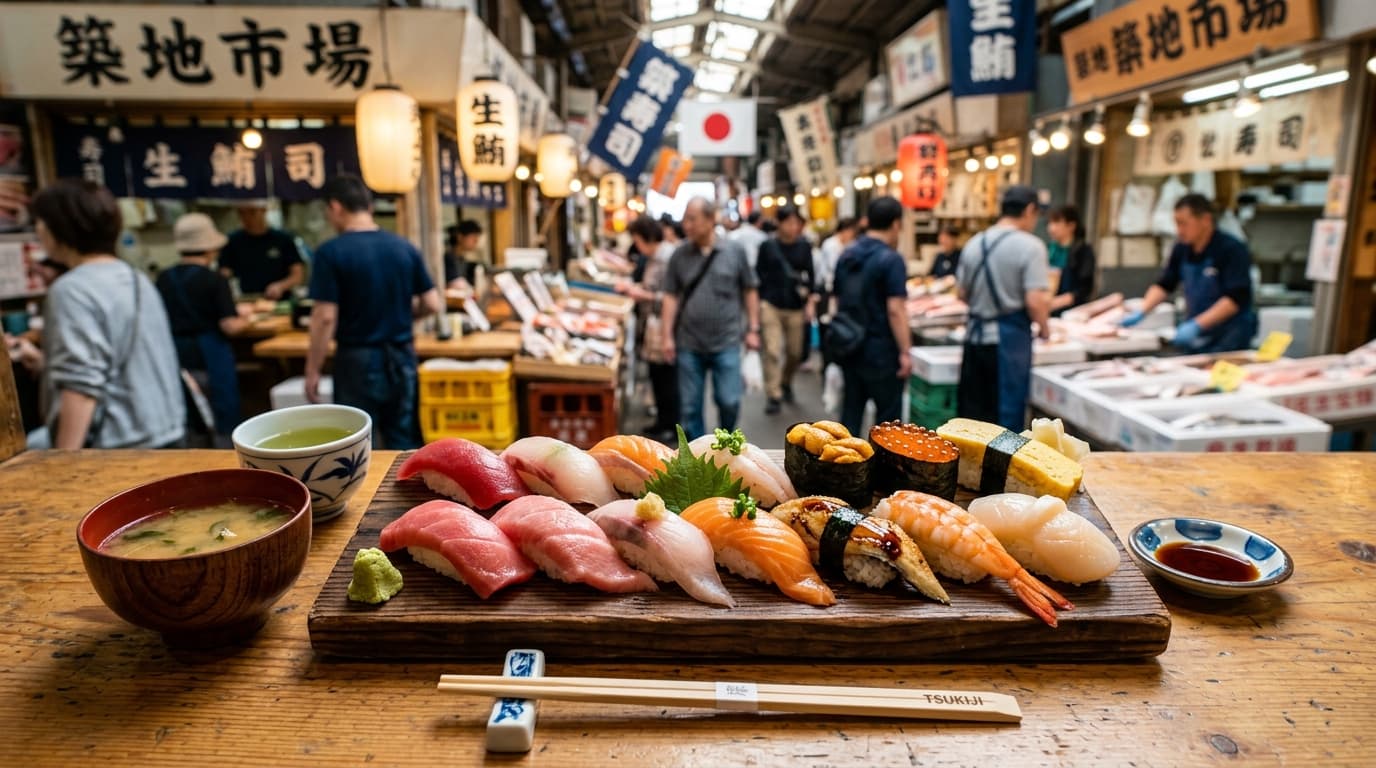
The moment you step into a Tokyo sushi restaurant—whether it's a gleaming Michelin-starred counter or a modest neighborhood spot—you understand why sushi in Tokyo is considered the pinnacle of Japanese culinary art. We've spent countless hours at fish markets before dawn, sat at sushi bars watching masters work with surgical precision, and eaten our way through neighborhoods most tourists never discover. This guide reveals where to find the best sushi experiences in Tokyo, from legendary establishments to hidden gems where locals queue before opening.
Key Takeaways
| Question | Answer |
|---|---|
| What is the best time to visit? | Year-round, but avoid peak tourist hours (12-1pm, 6-7pm). Early morning at fish markets is magical. |
| How much does it cost? | Budget sushi: ¥1,500-3,000 ($10-20 USD). Mid-range: ¥5,000-10,000 ($35-70 USD). Michelin-starred: ¥15,000-30,000+ ($100-200+ USD). |
| How do I get there? | Tokyo Metro reaches most neighborhoods. Tsukiji Outer Market is 5 min from Tsukiji Station (Hibiya Line). |
| Is it safe? | Extremely safe. All venues are legitimate and welcoming to foreigners. |
| What should I book in advance? | Michelin-starred restaurants require 1-2 months advance booking. Casual spots are walk-in friendly. |
| Do I need to speak Japanese? | No, but learning basic phrases helps. Many staff speak English at popular venues. |
| What's the etiquette? | Eat nigiri with your hands or chopsticks. Dip fish-side in soy sauce. Slurp tea. Compliment the chef. |
1. Understanding Sushi Culture and Tradition in Tokyo
Sushi in Tokyo isn't just food—it's a philosophy of simplicity, seasonality, and respect for ingredients that dates back centuries. The city's sushi culture emerged from Edo (Tokyo's former name) in the 19th century when street vendors began serving quick, affordable rice and fish to laborers. Today, that same spirit persists: whether you're eating at a ¥2,000 standing counter or a ¥25,000 omakase experience, the core principle remains unchanged—let the fish speak for itself.
When we visited Tokyo's most respected sushi establishments, we noticed something consistent: the best chefs obsess over rice temperature (ideally 32-35°C), fish sourcing (often from specific regions), and the relationship between each piece. This isn't pretension—it's craftsmanship. The rice is seasoned with vinegar, salt, and sugar in precise ratios that vary by chef. The fish is sliced at specific angles to maximize texture and flavor delivery.
The Edo-mae Style: Tokyo's Signature Approach
Edo-mae sushi (literally "in front of Edo") developed from the fast-paced culture of old Tokyo, where customers needed quick, satisfying meals. This style emphasizes nigiri sushi—hand-pressed rice topped with fish—over rolls, and traditionally uses fish from Tokyo Bay. Modern Edo-mae incorporates fish from across Japan and beyond, but the philosophy remains: simplicity, freshness, and respect for the ingredient.
Seasonal Variations and What to Expect Year-Round
Japanese sushi culture is deeply seasonal. During our time in Tokyo, we learned that spring brings delicate white fish and squid, summer offers fatty tuna and shellfish, autumn features premium uni (sea urchin) and abalone, and winter delivers the richest, most marbled tuna. A skilled sushi chef adjusts their offerings daily based on what arrived at market that morning. When you sit at a counter and order "omakase" (chef's choice), you're trusting them to guide you through the season's best offerings.
2. Tsukiji Outer Market: Tokyo's Legendary Fish Market
The Tsukiji Outer Market remains Tokyo's most iconic food destination, even after the inner market relocated to Toyosu in 2018. This bustling warren of 80+ restaurants, stalls, and shops sprawls across several blocks in Chuo Ward, drawing locals and visitors who understand that breakfast at Tsukiji is non-negotiable. When we arrived at 6:30 AM on a Tuesday, the market was already humming—vendors shouting prices, customers examining fish with the intensity of jewelers, and the unmistakable smell of the sea mixing with grilled seafood.
The outer market operates as a semi-organized chaos where you can eat at tiny sushi counters, grab grilled scallops from street vendors, or buy the freshest sashimi to take back to your accommodation. Most stalls open around 5 AM and close by early afternoon (around 2-3 PM), so timing is crucial. During our visit, we discovered that arriving before 8 AM meant shorter queues and the best selection of fish.
Best Sushi Spots in Tsukiji Outer Market
The market hosts numerous sushi restaurants, but several stand out for quality and authenticity. Sushi Dai and Daiwa Sushi are the two most famous—both offer counter seating where you watch chefs work while eating some of Tokyo's freshest nigiri. Expect to queue 30-60 minutes at either location, especially on weekends. The experience justifies the wait: a meal costs around ¥3,000-4,500 ($20-30 USD) for roughly 10-12 pieces of nigiri plus miso soup and tea.
Beyond the famous names, we found exceptional value at smaller counters like Tsukiji Kappa Zushi, where the owner sources fish directly and charges ¥2,500-3,500 ($17-23 USD) for a satisfying meal. The advantage of these lesser-known spots? Shorter waits and more personalized attention from the chef.
How to Navigate and Order Like a Local
Arrive early: The market is best between 5-8 AM. After 10 AM, crowds intensify and some stalls run low on premium fish.
Cash preferred: While many places accept cards, bringing ¥5,000-10,000 in cash ensures smooth transactions.
Point and eat: At most Tsukiji counters, you can point to fish in the display case and say "onegaishimasu" (please). The chef will prepare it immediately.
Understand the pricing: Most counters charge per piece (typically ¥200-500 per nigiri, or $1.50-3.50 USD). A typical meal is 10-15 pieces.
Did You Know? Tsukiji Outer Market handles over 1,600 tons of seafood annually, making it one of the world's largest fish markets by volume.
3. Michelin-Starred Sushi Experiences: Where Precision Meets Art
Tokyo boasts more Michelin-starred sushi restaurants than any other city globally—over 20 establishments with one or more stars. These aren't casual dining experiences; they're investments in culinary mastery. During our research, we learned that the highest-rated sushi restaurants in Tokyo operate on omakase-only systems, meaning you sit at the counter, the chef decides what you eat, and you pay a fixed price (typically ¥15,000-30,000 or $100-200+ USD per person).
The Michelin-starred sushi experience differs fundamentally from casual eating. You're not choosing dishes; you're experiencing the chef's interpretation of the day's best ingredients. Each piece arrives individually, often with explanation of its origin and how it should be eaten. The meal typically lasts 45-90 minutes and includes 15-20+ pieces of nigiri, plus appetizers and soup.
Three-Star and Two-Star Destinations
Sukiyabashi Jiro (three Michelin stars) is Tokyo's most famous sushi restaurant, though it's notoriously difficult to book—reservations fill months in advance through specific channels. The experience costs around ¥30,000 ($200 USD) and lasts approximately 30 minutes. Chef Jiro Ono, now in his 90s, still oversees the restaurant's operations, though his sons assist with daily service.
Sushi Yoshitake (three Michelin stars) in Ginza offers a more accessible high-end experience, with slightly easier booking and a similar price point. The restaurant seats only 8 customers at a time, creating an intimate atmosphere where you watch the chef work inches away.
Nabezo (two Michelin stars) in Roppongi provides exceptional value for Michelin-starred sushi, with omakase starting around ¥12,000-15,000 ($80-100 USD). During our visit, we found the chef more conversational than at three-star establishments, making it ideal for first-time omakase experiences.
How to Book and What to Expect
Most Michelin-starred sushi restaurants require advance booking through their websites or phone (Japanese-language ability helpful, though some have English contact options). Booking typically opens 1-2 months in advance. Payment is usually cash-only, and cancellations made less than 48 hours in advance may incur charges.
When you arrive, remove your shoes if indicated, sit at the counter, and let the experience unfold. The chef will likely ask about allergies or preferences. Beyond that, trust their expertise. Each piece arrives at optimal temperature and timing—eating it immediately is crucial.
4. Mid-Range Sushi Restaurants: Quality Without the Premium Price Tag
Not every excellent sushi experience requires a Michelin star or a month-long booking wait. Tokyo has hundreds of mid-range sushi restaurants where you'll eat genuinely excellent nigiri for ¥5,000-10,000 ($35-70 USD) per person. These establishments often have the advantage of walk-in seating, friendly atmospheres, and chefs who are passionate but less formal than their three-star counterparts.
When we explored neighborhoods like Shibuya, Shinjuku, and Chiyoda, we discovered that some of the best sushi values hide in residential areas away from tourist zones. A restaurant in a quiet Minato ward backstreet might offer superior fish quality and more attentive service than a famous Ginza establishment, simply because it caters to local regulars who return weekly.
Neighborhood Gems Worth Seeking Out
Sushi Saito (not to be confused with the three-star Sukiyabashi Jiro) in Tsukishima offers omakase for around ¥8,000-10,000 ($55-70 USD). The chef sources from Tsukiji daily and maintains relationships with specific fishmongers. Seating is first-come, first-served, so arrive by 5 PM to secure a spot.
Kiji in Shibuya, a standing sushi counter, serves excellent nigiri for ¥2,500-4,000 ($17-27 USD). The standing format keeps prices low while maintaining quality—you're essentially paying for the fish and rice, not table service or ambiance. We found the experience authentic and energetic, with a mix of salarymen, tourists, and locals.
Sushi Marui in Shinjuku offers counter seating and a relaxed atmosphere where the chef encourages questions. Prices range ¥6,000-9,000 ($40-60 USD) for omakase, and the chef is happy to explain each piece's origin and preparation method.
Comparison Table: Sushi Price and Experience Levels
| Restaurant Type | Best For | Typical Cost (JPY) | Typical Cost (USD) | Booking Required |
|---|---|---|---|---|
| Standing Counter/Casual | Quick, authentic, budget-conscious | ¥2,000-4,000 | $13-27 | No |
| Mid-Range Neighborhood | Quality omakase, local experience | ¥6,000-10,000 | $40-70 | Sometimes |
| Upscale Non-Michelin | Premium ingredients, refined service | ¥10,000-15,000 | $70-100 | Usually |
| One-Star Michelin | Recognized excellence, formal setting | ¥15,000-20,000 | $100-135 | Yes, 1-2 months |
| Two-Star Michelin | Exceptional artistry, intimate | ¥20,000-25,000 | $135-170 | Yes, 2+ months |
| Three-Star Michelin | Pinnacle experience, legendary | ¥25,000-35,000 | $170-235 | Yes, 2-3 months |
5. Conveyor Belt Sushi (Kaiten-zushi): Casual and Fun
For a completely different sushi experience—one that's casual, affordable, and perfect for solo diners or families—conveyor belt sushi (kaiten-zushi) represents Tokyo's more relaxed approach to the cuisine. Plates of nigiri rotate on a conveyor belt around the counter; you grab whatever appeals to you, and your bill is calculated by counting the empty plates at the end.
During our time in Tokyo, we visited several kaiten-zushi restaurants and found them consistently excellent for value. A typical meal costs ¥2,000-4,000 ($13-27 USD) and includes 10-15 pieces of sushi. The format removes pressure—there's no chef watching your reaction, no need to understand Japanese, no complex ordering process. You simply eat what you want, when you want.
Best Kaiten-zushi Chains and Locations
Sushiro and Kura Sushi are Tokyo's largest kaiten-zushi chains, with dozens of locations across the city. Both maintain quality standards despite their size, and both accept payment cards. Expect to wait 20-30 minutes during peak hours (lunch 12-1 PM, dinner 6-7 PM), but off-peak visits are nearly walk-in instant.
Tsukiji Outer Market also has several kaiten-zushi options, including Tsukiji Kappa Zushi, where the fish quality is noticeably higher than chain restaurants, though prices are slightly elevated (¥3,000-4,500 or $20-30 USD per meal).
Pro Tips for Kaiten-zushi Success
Order specials: Most kaiten-zushi restaurants have a menu of items not on the conveyor belt. Ask your server for recommendations or point to items on the wall menu. These are often the best value and highest quality.
Timing matters: Visit between 2-5 PM (post-lunch, pre-dinner) for minimal waits and full selection.
Understand the plate colors: Different colored plates indicate different prices. Typically, white/light plates cost ¥100-200, while special plates (often red or black) cost ¥300-500+.
Don't be shy about freshness: If a plate has been circulating for a while, skip it. The beauty of kaiten-zushi is that fresh plates arrive constantly.
6. Specialty Fish Markets Beyond Tsukiji
While Tsukiji dominates Tokyo's sushi tourism, several other markets offer authentic experiences and excellent eating opportunities. Toyosu Market, which opened in 2018 as the relocation site for Tsukiji's inner market, handles the wholesale fish trade but also has a public section with restaurants and shops. It's less atmospheric than Tsukiji Outer Market but offers similar quality and fewer crowds.
Ota Market in Ota Ward is Tokyo's second-largest fish market and primarily serves professional chefs and restaurants. However, the public can visit the market's outer section, and several small sushi counters operate there. The advantage? Significantly fewer tourists and often better prices than Tsukiji, since the market caters to trade professionals rather than visitors.
When we explored Ota Market, we found it more challenging to navigate than Tsukiji—signage is minimal, English is less common, and the market's layout is confusing. However, the reward is authenticity and value. A meal at one of Ota's sushi counters costs ¥2,500-4,000 ($17-27 USD) for excellent quality.
Getting to and Navigating These Markets
Tsukiji Outer Market: 5-minute walk from Tsukiji Station (Hibiya Line). Open daily except Sundays and holidays, roughly 5 AM-2 PM.
Toyosu Market: 10-minute walk from Toyosu Station (Yurikamome Line). Public section open 10 AM-5 PM (closed Mondays). Less crowded than Tsukiji but also less atmospheric.
Ota Market: 7-minute walk from Ota Market Station (Asakusa Line). Open Monday-Saturday 5 AM-1 PM. Arrive early; most restaurants close by 11 AM.
7. Learning Sushi Etiquette: How to Eat Like a Local
Understanding sushi etiquette transforms the experience from eating to dining. Japanese sushi culture has specific conventions that, while not strictly enforced at casual restaurants, reflect respect for the craft and ingredients. During our meals at various Tokyo sushi establishments, we observed consistent patterns in how experienced diners behaved.
Nigiri should be eaten in one bite. Dip the fish side (not the rice side, which absorbs soy sauce and becomes soggy) into soy sauce. If the chef has already applied sauce, don't add more. Eat immediately after receiving the piece—the rice temperature is intentional and degrades quickly.
Use your hands or chopsticks. Both are equally acceptable. Most locals use hands for nigiri, chopsticks for rolls and other items. The chef won't judge either choice.
Slurp your tea. This is not only acceptable but encouraged—it's how you cool the tea and show appreciation.
Compliment the chef. A simple "oishii" (delicious) or "gochisousama" (thank you for the meal) goes a long way. Chefs appreciate genuine feedback.
Don't rub chopsticks together. This implies the restaurant provided cheap chopsticks—an insult. It's a common tourist mistake.
Ginger is a palate cleanser. The pickled ginger (gari) served alongside sushi is meant to reset your palate between different fish types, not to be eaten as a side dish.
What NOT to Do
Avoid pouring soy sauce on rice. This is a cardinal sin in sushi culture. Soy sauce is for dipping fish, not for drowning rice.
Don't mix wasabi into soy sauce. The chef has already applied the appropriate amount of wasabi. Adding more is unnecessary and considered disrespectful.
Never ask for ketchup or mayo. At any legitimate sushi restaurant, these condiments are not provided. If you need them, you're at the wrong restaurant.
Don't photograph every piece. While a few photos are fine, constantly photographing disrupts the experience and annoys other diners and the chef.
Did You Know? The tradition of eating sushi with hands dates back to Edo period Tokyo, when sushi was street food eaten quickly by laborers. Using hands was practical and remains the preferred method among purists.
8. Seasonal Sushi: What to Eat When
One of the most overlooked aspects of sushi tourism is seasonality. The best sushi experiences align with seasonal availability—eating uni (sea urchin) in summer or fatty toro (tuna belly) in winter maximizes flavor and supports the chef's philosophy of respecting seasonal ingredients.
Spring (March-May): White fish like shiromi and squid (ika) peak during spring. Clams (hamaguri) are also excellent. The rice temperature becomes slightly cooler as weather warms. Spring is ideal for visiting sushi restaurants, as the season's delicate flavors showcase the chef's skill.
Summer (June-August): Shellfish like scallops (hotate) and abalone (awabi) are at their best. Fatty fish like mackerel (saba) become more available. Uni season begins in late summer. The chef may serve slightly cooler rice to complement the season.
Autumn (September-November): Premium uni reaches peak quality in October-November. Squid becomes exceptionally tender. Fatty tuna (toro) begins improving as fish prepare for winter. This is arguably the best season for sushi, with the widest range of premium ingredients available.
Winter (December-February): Fatty toro reaches peak quality. White fish like flounder (hirame) becomes sweeter. Scallops remain excellent. The chef serves warmer rice to complement heavier, richer fish. Winter is ideal for omakase, as the chef has maximum flexibility with premium ingredients.
When you visit a sushi restaurant, ask the chef what's seasonal. A good chef will enthusiastically explain what just arrived at market and why it's exceptional right now. This conversation is part of the sushi experience.
9. Sushi Ingredients and Fish Types: A Beginner's Guide
Understanding what you're eating enhances appreciation. Tokyo sushi restaurants work with dozens of fish types, but several appear consistently. During our sushi education, we learned that fish names in Japanese often differ from English, and knowing the Japanese names helps when ordering.
Toro (tuna belly): The most prized sushi ingredient, toro is fatty, buttery, and melts on your tongue. Otoro (fatty toro) is more expensive than chu-toro (medium fatty). Peak season is winter.
Maguro (lean tuna): The opposite of toro—lean, clean, slightly metallic. Excellent year-round but best in summer and autumn.
Sake (salmon): Buttery and rich, salmon is popular globally but considered less traditional in Tokyo sushi culture. Quality varies significantly by source.
Ebi (shrimp): Sweet and slightly firm, ebi is often served cooked (boiled). The sweetness intensifies with cooking.
Uni (sea urchin): Creamy, briny, and luxurious. Uni quality varies dramatically by source. Premium uni from Hokkaido or Shizuoka costs significantly more than standard uni.
Ikura (salmon roe): Bursts of salty, oceanic flavor. Often served as a small mound on rice rather than a traditional nigiri.
Hotate (scallop): Sweet and tender, scallops are often served raw but sometimes lightly seared. Excellent in all seasons but peak in summer.
Hirame (flounder): Delicate white fish with subtle sweetness. Excellent in winter when flavor intensifies.
Comparison Table: Common Sushi Fish Types
| Fish (Japanese) | English Name | Flavor Profile | Texture | Best Season | Price Level |
|---|---|---|---|---|---|
| Toro | Fatty tuna | Buttery, rich, umami | Melts on tongue | Winter | Premium |
| Maguro | Lean tuna | Clean, slightly metallic | Firm | Year-round | Moderate |
| Sake | Salmon | Buttery, rich | Tender | Year-round | Moderate |
| Uni | Sea urchin | Briny, creamy | Soft, creamy | Autumn | Premium |
| Ebi | Shrimp | Sweet, delicate | Firm (cooked) | Year-round | Moderate |
| Hotate | Scallop | Sweet, oceanic | Tender | Summer | Moderate-Premium |
| Hirame | Flounder | Delicate, subtle | Tender | Winter | Moderate |
| Ika | Squid | Sweet, oceanic | Chewy | Spring-Autumn | Budget-Moderate |
10. Practical Information: Costs, Neighborhoods, and Getting Around
Understanding Tokyo's geography helps you plan sushi experiences efficiently. The city's sushi culture isn't concentrated in one area—excellent restaurants exist in every neighborhood, though certain areas have higher concentrations of quality establishments.
Ginza is Tokyo's luxury sushi district, home to Michelin-starred restaurants, high-end omakase venues, and premium kaiten-zushi chains. Expect to pay premium prices; even casual restaurants here cost more than equivalent venues elsewhere. Ginza is worth visiting for the experience, but it's not necessary for eating excellent sushi.
Tsukishima has emerged as a serious sushi destination, with numerous mid-range omakase restaurants and a more local atmosphere than Ginza. Prices are 20-30% lower than Ginza for similar quality.
Shibuya and Shinjuku have excellent sushi options across all price ranges, from standing counters (¥2,000-3,000) to mid-range omakase (¥6,000-10,000). These areas are convenient if you're already exploring the neighborhoods.
Chiyoda (around Tokyo Station) has numerous sushi restaurants catering to business travelers. Quality is consistently high, and prices are reasonable.
Tsukiji Outer Market remains the must-visit destination for sushi tourism, but plan to arrive early (before 8 AM) to avoid crowds and secure seating.
Budget Breakdown for a Tokyo Sushi Trip
Budget traveler (¥5,000-7,000 daily food budget): Eat at kaiten-zushi chains (¥2,000-3,000), standing counters (¥2,500-3,500), and Tsukiji Outer Market (¥3,000-4,500). You'll eat excellent sushi while staying within budget.
Mid-range traveler (¥10,000-15,000 daily food budget): Mix mid-range omakase (¥6,000-10,000) with casual meals. This allows one or two nicer sushi experiences while maintaining reasonable daily costs.
Luxury traveler (¥20,000+ daily food budget): Splurge on Michelin-starred experiences (¥15,000-30,000) while enjoying mid-range restaurants on other days. This approach provides the full spectrum of Tokyo's sushi culture.
Frequently Asked Questions
What's the difference between sushi and sashimi?
Sushi refers to rice seasoned with vinegar, salt, and sugar, typically topped with fish (nigiri sushi) or rolled with vegetables and fish (maki sushi). Sashimi is sliced raw fish served without rice. Both are central to Japanese cuisine, but sushi specifically includes the rice component.
Do I need to make reservations at casual sushi restaurants?
No. Kaiten-zushi chains, standing counters, and most mid-range restaurants accept walk-ins. Expect 20-40 minute waits during peak hours (lunch 12-1 PM, dinner 6-7 PM). Michelin-starred restaurants and high-end omakase venues require advance reservations (1-3 months ahead).
Is it safe to eat raw fish in Tokyo?
Absolutely. Japanese food safety standards are among the world's strictest. All sushi-grade fish is either flash-frozen or handled with extreme care to eliminate parasites. Thousands of visitors eat sushi daily in Tokyo without issues. If you have specific health concerns, consult your doctor, but generally, sushi is safe.
What's the best time of day to visit Tsukiji Outer Market?
Early morning (5-8 AM) is ideal. The market has the most energy, the best selection of fish, and the shortest queues. After 10 AM, crowds intensify and some stalls run low on premium items. Most restaurants close by 2-3 PM.
Can I eat sushi if I'm vegetarian?
Yes, though options are limited. Vegetarian sushi includes cucumber (kappa), pickled radish (takuan), and avocado rolls. Some restaurants offer vegetable-only omakase, though you'll need to request this in advance. Tsukiji Outer Market has vegetable-focused options as well.
How much should I tip at a sushi restaurant?
Tipping is not customary in Japan and can be considered offensive. Service charges are included in the bill. Simply say "gochisousama" (thank you for the meal) when leaving.
What's the best sushi restaurant for first-time visitors?
For first-time omakase, we recommend mid-range neighborhood restaurants (¥6,000-10,000) over Michelin-starred venues. They offer excellent quality, shorter booking lead times, and a more relaxed atmosphere that's ideal for learning. Try Sushi Marui in Shinjuku or Sushi Saito in Tsukishima.
Conclusion
Sushi in Tokyo represents the pinnacle of Japanese culinary culture—a cuisine that respects ingredients, honors tradition, and welcomes both casual diners and serious enthusiasts. Whether you're eating at Tsukiji Outer Market before dawn, sitting at a Michelin-starred counter in Ginza, or grabbing plates from a conveyor belt in Shibuya, you're participating in a culinary tradition that spans centuries.
Our experience exploring Tokyo's sushi landscape revealed that the best meals aren't always the most expensive. Some of our most memorable sushi moments happened at ¥3,000 standing counters where the chef's passion for their craft was evident in every piece. The key is approaching sushi with respect for the ingredients, openness to the chef's expertise, and genuine curiosity about what makes each restaurant unique.
For more insights into Tokyo's food scene and Japanese cuisine, explore our comprehensive guides. And if you're planning a broader Tokyo visit, our city guide covers attractions, hotels, and practical information to make your trip seamless.
Start with Tsukiji Outer Market, explore a mid-range neighborhood omakase restaurant, and if budget allows, book a Michelin-starred experience. You'll understand why Tokyo remains the world's sushi capital.
The Go2Japan Team has explored Tokyo extensively, including two years living in the city. This guide reflects firsthand experience at dozens of sushi restaurants, markets, and food experiences across all price ranges and neighborhoods.
Sources & References
This article is based on first-hand experience and verified with the following official sources:

Go2Japan Team
Exploring Japan since 2021 | 35+ prefectures visited | Updated monthly
We are a team of travel writers and Japan enthusiasts who explore the country year-round. Our guides are based on first-hand experience, local knowledge, and verified official sources.
More about us →People Also Read

What to Eat in Japan: Local Food Guide for Travelers
Discover what to eat in Japan with our comprehensive local food guide. Learn about regional dishes, where to find the best versions, and how to order like a local.

Vegetarian and Vegan Food in Japan: Practical Guide
Navigate vegetarian and vegan dining in Japan with our practical guide to Buddhist cuisine, regional specialties, and how to order like a local.
Wagyu Beef: Where to Eat Japan's World-Famous Beef
Discover where to eat authentic wagyu beef in Japan. Expert guide to Kobe, Matsusaka, and A5 beef with restaurant recommendations and dining tips.
Japanese Food Guide: 20 Dishes Every Traveler Must Try
Guide to 20 must-try Japanese dishes for travelers. From sushi and ramen to regional specialties -- what to eat, where to find it, and how to order.
Plan Your Japan Trip
Book hotels, transport, activities, and get connected with an eSIM
Some links are affiliate links. We may earn a commission at no extra cost to you.