
Japan Travel Budget 2026: Real Daily Costs, Sample Budgets & Money-Saving Tips
Japan Travel Budget 2026: Real Daily Costs, Sample Budgets & Money-Saving Tips
Can you travel through Japan on a budget in 2026? Absolutely—but the answer depends entirely on your choices. A bowl of ramen costs ¥600 ($4 USD), while a night in a luxury ryokan exceeds ¥50,000 ($340 USD). Between these extremes lies a vast middle ground where savvy travelers stretch their yen without sacrificing the experiences that make Japan unforgettable. This guide breaks down real 2026 costs, shows you exactly what you'll spend daily, and reveals where to splurge and where to save.
Key Takeaways
| Question | Answer |
|---|---|
| What is the average daily budget? | ¥3,000–¥15,000+ ($20–$100+ USD) depending on travel style |
| Best time to visit for budget travelers? | June–August and December–January (fewer crowds, lower prices) |
| How much for a 7-day trip? | ¥50,000–¥150,000 ($340–$1,020 USD) excluding international flights |
| Is Japan safe for solo travelers? | Yes; Japan ranks among the world's safest destinations with excellent public safety |
| What should I book in advance? | JR Pass (if staying 7+ days), accommodation in peak seasons, and major attractions |
| Can I travel cheaply in Tokyo? | Yes, but Tokyo is pricier than rural areas; budget ¥5,000–¥8,000 daily ($34–$54 USD) |
| What's the cheapest way between cities? | Night buses and local trains cost 50–70% less than the JR Pass for short routes |
1. Understanding Japan's Cost Tiers: Budget, Mid-Range & Luxury
Japan's pricing structure isn't linear—it's tiered. A budget traveler in Japan can eat well, sleep safely, and see major sights for far less than most assume, while luxury experiences (kaiseki dinners, private onsen, first-class trains) command premium prices. The key is understanding which tier suits your trip and where flexibility saves money.
Our team's research across multiple 2026 travel sources reveals three distinct spending profiles. Budget travelers typically spend ¥3,000–¥6,000 daily ($20–$40 USD), mid-range visitors spend ¥8,000–¥12,000 ($54–$82 USD), and luxury travelers exceed ¥15,000 ($100+ USD) per day. These figures exclude international flights but include accommodation, food, local transport, and activities.
The Budget Tier: ¥3,000–¥6,000 Daily ($20–$40 USD)
This tier requires discipline but delivers authentic experiences. You'll stay in hostels or budget capsule hotels (¥2,000–¥3,500 per night), eat primarily at convenience stores and local noodle shops, and use local buses and trains rather than the JR Pass. Budget travelers often skip paid attractions entirely, focusing instead on free temples, parks, and street exploration.
Budget-friendly choices:
- Accommodation: Hostels (¥2,000–¥3,000), capsule hotels (¥2,500–¥3,500), or guesthouses (¥3,000–¥4,000)
- Meals: Convenience store onigiri and bento (¥300–¥600), ramen (¥600–¥900), gyudon beef bowls (¥500–¥800)
- Transport: IC cards (Suica/Pasmo) for local transit; avoid the JR Pass unless staying 7+ days
- Activities: Free temple visits, hiking, neighborhood walks, museum free hours
The Mid-Range Tier: ¥8,000–¥12,000 Daily ($54–$82 USD)
This is the sweet spot for most travelers. You'll stay in comfortable business hotels or quality guesthouses (¥4,000–¥7,000 per night), eat at casual restaurants and some nicer establishments, and have flexibility to book tours and paid attractions. Mid-range travelers can visit multiple cities without constant budget anxiety.
Mid-range choices:
- Accommodation: Business hotels (¥4,000–¥6,000), quality guesthouses (¥4,500–¥6,500), or budget ryokan (¥6,000–¥8,000)
- Meals: Mix of casual restaurants, set lunches (teishoku, ¥800–¥1,500), and occasional nicer dinners (¥2,000–¥3,500)
- Transport: JR Pass if visiting 3+ cities; otherwise IC cards for local transit
- Activities: Paid attractions (¥500–¥2,000 each), guided tours, cooking classes
The Luxury Tier: ¥15,000+ Daily ($100+ USD)
Luxury travelers prioritize comfort and exclusivity. Expect high-end ryokan with private onsen (¥20,000–¥50,000+ per night), kaiseki dinners, first-class train seats, and premium experiences like private guides or exclusive tea ceremonies.
Did You Know? Japan's luxury ryokan experiences rank among the world's most expensive, with some properties in Hakone and traditional areas exceeding ¥100,000 per night—yet budget ryokan in the same regions cost ¥6,000–¥10,000.
2. Accommodation Costs: Where You'll Sleep (and Save)
Accommodation typically consumes 30–50% of a daily budget, making it the single largest expense. Japan offers exceptional variety—from ¥2,000 capsule pods to ¥100,000+ luxury suites—so your choice here dramatically shapes your overall spend.
During our team's research into 2026 pricing, we found that accommodation costs vary dramatically by city and season. Tokyo travel and Kyoto accommodations command premium prices year-round, while smaller cities like Takayama or Kanazawa offer 30–40% lower rates for equivalent quality.
Budget Accommodation: ¥2,000–¥4,500 Per Night
Hostels dominate this tier. Most offer clean, safe dormitory beds with shared bathrooms and common areas. Capsule hotels—those iconic pod-like sleeping spaces—cost ¥2,500–¥3,500 and appeal to solo travelers seeking privacy without expense. Budget guesthouses (called minshuku or simple ryokan) range ¥3,000–¥4,500 and often include basic breakfasts.
Budget accommodation options:
- Dormitory hostels: ¥2,000–¥3,000 per bed
- Capsule hotels: ¥2,500–¥3,500 per pod
- Basic guesthouses: ¥3,000–¥4,500 with shared facilities
- Pro tip: Book 2–3 weeks ahead during June–July and December for better rates
Mid-Range Accommodation: ¥4,500–¥8,000 Per Night
Business hotels dominate this tier—functional, clean, and often centrally located. You'll get a private room, en-suite bathroom, and basic amenities (TV, air conditioning, small desk). Quality guesthouses and budget ryokan also fall here, offering more character than business hotels while remaining affordable.
Mid-range accommodation options:
- Business hotels: ¥4,500–¥6,500 with private room and bathroom
- Quality guesthouses: ¥4,500–¥6,500 with more local character
- Budget ryokan: ¥6,000–¥8,000 with traditional tatami rooms and shared onsen
- Best value: Book Sunday–Thursday for 15–25% discounts versus weekends
Luxury Accommodation: ¥8,000–¥50,000+ Per Night
High-end ryokan, luxury hotels, and exclusive properties occupy this tier. Expect private onsen, kaiseki dinners, impeccable service, and stunning locations. A night in a top-tier Hakone travel ryokan can exceed ¥50,000, while luxury Tokyo hotels range ¥15,000–¥30,000 for a standard room.
3. Food Costs: Eating Well Without Breaking the Bank
Food in Japan ranges from ¥300 convenience store meals to ¥30,000+ kaiseki dinners. The good news? You can eat exceptionally well on a modest budget. Japan's food culture celebrates simplicity and value, meaning affordable meals taste as authentic as expensive ones.
Our research found that food costs break into three clear categories: convenience store/street food (¥300–¥1,000), casual restaurants (¥800–¥2,000), and fine dining (¥3,000–¥30,000+). Most budget and mid-range travelers mix all three, eating cheaply for breakfast and lunch, then enjoying a nicer dinner occasionally.
Budget Eating: ¥300–¥1,200 Per Meal
Convenience stores (konbini) are budget travelers' best friends. Every block in urban Japan has a 7-Eleven, Lawson, or FamilyMart stocked with onigiri (¥150–¥300), bento boxes (¥400–¥700), and prepared sides. Quality rivals sit-down restaurants at a fraction of the price. Street food and casual noodle shops offer similarly low costs: ramen costs ¥600–¥900, udon ¥500–¥800, and gyudon beef bowls ¥500–¥800.
Budget eating options:
- Convenience stores: Onigiri (¥150–¥300), bento (¥400–¥700), prepared sides (¥200–¥500)
- Noodle shops: Ramen (¥600–¥900), udon (¥500–¥800), soba (¥500–¥800)
- Casual chains: Gyudon bowls (¥500–¥800), tonkatsu (¥800–¥1,200), okonomiyaki (¥700–¥1,000)
- Street food: Takoyaki (¥400–¥600), yakitori skewers (¥100–¥300 each), crepes (¥300–¥600)
Mid-Range Eating: ¥1,500–¥4,000 Per Meal
Casual sit-down restaurants, set lunch menus (teishoku), and nicer casual chains occupy this tier. A typical teishoku lunch includes a main protein, rice, miso soup, and pickles for ¥800–¥1,500. Dinner at a casual restaurant costs ¥1,500–¥3,000. This tier includes neighborhood sushi counters, yakitori grills, and local specialties.
Mid-range eating options:
- Set lunch menus (teishoku): ¥800–¥1,500 with protein, rice, soup, and sides
- Casual restaurants: ¥1,500–¥2,500 for dinner with drinks
- Sushi counters: ¥2,000–¥4,000 for omakase or nigiri sets
- Local specialties: Regional dishes (okonomiyaki in Osaka, ramen in Fukuoka) ¥1,000–¥2,000
Luxury Dining: ¥4,000–¥30,000+ Per Meal
Kaiseki (multi-course fine dining), Michelin-starred restaurants, and exclusive experiences dominate this tier. A kaiseki dinner ranges ¥8,000–¥30,000+, while high-end sushi omakase costs ¥5,000–¥15,000+. These meals are experiences, not just food.
Did You Know? Japan has more Michelin-starred restaurants than any country except France—yet a satisfying meal costs ¥600–¥1,200 at a neighborhood ramen shop or convenience store.
Source: Lonely Planet Japan
4. Transport Costs: Getting Around Japan Cheaply
Transport in Japan is efficient, affordable, and extensive—but costs vary wildly depending on your route and choices. The JR Pass (Japan Rail Pass) is famous but often overpriced for short trips. Understanding when to buy a pass versus paying per journey saves hundreds of dollars.
Local City Transport: ¥150–¥220 Per Journey
IC cards (Suica in Tokyo/Kanto, Pasmo in Tokyo, Icoca in Kansai) let you tap and ride buses, trains, and subways. A single journey costs ¥150–¥220 depending on distance. Most travelers spend ¥500–¥1,500 daily on local transport if visiting one city, or ¥1,000–¥2,500 if making day trips.
Local transport options:
- IC cards: Reloadable cards (¥2,000 initial cost, ¥1,500 usable balance) work across most cities
- Single journeys: ¥150–¥220 per trip on subways and local trains
- Day passes: ¥700–¥900 for unlimited city transport (useful if making 4+ journeys)
- Budget tip: Walk whenever possible—Japanese cities are pedestrian-friendly and exploring on foot reveals hidden gems
Intercity Transport: ¥3,000–¥14,000 Per Journey
Getting between cities requires choosing between trains, buses, and flights. Night buses (夜行バス) are the budget option: Tokyo to Kyoto costs ¥3,000–¥5,000 and takes 7–8 hours. Shinkansen (bullet trains) are faster but pricier: Tokyo to Kyoto costs ¥13,320 (standard) or ¥14,320 (first class) and takes 2 hours 15 minutes. The JR Pass makes sense only if visiting 3+ cities within 7 days.
Intercity transport options:
- Night buses: ¥3,000–¥5,000 between major cities (7–9 hours)
- Local trains: ¥4,000–¥8,000 between cities (3–5 hours)
- Shinkansen: ¥13,000–¥14,000 between major cities (2–3 hours)
- JR Pass (7-day): ¥29,650 ($200 USD) — only worthwhile if making 3+ long journeys
- Budget strategy: Use night buses for 1–2 journeys, local trains for shorter routes, and skip the JR Pass unless your itinerary justifies it
Did You Know? Night buses between Tokyo and Kyoto cost ¥3,000–¥5,000 and take 7–8 hours, while a Shinkansen ticket costs ¥13,320 for 2 hours 15 minutes—a budget traveler's dilemma that depends entirely on whether you value time or money.
5. Activities & Attractions: What Costs Money (and What Doesn't)
Japan offers world-class attractions, but many of the best experiences are free. Temple visits, neighborhood walks, hiking, and street exploration cost nothing. Paid attractions (museums, observation decks, theme parks) range ¥500–¥3,000 per entry.
Free Activities
Free things to do in Kyoto include wandering through thousands of torii gates at Fushimi Inari, exploring bamboo groves, and visiting neighborhood temples. In Tokyo, walk the Kanto region neighborhoods, visit Senso-ji Temple, and explore parks. Hiking to mountain temples, visiting shrines, and exploring local markets cost nothing.
Free activities:
- Temple and shrine visits: Most neighborhood temples are free; major temples charge ¥300–¥800
- Neighborhood exploration: Walking tours of historic districts, markets, and residential areas
- Hiking: Mountain trails and forest walks (bring water and snacks)
- Parks and gardens: Many public parks are free; some charge ¥200–¥500
- Street food and markets: Watching food preparation, sampling street food (¥300–¥600 per item)
Paid Attractions: ¥500–¥3,000 Per Entry
Major attractions charge entry fees. Temples like Kinkaku-ji in Kyoto cost ¥400, while observation decks (Tokyo Skytree, Tokyo Tower) cost ¥2,000–¥2,500. Museums typically charge ¥500–¥1,500. Theme parks like Universal Studios Japan cost ¥8,000–¥11,000 for a day pass.
Paid attractions (typical costs):
- Major temples and shrines: ¥300–¥800 per entry
- Museums and galleries: ¥500–¥1,500 per entry
- Observation decks: ¥2,000–¥2,500 per entry
- Theme parks: ¥8,000–¥11,000 for full-day passes
- Guided tours: ¥3,000–¥8,000 for half-day experiences
- Cooking classes: ¥4,000–¥8,000 for 2–3 hour classes
Strategic Splurging: Where to Invest
Rather than visiting every paid attraction, budget travelers should splurge strategically. A Mt. Fuji day tour (¥8,000–¥12,000) or a cooking class (¥4,000–¥8,000) creates lasting memories. A single kaiseki dinner (¥8,000–¥15,000) offers more value than five museum entries.
6. Sample Daily Budgets: Three Real Scenarios
Let's move from theory to practice. Here are three realistic daily budgets based on actual 2026 spending patterns.
Budget Traveler: ¥4,500 Daily ($30 USD)
This traveler stays in a hostel, eats at convenience stores and noodle shops, uses local transport, and focuses on free attractions.
| Category | Cost | Notes |
|---|---|---|
| Accommodation | ¥2,500 | Hostel dormitory bed |
| Breakfast | ¥400 | Convenience store onigiri and coffee |
| Lunch | ¥700 | Ramen or udon at local shop |
| Dinner | ¥600 | Convenience store bento or gyudon |
| Local transport | ¥400 | IC card journeys |
| Activities | ¥300 | One temple visit (¥300) or free walk |
| Total | ¥4,900 | ~¥4,500–¥5,000 realistic range |
Weekly cost: ¥31,500–¥35,000 ($210–$235 USD) | Monthly cost: ¥135,000–¥150,000 ($900–$1,000 USD)
Mid-Range Traveler: ¥9,000 Daily ($60 USD)
This traveler stays in a business hotel, eats at casual restaurants with occasional nicer meals, uses local transport plus some intercity journeys, and books selected paid attractions.
| Category | Cost | Notes |
|---|---|---|
| Accommodation | ¥5,500 | Business hotel or quality guesthouse |
| Breakfast | ¥600 | Café or convenience store |
| Lunch | ¥1,200 | Casual restaurant or set menu |
| Dinner | ¥1,800 | Casual restaurant with drink |
| Local transport | ¥500 | IC card journeys |
| Activities | ¥1,000 | Museum (¥800) or temple (¥500) |
| Total | ¥10,600 | ~¥9,000–¥10,500 realistic range |
Weekly cost: ¥63,000–¥73,500 ($420–$490 USD) | Monthly cost: ¥270,000–¥315,000 ($1,800–$2,100 USD)
Luxury Traveler: ¥18,000 Daily ($120 USD)
This traveler stays in a nice ryokan or upscale hotel, eats at quality restaurants and experiences kaiseki, uses Shinkansen for intercity travel, and books premium activities.
| Category | Cost | Notes |
|---|---|---|
| Accommodation | ¥10,000 | Upscale ryokan or hotel |
| Breakfast | ¥1,500 | Hotel breakfast or café |
| Lunch | ¥2,500 | Quality casual restaurant |
| Dinner | ¥3,500 | Nicer restaurant or kaiseki |
| Transport | ¥1,500 | Shinkansen or intercity train |
| Activities | ¥2,000 | Premium tours or experiences |
| Drinks/extras | ¥1,000 | Sake tasting, café visits |
| Total | ¥22,000 | ~¥18,000–¥22,000 realistic range |
Weekly cost: ¥126,000–¥154,000 ($840–$1,030 USD) | Monthly cost: ¥540,000–¥660,000 ($3,600–$4,400 USD)
7. Money-Saving Strategies: Proven Tactics
Experienced travelers use specific tactics to stretch their yen. These aren't sacrifices—they're smart choices that often enhance your experience.
Timing Strategies
Travel during shoulder seasons (June–July, December–January) rather than peak cherry blossom season (late March–early April) or Golden Week (late April–early May). During our team's research, we found accommodation costs drop 20–30% outside peak periods. June is rainy but cheap; December is cold but quiet.
Book accommodations on weekday nights (Sunday–Thursday) for 15–25% discounts versus weekends. A ¥6,000 Friday night hotel might cost ¥4,500 on a Tuesday.
Eat lunch as your main meal. Set lunch menus (teishoku) cost ¥800–¥1,500 and offer better value than dinner at the same restaurant. Many restaurants offer lunch specials unavailable at dinner.
Transport Hacks
Use night buses for long distances. A night bus from Tokyo to Kyoto costs ¥3,000–¥5,000 versus ¥13,320 for Shinkansen—you save money and a night's accommodation by sleeping en route.
Skip the JR Pass unless visiting 3+ cities. For Tokyo–Kyoto–Osaka (three cities), the 7-day JR Pass (¥29,650) barely breaks even. For Tokyo–Kyoto only, buy individual tickets.
Use local trains instead of Shinkansen for short routes. Tokyo to Hakone costs ¥4,000–¥5,000 on local trains versus ¥6,000+ on Shinkansen—slower but cheaper.
Food Hacks
Eat breakfast at convenience stores. A ¥400 onigiri and coffee beats a ¥1,500 hotel breakfast.
Visit food markets at closing time (4–5 PM). Vendors discount prepared food 20–50% before closing. Markets in Tokyo, Kyoto, and Osaka offer exceptional deals on sushi, bento, and prepared dishes.
Cook in hostels with kitchen access. Buy groceries at supermarkets (often 30% cheaper than restaurants) and prepare simple meals.
Seek out "standing sushi" counters. Sushi eaten standing at a counter costs 30–50% less than seated restaurants with identical quality.
Activity Hacks
Visit temples on weekday mornings. Fewer crowds, more peaceful experiences, and often lower energy costs mean some temples offer discounts.
Use free museum hours. Many Japanese museums offer free or discounted entry on specific weekdays or times—check ahead.
Book group tours for better rates. Cooking classes, hiking tours, and cultural experiences cost less per person in groups.
Explore neighborhoods instead of paid attractions. Walking through residential areas, visiting neighborhood shrines, and exploring local markets cost nothing and reveal authentic Japan.
8. Hidden Costs & What to Avoid
Savvy travelers anticipate hidden expenses and avoid tourist traps. Here's what catches unprepared travelers off guard.
Unexpected Expenses
Airport transport: Narita Express (N'EX) to central Tokyo costs ¥3,000–¥3,500; Keisei Skyliner costs ¥2,500 but requires transfers. Budget ¥2,500–¥3,500 from the airport.
Convenience store pricing: While cheap, daily convenience store meals cost 20–30% more than supermarket equivalents. Buy groceries for hostel cooking when possible.
Tourist restaurant markups: Restaurants near major temples or in tourist districts charge 30–50% premiums. Eat one block away from attractions for 30% savings.
Luggage storage: Coin lockers at stations cost ¥400–¥800 per day. Plan your route to minimize storage needs.
Onsen and sento (public bath) fees: While cheap (¥150–¥500 per visit), daily visits add up. Budget ¥2,000–¥3,000 monthly if bathing daily outside your accommodation.
Tourist Traps to Avoid
Overpriced "tourist information" restaurants. Restaurants directly next to major temples charge 50–100% premiums. Walk 2–3 blocks away for authentic, affordable meals.
Paid "free" walking tours. Some tours marketed as "free" expect ¥2,000–¥5,000 tips. Legitimate free walking tours exist but verify beforehand.
Expensive souvenir shops near attractions. Buy souvenirs at department stores or convenience stores for 30–50% less than tourist shops.
Taxis in cities. Taxis cost ¥600–¥1,200 per km. Use trains and buses instead—they're 80% cheaper and faster in traffic.
9. Currency, Payment Methods & Money Management
Understanding Japan's payment landscape prevents costly mistakes and maximizes convenience.
Currency & Exchange Rates
Japan uses the Japanese Yen (¥). As of June 2026, exchange rates fluctuate, but historical rates hover around ¥150 = $1 USD. Check current rates before exchanging money. Airport exchange rates are typically 3–5% worse than bank rates—exchange money at your home bank before traveling if possible.
Payment Methods
Cash is still king in Japan. While major cities accept credit cards, many small restaurants, temples, and rural areas accept only cash. Withdraw ¥50,000–¥100,000 upon arrival and use ATMs (7-Eleven ATMs accept most international cards) to replenish.
IC cards (Suica, Pasmo, Icoca) work for transport and many convenience stores. Buy an IC card at the airport (¥2,000 with ¥1,500 usable balance) and reload at convenience stores.
Credit cards work at major hotels, restaurants, and department stores but not at small shops, temples, or markets. Notify your bank of travel dates to avoid fraud blocks.
Mobile payments (PayPay, LINE Pay) are increasingly common but require a Japanese phone number to set up. Not essential for tourists.
Money Management Tips
Carry ¥10,000–¥20,000 in cash daily. Most daily expenses (food, transport, small attractions) require cash.
Use 7-Eleven ATMs for withdrawals. They accept most international cards and charge reasonable fees (typically ¥100–¥200 per withdrawal).
Avoid airport money changers. Exchange rates are 3–5% worse than banks. Exchange money at your home bank before traveling.
Track daily spending. Use a simple app or notebook to log expenses—it helps identify where money goes and adjust if needed.
10. Sample 7-Day & 14-Day Trip Budgets
Let's calculate realistic costs for common trip lengths.
7-Day Trip: Tokyo & Kyoto (Mid-Range Traveler)
| Item | Cost |
|---|---|
| Accommodation (6 nights) | ¥33,000 (¥5,500/night) |
| Food (7 days) | ¥15,400 (¥2,200/day) |
| Local transport | ¥3,500 |
| Intercity transport | ¥8,000 (night bus Tokyo–Kyoto) |
| Activities & attractions | ¥5,000 |
| Miscellaneous | ¥2,000 |
| Subtotal (in-country) | ¥66,900 |
| International flights | ¥80,000–¥150,000 (varies by origin) |
| Total estimated | ¥146,900–¥216,900 ($980–$1,450 USD) |
Per-day average (excluding flights): ¥9,557 ($64 USD)
14-Day Trip: Tokyo, Kyoto, Osaka, Hiroshima (Mid-Range Traveler)
| Item | Cost |
|---|---|
| Accommodation (13 nights) | ¥71,500 (¥5,500/night) |
| Food (14 days) | ¥30,800 (¥2,200/day) |
| Local transport | ¥7,000 |
| Intercity transport | ¥18,000 (mix of night buses and trains) |
| Activities & attractions | ¥12,000 |
| Miscellaneous | ¥4,000 |
| Subtotal (in-country) | ¥143,300 |
| International flights | ¥80,000–¥150,000 (varies by origin) |
| Total estimated | ¥223,300–¥293,300 ($1,490–$1,960 USD) |
Per-day average (excluding flights): ¥10,236 ($68 USD)
Frequently Asked Questions
How much does a week in Japan cost for one person?
A 7-day trip for one person costs ¥50,000–¥100,000 ($335–$670 USD) in-country expenses, depending on your travel style. Budget travelers spend ¥3,000–¥5,000 daily (¥21,000–¥35,000 total), while mid-range travelers spend ¥8,000–¥10,000 daily (¥56,000–¥70,000 total). International flights add ¥80,000–¥150,000 ($535–$1,000 USD) depending on your origin.
Is Japan cheaper than Thailand or Southeast Asia?
Japan is generally more expensive than Thailand, Vietnam, or Cambodia for accommodation and food. A hostel bed costs ¥2,000–¥3,000 in Japan versus ¥300–¥600 in Thailand. However, Japan's public transport, safety, and infrastructure offer better value for mid-range travelers. Budget travelers find Southeast Asia cheaper; mid-range travelers find Japan's value comparable when considering quality and safety.
What's the cheapest month to visit Japan?
June (rainy season) and December (winter) offer the lowest prices—accommodation costs drop 20–30% outside peak seasons. June brings rain but fewer crowds; December brings cold weather but holiday atmosphere. Avoid late March–early April (cherry blossoms) and late April–early May (Golden Week) when prices peak.
Can I travel Japan for ¥3,000 daily?
Yes, but it requires strict discipline. Stay in hostels (¥2,000–¥2,500), eat at convenience stores and noodle shops (¥600–¥1,200 total), use local transport (¥400), and skip paid attractions. This leaves ¥200–¥300 for miscellaneous expenses. It's possible but leaves little room for error or spontaneity.
Should I buy a JR Pass?
Only if visiting 3+ cities within 7 days and making long intercity journeys. For Tokyo–Kyoto–Osaka, the 7-day JR Pass (¥29,650) barely breaks even. For Tokyo–Kyoto only, buy individual tickets. Night buses offer better value for budget travelers making 1–2 long journeys.
What are the best free things to do in Japan?
Temple visits (most neighborhood temples are free), hiking, exploring neighborhoods, visiting parks and gardens, and watching street food preparation cost nothing. Major temples charge ¥300–¥800, but countless neighborhood temples are free. Walking tours of historic districts reveal authentic Japan without paid attractions.
How much should I budget for food daily?
Budget travelers spend ¥1,700–¥2,200 daily (¥600 breakfast, ¥700 lunch, ¥400 dinner). Mid-range travelers spend ¥2,200–¥3,500 daily. Luxury travelers spend ¥4,000–¥8,000+ daily. Eating at convenience stores and noodle shops keeps costs low; eating at restaurants increases expenses significantly.
Conclusion
Japan travel on a budget in 2026 is entirely feasible—the question isn't whether you can afford it, but what experience you want. A ¥4,500 daily budget (¥31,500 weekly) supports a full, authentic trip with hostels, local food, and free attractions. A ¥9,000 daily budget (¥63,000 weekly) offers comfort, flexibility, and occasional splurges. Even luxury travelers find value in Japan's efficient infrastructure and exceptional quality.
The key is understanding your tier, making intentional choices about where to splurge and save, and avoiding tourist traps. Eat lunch as your main meal, use night buses for long distances, stay in business hotels rather than luxury resorts, and focus on free attractions and neighborhood exploration. These tactics don't sacrifice experience—they often enhance it by forcing deeper engagement with local culture.
Ready to plan your Japan trip? Check out our comprehensive Japan travel guides for specific city recommendations, our getting around Japan guide for transport details, and our best time to visit Japan guide for seasonal planning. Start with your budget tier, build your itinerary, and book accommodation early—Japan rewards prepared travelers with unforgettable experiences.
We may earn a small commission from bookings made through our links, at no extra cost to you. This helps us keep creating free travel guides.
Sources & References
This article is based on first-hand experience and verified with the following official sources:

Go2Japan Team
Exploring Japan since 2021 | 35+ prefectures visited | Updated monthly
We are a team of travel writers and Japan enthusiasts who explore the country year-round. Our guides are based on first-hand experience, local knowledge, and verified official sources.
More about us →People Also Read
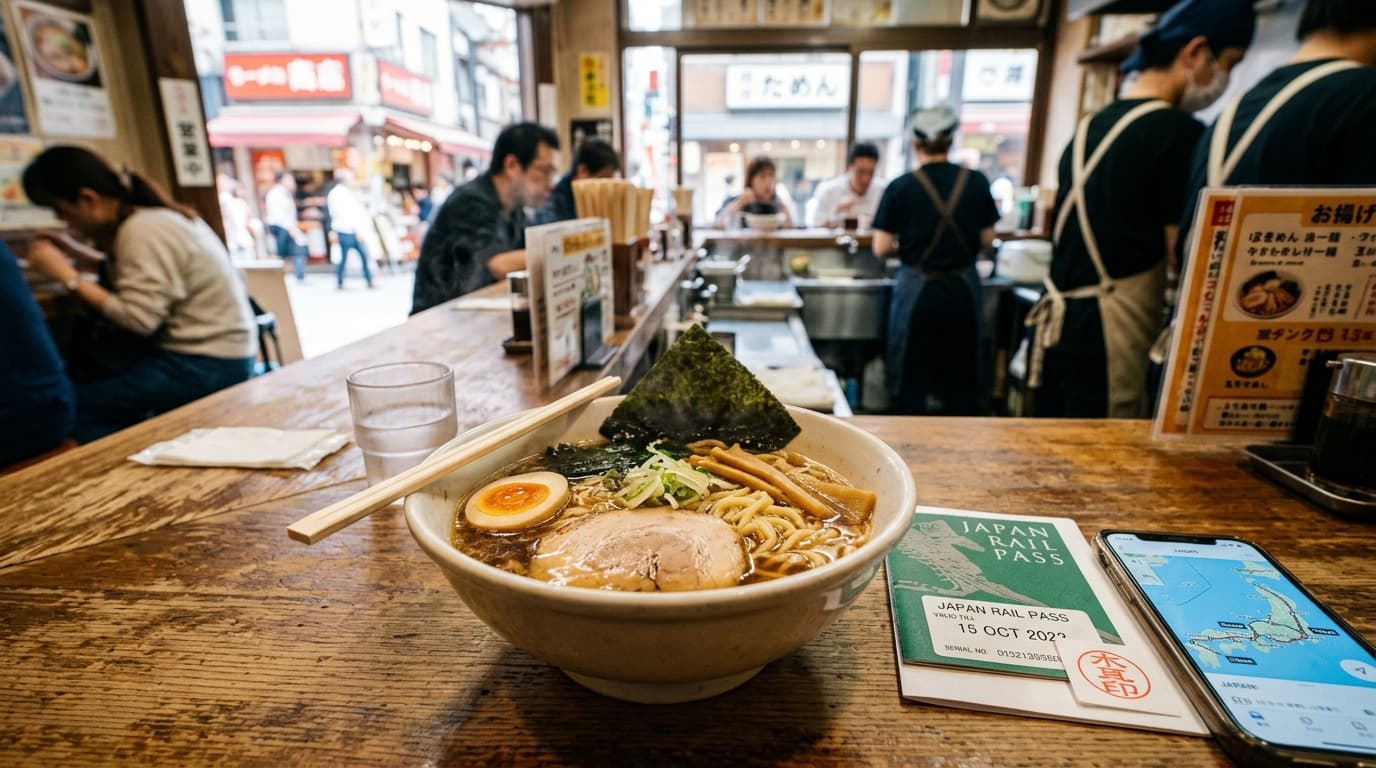
Japan on a Budget: How to Travel for Under $100/Day
Japan on a budget is entirely achievable. This guide breaks down real daily costs for accommodation, food, transport, and activities -- with a clear path to staying under $100/day.
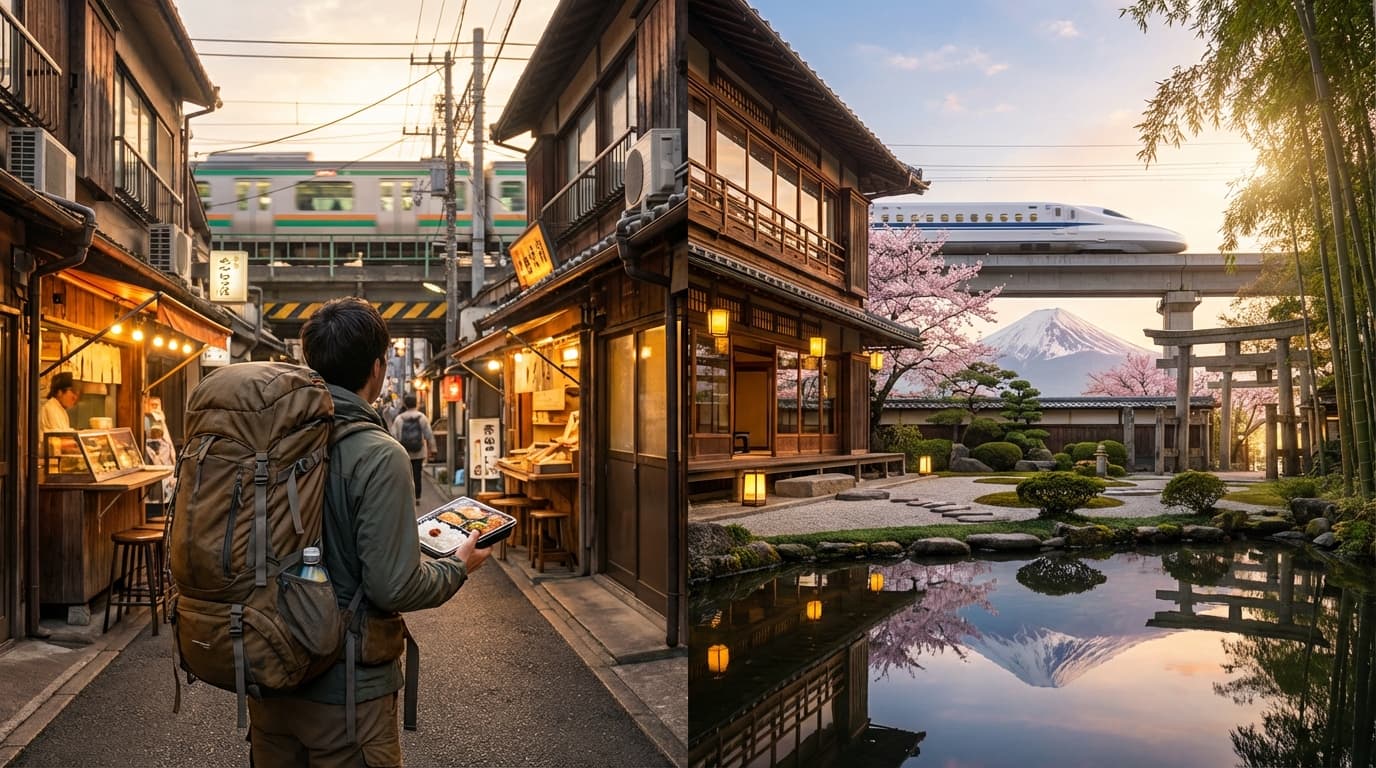
Japan Budget vs Luxury Travel: What's Worth Splurging On
Real costs for budget and luxury Japan travel. Save on food, splurge on experiences. Exact prices in JPY and USD with sample day budgets.

Japan in Peak Season vs Low Season: Honest Comparison
Peak vs low season in Japan: crowds, costs, weather, and festivals compared. Plan smarter with honest pros and cons for each season.
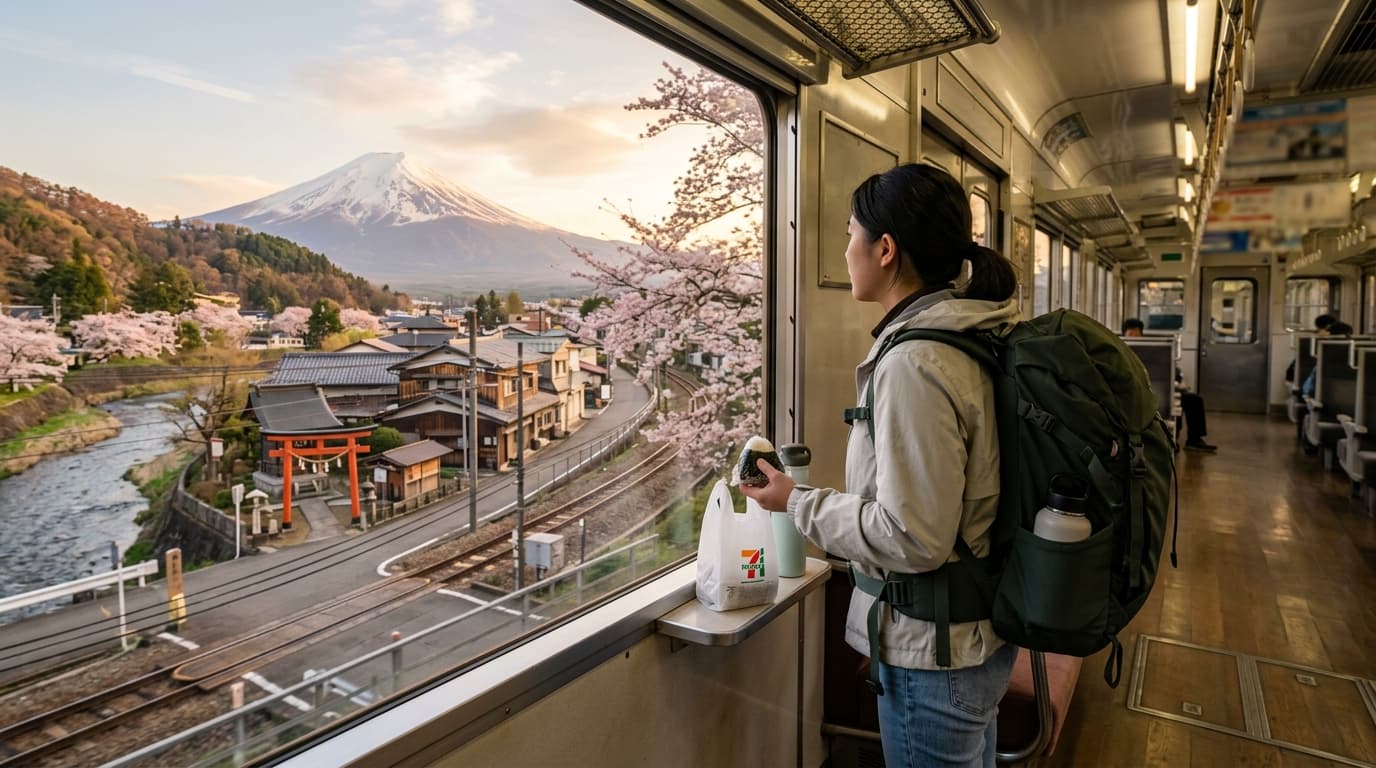
Japan on $50 Per Day: A Realistic Budget Travel Guide
Travel Japan on $50/day with our realistic budget guide. Exact costs in JPY/USD, sample day budgets, and insider money-saving tips.
Plan Your Japan Trip
Book hotels, transport, activities, and get connected with an eSIM
Some links are affiliate links. We may earn a commission at no extra cost to you.