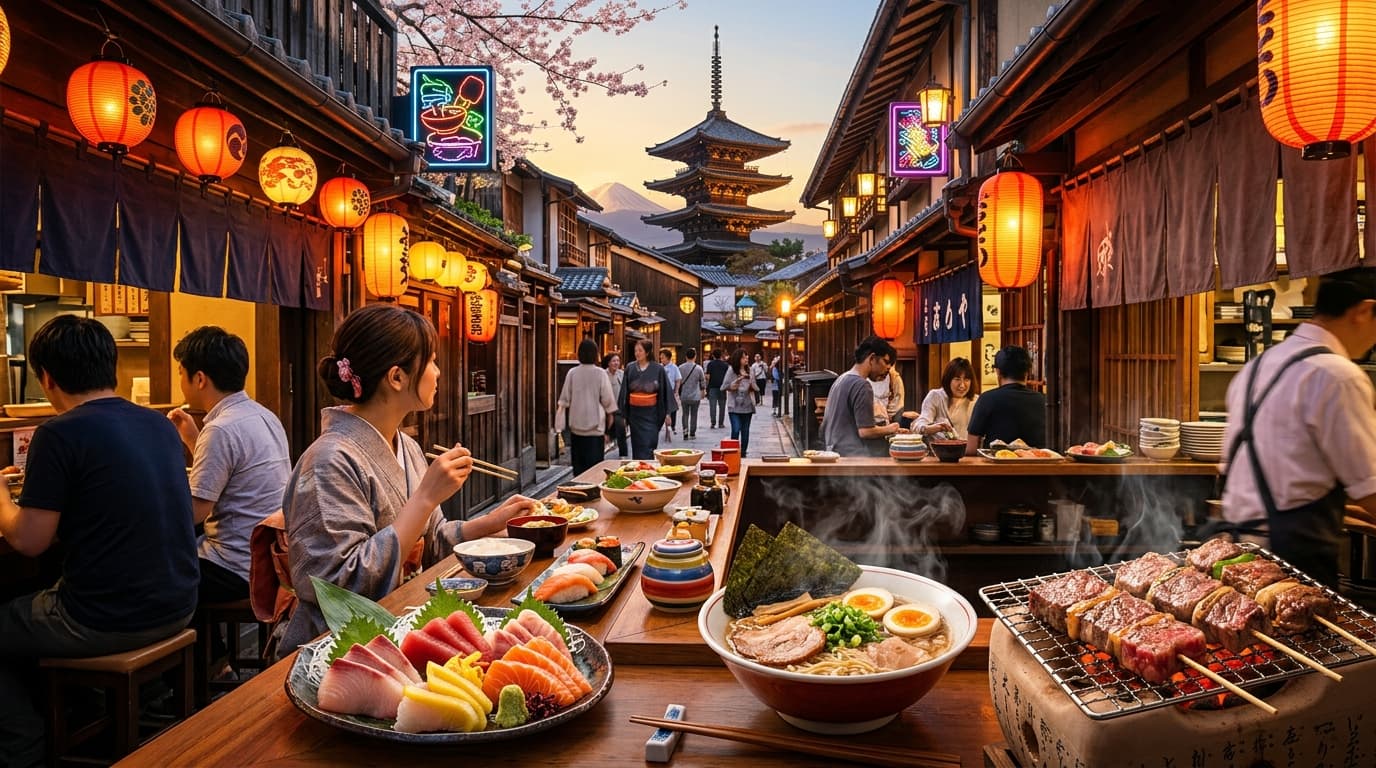
Sink your teeth into one of Japan's most prized culinary treasures: wagyu beef, a marbled delicacy that commands premium prices and devoted followers worldwide. But here's the thing—eating authentic wagyu in Japan is a completely different experience than what you'll find abroad, and knowing where to go can mean the difference between a transcendent meal and an overpriced tourist trap.
Key Takeaways
| Question | Answer |
|---|---|
| What is wagyu beef? | Japanese cattle bred for intense marbling (intramuscular fat), graded A1-A5 with A5 being the highest quality |
| How much does it cost? | ¥3,000–¥15,000+ ($20–$100+) per meal depending on grade and restaurant type |
| Where is the best wagyu? | Kobe (Hyogo Prefecture), Matsusaka (Mie Prefecture), and Takayama (Gifu Prefecture) are the three most famous regions |
| How do I order like a local? | Ask for the grade (A5 is best), cooking method (yakiniku or sukiyaki), and portion size; let the chef recommend |
| Should I book in advance? | Yes—top-tier restaurants require reservations weeks ahead; casual yakiniku spots accept walk-ins |
| Is it worth the splurge? | Absolutely—A5 wagyu is a once-in-a-lifetime experience; even mid-range wagyu offers exceptional quality |
Some links in this article are affiliate links — if you book through them, we earn a small commission at no extra cost to you. This helps us keep go2-japan.com free and up to date.
1. Understanding Wagyu: What Makes It Special
Wagyu beef isn't just expensive meat—it's a product of centuries of selective breeding, meticulous animal husbandry, and strict grading standards that set it apart from every other beef in the world. The word "wagyu" literally means "Japanese cow," but the reality is far more nuanced. These cattle are raised with extraordinary care, often fed specialized diets that include beer and sake to encourage fat marbling, and their stress levels are carefully managed because tension affects meat quality.
The defining characteristic of wagyu is its marbling—those delicate white streaks of intramuscular fat that run through the meat. When we visited a wagyu farm in Hyogo Prefecture, the farmer explained that this fat has a lower melting point than regular beef fat, which means it literally melts on your tongue at body temperature. It's not just richness; it's a textural and flavor experience that transforms how you understand beef.
The Grading System Explained
Japan's beef grading system uses two components: the yield grade (A, B, or C) and the quality grade (1–5). An A5 wagyu means the carcass has the highest yield of usable meat AND the highest quality rating for marbling, color, firmness, and fat quality. This is the holy grail. When you see A5 on a menu, you're looking at the top 2–3% of all Japanese beef produced. The grading is done by official inspectors using the Japanese Beef Marbling Standard (BMS), which rates fat distribution on a scale of 1–12.
Did You Know? Only about 3% of Japanese beef receives an A5 grade. The rest falls into A4, A3, or lower categories, which are still excellent but significantly less marbled.
Source: Japanese Beef Marbling Standard
Why Japanese Wagyu Costs More Than Other Beef
The price premium isn't arbitrary—it reflects genuine differences in production. Japanese cattle are typically raised for 28–32 months (versus 18–24 months for most beef cattle), and the feed costs alone are substantial. A single A5 wagyu steer can cost a farmer ¥2–3 million ($13,000–$20,000) to raise. When that animal is slaughtered, the butcher gets maybe 60–70% usable meat, so the per-kilogram cost is astronomical. Add restaurant overhead, the skill required to cook it properly, and the prestige factor, and suddenly a ¥15,000 plate makes economic sense.
2. The Three Pillars of Japanese Wagyu: Kobe, Matsusaka, and Takayama
Japan has dozens of regional wagyu brands, but three stand above the rest in international reputation and quality: Kobe beef, Matsusaka beef, and Takayama beef. Each has its own character, terroir, and devoted following. Understanding the differences helps you choose where to splurge.
Kobe Beef: The Most Famous
Kobe beef comes from Tajima cattle raised in Hyogo Prefecture, and it's the most recognized wagyu globally—partly because it's been exported longer than other brands, and partly because it genuinely deserves the hype. Kobe beef must meet strict criteria: the cattle must be born and raised in Hyogo, slaughtered in designated facilities, and achieve a BMS rating of 6 or higher. The meat has a distinctive soft texture and buttery flavor that comes from the specific genetics of Tajima cattle and the mineral-rich water and forage of the Hyogo region.
During our time in Kobe, we discovered that the city's steakhouses and yakiniku restaurants are temples to this beef. The most famous establishments have waiting lists months long, but even mid-range restaurants in the Motomachi and Sannomiya districts serve legitimate Kobe beef at more accessible prices. The key is understanding that "Kobe beef" on a menu in Tokyo or Osaka might not actually be certified Kobe—it could be a different wagyu or even a blend. Always ask for certification.
Top Kobe Dining Areas:
- Motomachi district: Historic neighborhood with established steakhouses and yakiniku spots
- Sannomiya station area: More casual options, easier walk-ins, good for mid-range wagyu
- Kitano-cho: Upscale dining with views; book ahead
Matsusaka Beef: The Underrated Champion
If Kobe is the celebrity of wagyu, Matsusaka is the connoisseur's choice. Produced in Mie Prefecture (about 90 minutes from Osaka by train), Matsusaka beef comes from Tajima cattle that are raised longer than Kobe cattle—often 28–32 months—which allows for even more fat marbling. Some beef experts argue that top-grade Matsusaka actually surpasses Kobe in marbling intensity and flavor complexity.
The town of Matsusaka itself is small and charming, with several dedicated wagyu restaurants that source directly from local ranches. Prices here are often 20–30% lower than equivalent Kobe restaurants in major cities, and the quality is exceptional. We found that booking a table at a Matsusaka restaurant and making it a day trip from Osaka or Kyoto is one of Japan's best food experiences—you get world-class beef, a quieter atmosphere, and better value.
Takayama Beef: The Mountain Secret
Takayama beef comes from the Hida region in Gifu Prefecture, in the Japanese Alps. It's less internationally famous than Kobe or Matsusaka, but locals and serious beef enthusiasts know it's exceptional. The cattle are raised in the cool mountain climate, and the meat has a slightly leaner profile than Kobe while maintaining excellent marbling. Takayama beef is particularly popular in sukiyaki and shabu-shabu preparations.
The town of Takayama is worth visiting for its historic merchant houses and sake breweries anyway, so adding a wagyu meal makes it a perfect culinary pilgrimage. Restaurants here are less crowded than Kobe establishments, and you'll often find English-speaking staff accustomed to international visitors.
3. How to Order Wagyu Like a Local
Walking into a high-end wagyu restaurant without knowing the basics can be intimidating. Here's what locals know and what will make your experience infinitely better.
Understanding Cooking Methods
The two primary ways to eat wagyu in Japan are yakiniku (grilled at your table) and sukiyaki (simmered in broth). Each method showcases the beef differently. Yakiniku is theatrical and interactive—you cook thin slices of meat on a hot griddle or grill, dip them in sauce (usually a soy-based mixture), and eat immediately. The high heat caramelizes the fat, creating an incredible crust while the interior stays tender. Sukiyaki is more elegant and meditative: thin slices are cooked in a shallow pot with broth, vegetables, and a sweet-savory sauce, then dipped in raw egg before eating.
There's also teppanyaki (cooked on an iron griddle by a chef in front of you) and shabu-shabu (hot pot with paper-thin slices), though these are less common for premium wagyu. When we dined at a Kobe yakiniku restaurant, our server explained that the cooking method depends on the cut: ribeye and sirloin are best for yakiniku, while tenderloin works beautifully in sukiyaki. Ask your server for a recommendation based on the specific cut available that day.
What to Ask Your Server
Grade and origin: Always confirm the grade (A5, A4, etc.) and whether it's certified Kobe, Matsusaka, or another brand. If the menu just says "wagyu" without specifics, it's likely a lower-grade wagyu or a blend—not necessarily bad, but you should know what you're paying for.
Cut and weight: Wagyu portions are typically 80–150g (3–5 oz) per person, which is smaller than you might expect. This is intentional—the richness means you eat less. Ask how many grams you're getting.
Sauce options: Most yakiniku restaurants offer multiple dipping sauces. The classic is a soy-based sauce with citrus, but some places offer miso, ponzu, or even no sauce (to taste the beef pure). For sukiyaki, the restaurant usually provides a house sauce, but you can ask for variations.
Timing: If you're doing yakiniku, ask the server to explain the cooking time for each piece—usually just 30 seconds to 2 minutes per side. Overcooking wagyu is a tragedy; the server will help you get it right.
Did You Know? The Japanese Wagyu Association estimates that authentic A5 wagyu accounts for less than 3% of all beef consumed in Japan, making it genuinely rare even domestically.
Source: Kobe Beef Marketing & Distribution Promotion Association
4. Regional Wagyu Varieties Beyond the Big Three
Japan produces exceptional wagyu in regions you've probably never heard of, and exploring these lesser-known brands is part of the adventure. Each region's cattle and raising practices create distinct flavor profiles.
Omi Beef and Shiga Prefecture
Omi beef, from Shiga Prefecture near Kyoto, is one of Japan's oldest wagyu brands—it's been documented since the 1600s. The cattle are raised on the shores of Lake Biwa, and the meat has a slightly firmer texture than Kobe while maintaining excellent marbling. Omi beef is particularly popular in sukiyaki, and if you're visiting Kyoto, it's worth seeking out a dedicated Omi beef restaurant in the Gion district.
Hida Beef and Gifu Prefecture
Beyond Takayama, the broader Hida region produces exceptional beef. Hida beef must meet strict criteria similar to Kobe beef, and the cooler mountain climate produces meat with a distinctive umami depth. This is the beef of choice for sukiyaki in the region, and local restaurants often serve it with miso-based broths that complement the beef's subtle flavors.
Yonezawa Beef and Yamagata Prefecture
Yonezawa beef comes from the Yamagata region in northeastern Honshu, and it's gaining international recognition. The cattle are raised in a cooler climate, which produces meat with excellent marbling and a slightly leaner profile than Kobe. Yonezawa beef is particularly prized for teppanyaki and yakiniku, and the town of Yonezawa has several dedicated restaurants.
Regional Wagyu Comparison:
| Wagyu Type | Origin | Best For | Flavor Profile | Typical Price (per 100g) |
|---|---|---|---|---|
| Kobe Beef | Hyogo | Yakiniku, steaks | Buttery, soft, delicate | ¥3,000–¥5,000 |
| Matsusaka Beef | Mie | Yakiniku, sukiyaki | Rich, complex, intense marbling | ¥2,500–¥4,500 |
| Takayama Beef | Gifu | Sukiyaki, shabu-shabu | Umami-forward, lean-marbled balance | ¥2,000–¥3,500 |
| Omi Beef | Shiga | Sukiyaki, kaiseki | Firm texture, deep umami | ¥2,200–¥3,800 |
| Yonezawa Beef | Yamagata | Teppanyaki, yakiniku | Balanced, clean finish | ¥2,000–¥3,500 |
5. Where to Eat Wagyu in Tokyo
Tokyo has the highest concentration of wagyu restaurants in Japan, ranging from Michelin-starred establishments to casual yakiniku joints. The challenge isn't finding wagyu—it's finding authentic, high-quality wagyu at a price that makes sense.
High-End Steakhouses and Kaiseki
Tokyo's most prestigious wagyu restaurants are concentrated in Ginza, Roppongi, and Akasaka. These are typically omakase-style establishments where you sit at a counter and the chef prepares each course in front of you. Expect to spend ¥15,000–¥30,000 ($100–$200) per person, and book at least 2–3 weeks in advance. These restaurants source the finest A5 beef and often feature rare cuts you won't find elsewhere. The experience is as much about the chef's skill and presentation as the beef itself.
Mid-Range Yakiniku Restaurants
For better value, Tokyo's mid-range yakiniku restaurants in areas like Shibuya, Shinjuku, and Harajuku offer legitimate A4 and A5 wagyu at ¥5,000–¥10,000 per person. These are more casual—you cook the meat yourself at your table—but the quality is excellent. Many of these restaurants have English menus and staff accustomed to international guests. Walk-ins are often possible during off-peak hours (before 6 PM or after 9 PM on weekdays).
Budget-Friendly Options
Even in Tokyo, you can eat wagyu for under ¥3,000 per person at casual yakiniku chains and smaller neighborhood restaurants. The beef might be A3 or lower grade, but it's still genuine wagyu and represents exceptional value. These spots are perfect for experiencing the category without the premium price tag.
During our time living in Tokyo, we discovered that asking locals for recommendations yielded far better results than guidebooks. Neighborhood yakiniku spots in areas like Ebisu and Meguro often have loyal followings and serve excellent beef at reasonable prices.
6. Dining in Kobe: The Epicenter of Wagyu Culture
Kobe is the pilgrimage site for wagyu devotees, and spending a day or two here eating your way through the city's beef culture is non-negotiable for serious food travelers. The city has over 100 restaurants specializing in Kobe beef, and the quality is remarkably consistent.
Motomachi: Historic Steakhouses
The Motomachi district is the heart of Kobe's beef culture. This is where you'll find the oldest, most established steakhouses—some dating back to the Meiji era. These restaurants are formal, often require reservations weeks in advance, and serve A5 Kobe beef in elegant presentations. Expect to spend ¥10,000–¥20,000 per person, but you're paying for history, expertise, and the finest beef available.
Sannomiya: Accessible Yakiniku
The Sannomiya area near the train station has more casual yakiniku restaurants that serve legitimate Kobe beef at more accessible prices. These spots are perfect if you want to experience Kobe beef without the formal atmosphere or the premium price tag. Many accept walk-ins, especially during lunch hours. Prices typically range from ¥4,000–¥8,000 per person.
Timing and Logistics
If you're visiting Kobe as a day trip from Osaka or Kyoto, plan to arrive by early afternoon. Lunch service typically runs from 11:30 AM to 2 PM, and dinner from 5 PM to 10 PM. Mid-range restaurants are easier to access during lunch, while high-end establishments are better for dinner. The Kobe beef restaurants are concentrated within walking distance of Motomachi and Sannomiya stations, making navigation straightforward.
7. Making the Pilgrimage to Matsusaka
Matsusaka is a small town in Mie Prefecture that most tourists never visit, which is precisely why it's worth the journey. The town is home to some of Japan's finest wagyu restaurants, and the prices are noticeably lower than equivalent establishments in Kobe or Tokyo.
Getting There and Timing
From Osaka, take the Kintetsu Limited Express train toward Nagoya and get off at Matsusaka Station (about 90 minutes, ¥2,500–¥3,000). The town's wagyu restaurants are within walking distance of the station. Plan for a full day: arrive by late morning, explore the town's historic merchant houses and sake breweries, have lunch or early dinner at a wagyu restaurant, and return to Osaka or Kyoto by evening.
Restaurant Characteristics
Matsusaka's wagyu restaurants tend to be smaller and more intimate than their Kobe counterparts. Many are family-run establishments where the owner sources beef directly from local ranches. This means you're often eating beef that was raised within 20–30 km of where you're sitting. The quality is exceptional, and the personal connection between restaurant and producer is palpable.
Prices at Matsusaka restaurants typically range from ¥3,000–¥8,000 per person for lunch and ¥5,000–¥12,000 for dinner—significantly less than comparable experiences in Kobe or Tokyo. Reservations are recommended for dinner but not always necessary for lunch.
Why Matsusaka Beef Matters
Matsusaka cattle are often raised longer than Kobe cattle (sometimes 32+ months), which allows for even more fat marbling. Some beef experts argue that top-grade Matsusaka actually surpasses Kobe in marbling intensity. The beef has a slightly sweeter flavor profile than Kobe, which some prefer. If you're serious about wagyu, comparing Kobe and Matsusaka side-by-side is an enlightening experience.
8. Wagyu in Kyoto and the Kansai Region
The Kansai region is wagyu country, and Kyoto offers excellent wagyu dining in a more refined context than you'll find in Kobe. Many of Kyoto's high-end kaiseki restaurants feature wagyu as a course within a larger meal, which provides a different experience than dedicated wagyu restaurants.
Kaiseki Restaurants Featuring Wagyu
Kyoto's kaiseki tradition means that wagyu is often incorporated into multi-course meals rather than served as the main focus. This is actually an advantage—you get to taste the beef in the context of seasonal vegetables, broths, and other elements that highlight different aspects of its flavor. Expect to spend ¥10,000–¥20,000 per person at a kaiseki restaurant featuring wagyu.
Gion District Yakiniku
The Gion district has several excellent yakiniku restaurants serving Omi beef and other regional wagyu. These are more casual than kaiseki establishments but still maintain high standards. Prices range from ¥5,000–¥10,000 per person, and many accept reservations or walk-ins.
Combining Wagyu with Other Kyoto Experiences
One of the advantages of eating wagyu in Kyoto is that you can combine it with visits to temples, gardens, and other cultural sites. Our team spent a morning visiting the Fushimi Inari shrine, then had a late lunch of Omi beef sukiyaki in Gion before exploring the geisha district in the evening. This kind of integrated food and culture experience is uniquely possible in Kyoto.
9. Understanding Wagyu Pricing and Value
Wagyu prices vary wildly depending on grade, cut, restaurant type, and location. Understanding what drives these prices helps you make informed decisions about where to splurge and where you can save.
Price Breakdown by Grade and Location
An A5 wagyu meal in a high-end Tokyo steakhouse might cost ¥20,000–¥30,000 per person. The same A5 beef at a mid-range yakiniku restaurant in the same city might be ¥8,000–¥12,000. In Matsusaka or smaller towns, A5 wagyu might be ¥6,000–¥10,000. These differences reflect restaurant overhead, prestige, and location rather than beef quality.
A4 wagyu is typically 30–40% cheaper than A5 but still exceptional. If you're budget-conscious, A4 represents outstanding value—the difference in quality between A4 and A5 is noticeable but not as dramatic as the price difference.
A3 wagyu is genuinely good beef at a fraction of the cost. If you're eating wagyu for the first time or want to experience it without a major splurge, A3 is a smart choice. You'll still taste the characteristic marbling and tenderness that makes wagyu special.
Best Value Strategies
Lunch over dinner: Most wagyu restaurants charge 20–30% less for lunch than dinner. If you're flexible on timing, lunch offers better value.
Smaller portions: A 100g portion of A5 beef is often more satisfying than a 150g portion of A3 beef. Prioritize quality over quantity.
Regional restaurants over major cities: Eating wagyu in Matsusaka or Takayama is typically 20–30% cheaper than eating equivalent beef in Tokyo or Kobe.
Yakiniku over steakhouses: Casual yakiniku restaurants are typically 40–50% cheaper than formal steakhouses, and the beef quality is often comparable.
Lunch sets: Many restaurants offer lunch sets that include wagyu, rice, soup, and vegetables for a fixed price—often better value than ordering à la carte.
Did You Know? A single A5 wagyu steer can cost a farmer ¥2–3 million ($13,000–$20,000) to raise over 28–32 months, which explains why the retail price is so high.
10. Practical Tips for Eating Wagyu in Japan
Booking and Reservations
High-end wagyu restaurants in major cities require reservations 2–4 weeks in advance. If you don't speak Japanese, ask your hotel concierge to make the reservation, or use a service like Tabelog (Japan's largest restaurant review site) which has English options and booking capabilities. Mid-range yakiniku restaurants often accept walk-ins but reservations are safer during peak hours (6–8 PM).
Language and Communication
English menus are common in major cities but rare in smaller towns. Download Google Translate's offline feature before you go, and don't hesitate to ask staff for help. Most wagyu restaurants are accustomed to international guests and will make an effort to explain options. Pointing at other diners' plates is also a perfectly acceptable way to order in Japan.
Dress Code
High-end steakhouses and kaiseki restaurants expect smart casual at minimum—no athletic wear or beachwear. Mid-range yakiniku restaurants are casual; jeans and a clean shirt are fine. If you're unsure, ask when you make your reservation.
Dietary Restrictions
Wagyu restaurants can usually accommodate vegetarians by substituting vegetables for the meat, but it defeats the purpose. If you're vegan or have other restrictions, call ahead to discuss options. Most restaurants are helpful and will do their best to accommodate.
Tipping
Japan doesn't have a tipping culture. Don't tip at wagyu restaurants or anywhere else in Japan—it's not expected and can actually be considered rude. The price on the menu is what you pay.
Payment Methods
Major restaurants in cities accept credit cards, but some smaller establishments are cash-only. Always carry yen, especially when visiting smaller towns. Many restaurants don't accept foreign credit cards, so having cash is essential.
Frequently Asked Questions
What's the difference between wagyu and Kobe beef?
All Kobe beef is wagyu, but not all wagyu is Kobe beef. Kobe beef comes specifically from Tajima cattle raised in Hyogo Prefecture and must meet strict criteria including BMS rating of 6 or higher. Other wagyu comes from different regions and cattle breeds. Kobe beef is typically more expensive and has a distinctive soft texture, but high-grade Matsusaka or other regional wagyu can be equally excellent.
Is A5 wagyu worth the premium over A4?
A5 is noticeably more marbled and has a richer mouthfeel than A4, but the difference is less dramatic than the price difference. If you're eating wagyu for the first time, A4 offers exceptional quality at better value. If you're a serious beef enthusiast or treating yourself to a special occasion, A5 is worth the splurge.
Can I buy wagyu to cook at home?
Yes, many department stores in Japan sell wagyu, and you can buy it to cook in your hotel room or Airbnb. However, the experience is diminished without proper equipment and expertise. Restaurant-cooked wagyu is worth the premium—the chef's skill in temperature control and timing is crucial to the final result.
What's the best way to cook wagyu at home if I buy it?
For yakiniku-style cooking, use a hot griddle or grill and cook each slice for 30 seconds to 2 minutes per side. For sukiyaki, use a shallow pot with broth and cook slices for just a few seconds. The key is not overcooking—wagyu's high fat content means it cooks quickly and becomes tough if overdone. Many home cooks undercook it slightly, which is better than overcooking.
Is wagyu from other countries (like Australia or the US) comparable to Japanese wagyu?
No. While other countries produce excellent wagyu cattle, Japanese wagyu has unique characteristics due to selective breeding over centuries and the specific terroir of Japanese regions. Japanese A5 wagyu is distinctly superior to wagyu produced elsewhere, though Australian and American wagyu can be excellent in their own right and at lower prices.
How much wagyu should I eat in one meal?
A typical serving is 80–150g (3–5 oz) per person, which might seem small but is appropriate for the richness. If you're doing yakiniku, you might eat 3–5 slices over the course of an hour. If you're doing sukiyaki, you might eat 150–200g total with vegetables and broth. The richness means you eat less than you would with regular beef.
What's the best time of year to eat wagyu in Japan?
Wagyu is available year-round, but autumn and winter (September–February) are traditionally considered the best seasons. The cattle are at their peak condition after summer grazing, and the cooler weather makes hot pot dishes (sukiyaki, shabu-shabu) more appealing. That said, summer yakiniku is also excellent—there's no bad time to eat wagyu.
Conclusion
Eating wagyu beef in Japan is more than just a meal—it's a window into Japanese agricultural tradition, craftsmanship, and the pursuit of perfection. Whether you're splurging on A5 beef in a Kobe steakhouse or discovering regional varieties in a small-town yakiniku restaurant, you're experiencing one of the world's finest foods in its place of origin.
Start with our complete Japanese food guide to explore other culinary treasures, or dive deeper into regional specialties with our Osaka travel guide and Kyoto travel guide. And if you're planning a broader Japan trip, check out our Japan travel guide 2026 for comprehensive planning advice.
The Go2Japan team has spent years exploring Japan's food scene, and we can confidently say that wagyu represents the pinnacle of Japanese beef culture. Book your reservation, arrive with an open mind, and prepare for a meal you'll remember for years.
Sources & References
This article is based on first-hand experience and verified with the following official sources:

Go2Japan Team
Exploring Japan since 2021 | 35+ prefectures visited | Updated monthly
We are a team of travel writers and Japan enthusiasts who explore the country year-round. Our guides are based on first-hand experience, local knowledge, and verified official sources.
More about us →People Also Read

What to Eat in Japan: Local Food Guide for Travelers
Discover what to eat in Japan with our comprehensive local food guide. Learn about regional dishes, where to find the best versions, and how to order like a local.

Vegetarian and Vegan Food in Japan: Practical Guide
Navigate vegetarian and vegan dining in Japan with our practical guide to Buddhist cuisine, regional specialties, and how to order like a local.
Best Sushi Restaurants and Markets in Tokyo You Must Visit
Discover Tokyo's best sushi restaurants and fish markets. Expert guide to Michelin-starred venues, local favorites, and how to eat like a pro.

Japan in Peak Season vs Low Season: Honest Comparison
Peak vs low season in Japan: crowds, costs, weather, and festivals compared. Plan smarter with honest pros and cons for each season.
Plan Your Japan Trip
Book hotels, transport, activities, and get connected with an eSIM
Some links are affiliate links. We may earn a commission at no extra cost to you.