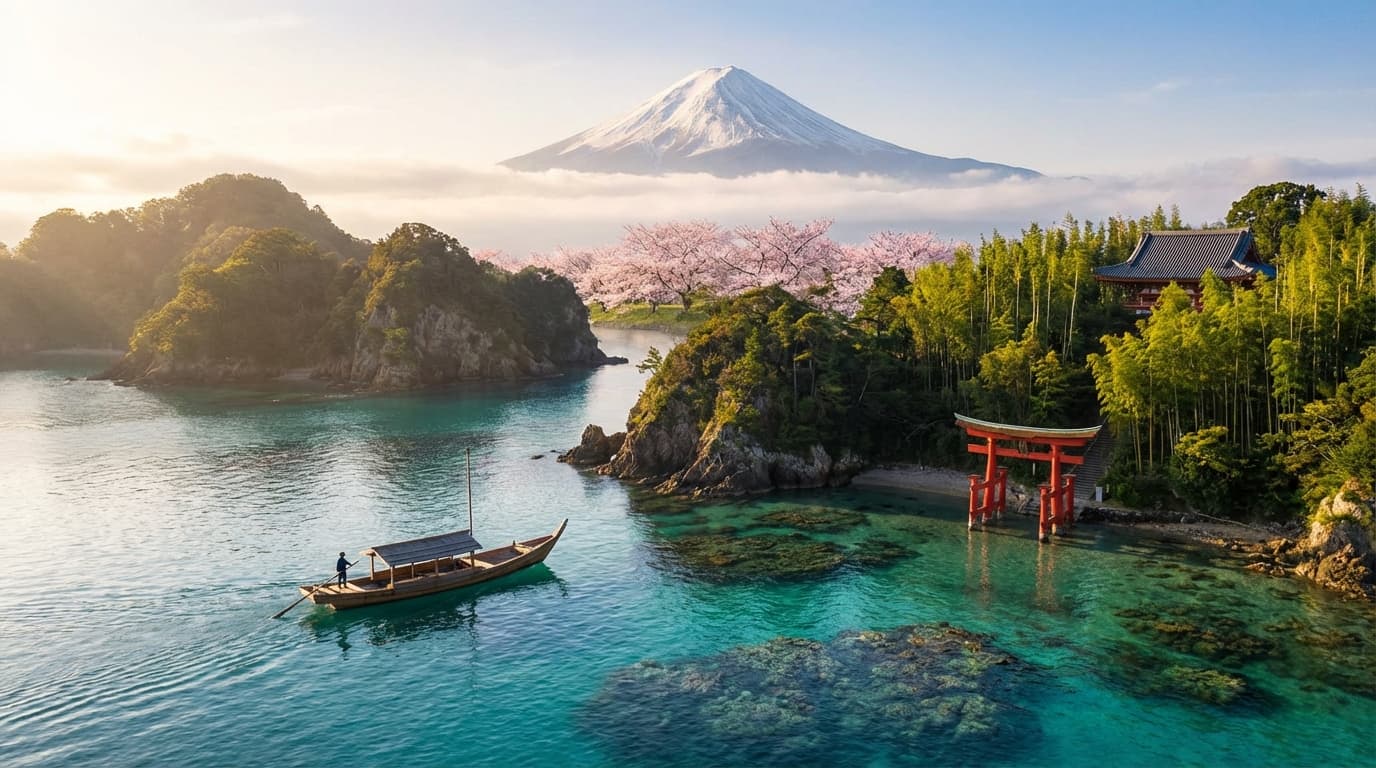
Imagine trading snow-capped mountains and neon-lit cities for crystalline turquoise waters, white-sand beaches, and coral reefs teeming with tropical fish. Island hopping in Okinawa is Japan's best-kept secret—a subtropical escape where you can snorkel with sea turtles in the morning, kayak through mangrove forests by afternoon, and watch the sunset from a private beach. Unlike the crowded beaches of mainland Japan, Okinawa's scattered islands offer genuine tropical adventure without leaving the country.
Key Takeaways
| Question | Answer |
|---|---|
| What is the best time to visit? | April–May and September–November; avoid typhoon season (June–September) and peak summer crowds (July–August) |
| How much does it cost? | ¥8,000–¥15,000 ($55–$100 USD) per person for full-day island tours; accommodation ¥5,000–¥20,000 per night |
| How do I get there? | Fly into Naha (OKA) from Tokyo or other major cities; ferries connect main island to outer islands |
| Is it safe? | Very safe; excellent infrastructure and English signage in tourist areas |
| What should I book in advance? | Ferry tickets (especially weekends), snorkeling tours, and accommodation during peak seasons |
| Do I need a car? | Recommended for flexibility; rental cars available at airport from ¥4,000–¥8,000/day |
| What's the water temperature? | 20°C (68°F) in winter; 28°C (82°F) in summer; wetsuit recommended year-round |
1. Understanding Okinawa's Island Geography
Okinawa Prefecture comprises 160 islands stretching across the East China Sea, though only about 50 are inhabited. The main island of Okinawa is the hub, with the capital city of Naha serving as your gateway. From here, you can reach nearby islands like Kerama Islands (30–90 minutes by ferry), Zamami, Tokashiki, and Ie Island within hours. The Yaeyama Islands further south—Ishigaki and Iriomote—offer more remote, pristine experiences but require longer travel times.
When we explored Okinawa, we discovered that island hopping doesn't mean you need to stay on every island. Most visitors base themselves in Naha or a beachside town and take day trips to surrounding islands. This approach balances convenience with adventure. The Kerama Islands, just 30 minutes from Naha by fast ferry, are the most accessible and offer world-class snorkeling without the long commute.
Ferry Networks and Transport Options
The primary ferry operator connecting Okinawa's islands is the Kerama Ferry Company, which runs multiple daily departures from Naha's Naha Port. Journey times vary: Zamami Island takes 50–90 minutes depending on the ferry type, while Tokashiki Island is 35–70 minutes away. High-speed ferries cost more but cut travel time roughly in half.
Ferry cost comparison:
- Standard ferry to Zamami: ¥2,070 one-way ($14 USD)
- High-speed ferry to Zamami: ¥3,070 one-way ($21 USD)
- Return tickets: Approximately 10% discount on round-trip bookings
Island Accessibility and Infrastructure
Zamami and Tokashiki have basic infrastructure—convenience stores, small restaurants, and guesthouses—but don't expect the amenities of Naha. Ie Island is even more remote and quieter, ideal if you want to escape tourist crowds entirely. During our time in Okinawa, we found that smaller islands had limited English signage, so downloading offline maps and carrying a translation app proved invaluable.
Did You Know? Okinawa's islands are home to the world's highest concentration of centenarians. The local diet—rich in vegetables, fish, and minimal processed foods—contributes to this longevity.
Source: Japan Times
2. Best Snorkeling and Diving Experiences
Snorkeling in Okinawa rivals destinations like the Maldives or Great Barrier Reef, yet costs a fraction of the price. The Kerama Islands are Japan's premier snorkeling destination, with coral gardens, sea turtles, and schools of tropical fish visible within meters of the shore. Visibility typically ranges from 20–40 meters, depending on the season.
Zamami Island's Furuzamami Beach is legendary among snorkelers. The coral reef starts just 10 meters from shore, and encounters with sea turtles are common. Tokashiki Island offers similar experiences with slightly fewer crowds. Both islands have rental shops offering snorkeling gear (¥1,000–¥2,000 per day) if you don't want to bring your own.
Guided Snorkeling Tours vs. Self-Guided Adventures
Guided snorkeling tours typically cost ¥8,000–¥12,000 per person and include transportation from Naha, snorkeling equipment, and a guide who knows where the turtles congregate. Tour operators like Kerama Snorkel Tours and Okinawa Snorkeling Club offer reputable services with English-speaking guides. The advantage is safety, local knowledge, and the guarantee of seeing marine life.
Self-guided snorkeling is cheaper (just ferry cost + rental gear) but requires more planning. You'll need to research tide times, currents, and safe entry points. During our visits, we found that even experienced snorkelers appreciated a guide's knowledge of seasonal patterns and best spots.
Popular snorkeling tour operators:
- Kerama Snorkel Tours: ¥10,000–¥12,000; includes lunch and hotel pickup
- Okinawa Snorkeling Club: ¥9,000–¥11,000; smaller groups, personalized service
- Naha-based day tours: ¥8,000–¥15,000; often include multiple islands and lunch
Diving for Certification and Advanced Divers
If snorkeling isn't enough, scuba diving opens up deeper reefs and larger marine species. Several operators offer PADI certification courses (¥40,000–¥60,000 for Open Water) and guided dives (¥12,000–¥18,000 per dive). The Kerama Islands have numerous dive sites suitable for beginners and advanced divers alike.
3. Beach Days and Relaxation
Not every moment in Okinawa needs to involve snorkeling or tours. The islands have stunning beaches perfect for swimming, sunbathing, and simply disconnecting. Furuzamami Beach on Zamami Island is the most famous—a crescent of white sand backed by pine trees, with calm, clear water ideal for families.
Tokashiki Island's Tokashiki Beach offers a quieter alternative with fewer day-trippers. Ie Island's beaches are even more secluded, attracting visitors seeking solitude. When we spent time on these islands, we noticed that even during peak season, beaches rarely felt crowded compared to mainland Japan.
Beach Facilities and Amenities
Furuzamami Beach has a small visitor center, rental shops, and a few restaurants. Showers and toilets are available. Peak season (July–August) brings crowds, but even then, the beach remains manageable. Tokashiki Beach has similar facilities but fewer vendors. Ie Island's beaches are more basic—bring supplies from the main island.
Beach day budget:
- Ferry: ¥2,000–¥3,000 round-trip
- Lunch: ¥1,500–¥3,000
- Snorkel rental: ¥1,000–¥2,000
- Total per person: ¥4,500–¥8,000 ($30–$55 USD)
4. Kayaking and Mangrove Exploration
Kayaking through Okinawa's mangrove forests is a unique experience you won't find elsewhere in Japan. The Nakijin River on the main island and several spots on the outer islands offer guided kayak tours through dense mangrove tunnels, where you might spot herons, kingfishers, and occasionally sea eagles.
Most kayak tours last 2–3 hours and cost ¥5,000–¥8,000 per person, including equipment and a guide. Tours typically depart in the morning or late afternoon to avoid midday heat. During our time exploring these waterways, we found the experience meditative—paddling silently through the mangroves, listening to bird calls, felt worlds away from Naha's bustle.
Kayaking Operators and Booking
Several Naha-based operators offer mangrove kayak tours with English-speaking guides. Tours are suitable for all fitness levels, though some require basic swimming ability. Equipment is provided, and no prior kayaking experience is necessary.
Popular kayaking tour operators:
- Okinawa Mangrove Kayak Tours: ¥6,000–¥7,500; includes guide and equipment
- Naha River Kayak Adventures: ¥5,500–¥7,000; morning and sunset tours available
- Private guides: ¥8,000–¥12,000 for small groups; more flexibility and personalization
5. Cultural Experiences and Local Villages
Beyond beaches and water activities, Okinawa's islands have distinct cultures shaped by centuries of trade and indigenous traditions. Zamami Village, the main settlement on Zamami Island, is a working fishing village where locals still practice traditional boat-building. Walking through the village, you'll see small shrines, family-run restaurants, and locals going about daily life largely unchanged for decades.
Tokashiki Village is similarly authentic, with a small museum documenting the island's WWII history and post-war recovery. Visiting these villages offers perspective on how islanders live beyond tourism. Many visitors skip the villages entirely, focusing only on beaches—a missed opportunity for genuine cultural connection.
Local Restaurants and Food Experiences
Island restaurants serve fresh seafood, local vegetables, and Okinawan specialties like goya champuru (bitter melon stir-fry) and soki soba (Okinawan noodle soup). Meals typically cost ¥1,500–¥3,000. Quality varies, but even simple island restaurants often source ingredients locally.
Dining recommendations:
- Zamami Village restaurants: Small family-run establishments; expect limited English but warm hospitality
- Tokashiki Village: Similar setup; fewer restaurants than Zamami
- Naha (main island): Hundreds of restaurants ranging from casual to upscale; English menus common
6. Seasonal Considerations and Weather Planning
Best seasons for island hopping are April–May (spring) and September–November (autumn). During these periods, water temperature is comfortable (20–24°C), weather is stable, and typhoon risk is minimal. Summer (July–August) is warm but crowded and carries typhoon risk. Winter (December–February) is mild but water temperature drops to 20°C, requiring a wetsuit for extended snorkeling.
Typhoon season officially runs June–September, with peak activity in August–September. During typhoon warnings, ferries may be cancelled, trapping you on an island. We recommend travel insurance and flexible booking during these months. Check the Japan Meteorological Agency's typhoon forecasts before booking.
Weather-Based Activity Planning
| Season | Water Temp | Weather | Best Activities | Crowds |
|---|---|---|---|---|
| April–May | 20–24°C | Stable, warm | Snorkeling, kayaking, beach days | Moderate |
| June–August | 26–28°C | Hot, typhoon risk | Swimming, diving (avoid June) | High |
| September–November | 22–26°C | Stable, warm | All water activities | Moderate |
| December–February | 18–20°C | Mild, dry | Snorkeling (with wetsuit), cultural visits | Low |
Did You Know? Okinawa receives more annual sunshine than any other Japanese prefecture—approximately 2,000 hours per year compared to Tokyo's 1,600 hours.
7. Accommodation Options Across Islands
Naha offers the widest range of accommodation, from budget hostels (¥3,000–¥5,000) to luxury resorts (¥30,000+). Staying in Naha gives you flexibility—day trips to islands without committing to island accommodation. However, staying overnight on an island immerses you in local culture and allows early-morning beach access before crowds arrive.
Island accommodation is more limited. Zamami and Tokashiki have guesthouses (¥6,000–¥12,000 per night), small hotels, and a few upscale options. Ie Island has fewer choices, making advance booking essential. Accommodation on islands tends to be simpler but offers authentic experiences—many guesthouses are family-run with home-cooked meals included.
Accommodation Comparison
| Location | Budget | Mid-Range | Luxury | Best For |
|---|---|---|---|---|
| Naha | ¥3,000–¥5,000 | ¥8,000–¥15,000 | ¥25,000+ | Convenience, variety, nightlife |
| Zamami Island | ¥6,000–¥8,000 | ¥10,000–¥15,000 | ¥18,000–¥25,000 | Island immersion, snorkeling access |
| Tokashiki Island | ¥5,500–¥8,000 | ¥9,000–¥14,000 | ¥16,000–¥22,000 | Quieter alternative, fewer crowds |
| Ie Island | ¥5,000–¥7,000 | ¥8,000–¥12,000 | Limited | Ultimate seclusion, authentic village life |
8. Getting to Okinawa and Inter-Island Transport
Most international visitors fly into Naha Airport (OKA), which has direct flights from Tokyo, Osaka, and other major Japanese cities. Flight time from Tokyo is approximately 2.5 hours. From the airport, it's a 30-minute taxi or bus ride to Naha Port, where ferries to outer islands depart.
Domestic flights within Japan are competitively priced. A round-trip Tokyo–Naha flight typically costs ¥15,000–¥30,000 ($100–$200 USD) if booked in advance. Budget airlines like Peach Aviation and Jetstar offer cheaper fares but with baggage restrictions.
Ferry Booking and Schedules
Ferry schedules are reliable and frequent. High-speed ferries to Zamami depart Naha Port multiple times daily (typically 8:30 AM, 11:00 AM, 2:00 PM, 5:00 PM). Standard ferries are slower but cheaper. During peak season (Golden Week in late April, summer vacation in August), ferries fill quickly—book 1–2 days in advance.
Ferry booking options:
- In-person: Naha Port ticket office (English-speaking staff available)
- Online: Kerama Ferry Company website (Japanese-language site; use Google Translate)
- Through hotels: Many Naha hotels can book ferries for guests
9. Budget Planning and Cost Breakdown
A realistic budget for island hopping in Okinawa depends on accommodation choices and activity preferences. Budget travelers can manage on ¥8,000–¥12,000 per day ($55–$80 USD); mid-range travelers should budget ¥15,000–¥25,000 ($100–$165 USD).
Sample 3-Day Island Hopping Itinerary Budget
Budget Option (Naha-based day trips):
- Accommodation (3 nights, budget hotel): ¥12,000
- Ferries (round-trip to Zamami): ¥6,000
- Snorkeling tour (1 day): ¥10,000
- Meals (¥2,000/day): ¥6,000
- Miscellaneous (tips, snacks, activities): ¥3,000
- Total: ¥37,000 ($250 USD) for 3 days
Mid-Range Option (1 night on island):
- Accommodation (2 nights Naha + 1 night Zamami): ¥28,000
- Ferries: ¥8,000
- Snorkeling tour (1 day): ¥10,000
- Meals: ¥9,000
- Miscellaneous: ¥5,000
- Total: ¥60,000 ($400 USD) for 3 days
10. Practical Tips and Common Mistakes to Avoid
Bring reef-safe sunscreen: Standard sunscreen damages coral reefs. Okinawa's islands depend on coral ecosystems—use reef-safe, mineral-based sunscreen only.
Don't underestimate ferry schedules: Ferries run on fixed schedules, and weather can cause cancellations. Plan flexibility into your itinerary, especially during typhoon season.
Rent a car for flexibility: If staying multiple days, a rental car (¥4,000–¥8,000/day) provides freedom to explore at your own pace. Driving is on the left side of the road, familiar to UK and Australian visitors but potentially challenging for others.
Learn basic Japanese phrases: English is less common on outer islands. Phrases like "arigatou gozaimasu" (thank you) and "sumimasen" (excuse me) go a long way.
Book accommodation in advance during peak season: April–May and October–November fill quickly. Booking 2–4 weeks ahead ensures better selection and prices.
Respect local customs: Island communities are small and tight-knit. Be respectful of local traditions, don't litter, and support local businesses rather than chain restaurants.
Did You Know? Okinawa has a unique indigenous culture distinct from mainland Japan. The Ryukyuan language, though endangered, is still spoken by older residents and represents a separate linguistic heritage.
Source: Lonely Planet Japan
Frequently Asked Questions
Is it safe to snorkel alone on Okinawa's islands?
Yes, snorkeling is generally safe, especially at established beaches like Furuzamami. However, we recommend snorkeling with a partner and checking tide times and currents beforehand. Guided tours are safer for first-time snorkelers or those unfamiliar with ocean conditions.
Can I visit multiple islands in one day?
Yes, though it's rushed. Most visitors do one island per day. A fast ferry to Zamami (30 minutes) leaves time for snorkeling and beach time before returning. Visiting two islands in one day is possible but leaves little time to relax.
What should I pack for island hopping?
Essentials: reef-safe sunscreen, rash guard or wetsuit, underwater camera, waterproof phone case, light clothing, hat, and insect repellent. Many items are available in Naha but harder to find on outer islands.
Are there vegetarian/vegan dining options?
Okinawa's cuisine is seafood-heavy. Vegetarian options exist but are limited on outer islands. Naha has more restaurants accommodating dietary restrictions. Consider eating before ferrying to islands or bringing snacks.
What's the best way to travel between Okinawa and other Japanese regions?
Fly from Naha Airport to major cities like Tokyo or Osaka. Flights are frequent and competitively priced. Alternatively, take a ferry to Kagoshima (Kyushu) and connect to the Kyushu rail network, though this takes longer.
Conclusion
Island hopping in Okinawa offers a side of Japan most visitors never experience—tropical beaches, world-class snorkeling, and authentic island culture. Whether you spend three days or two weeks, the islands reward exploration with memories of turquoise waters, friendly locals, and genuine relaxation. The combination of accessibility (short flights from major cities), affordability (cheaper than comparable tropical destinations), and unique experiences makes Okinawa essential for any Japan itinerary.
Start by flying into Naha, spend a day acclimating and booking ferries, then venture to the Kerama Islands for snorkeling and beach time. If you have more time, explore quieter islands like Ie or venture south to the Yaeyama Islands for a deeper adventure. Check our Getting Around Japan guide for transport tips, and consider travel insurance to protect your island adventure.
Ready to plan your Okinawa escape? Start with our practical travel information for visa requirements, currency tips, and connectivity options. The islands are waiting.
Sources & References
This article is based on first-hand experience and verified with the following official sources:

Go2Japan Team
Exploring Japan since 2021 | 35+ prefectures visited | Updated monthly
We are a team of travel writers and Japan enthusiasts who explore the country year-round. Our guides are based on first-hand experience, local knowledge, and verified official sources.
More about us →People Also Read

Best Beach Destinations in Japan for Different Travel Styles
Discover Japan's best beach islands for every traveler. From party hotspots to quiet retreats, find your perfect coastal escape.

Japan in Peak Season vs Low Season: Honest Comparison
Peak vs low season in Japan: crowds, costs, weather, and festivals compared. Plan smarter with honest pros and cons for each season.

What to Eat in Japan: Local Food Guide for Travelers
Discover what to eat in Japan with our comprehensive local food guide. Learn about regional dishes, where to find the best versions, and how to order like a local.

Japan Street Food and Markets: What to Try First
Discover Japan's best street food and markets. Learn what to try first, where to find them, and how to order like a local.
Plan Your Japan Trip
Book hotels, transport, activities, and get connected with an eSIM
Some links are affiliate links. We may earn a commission at no extra cost to you.