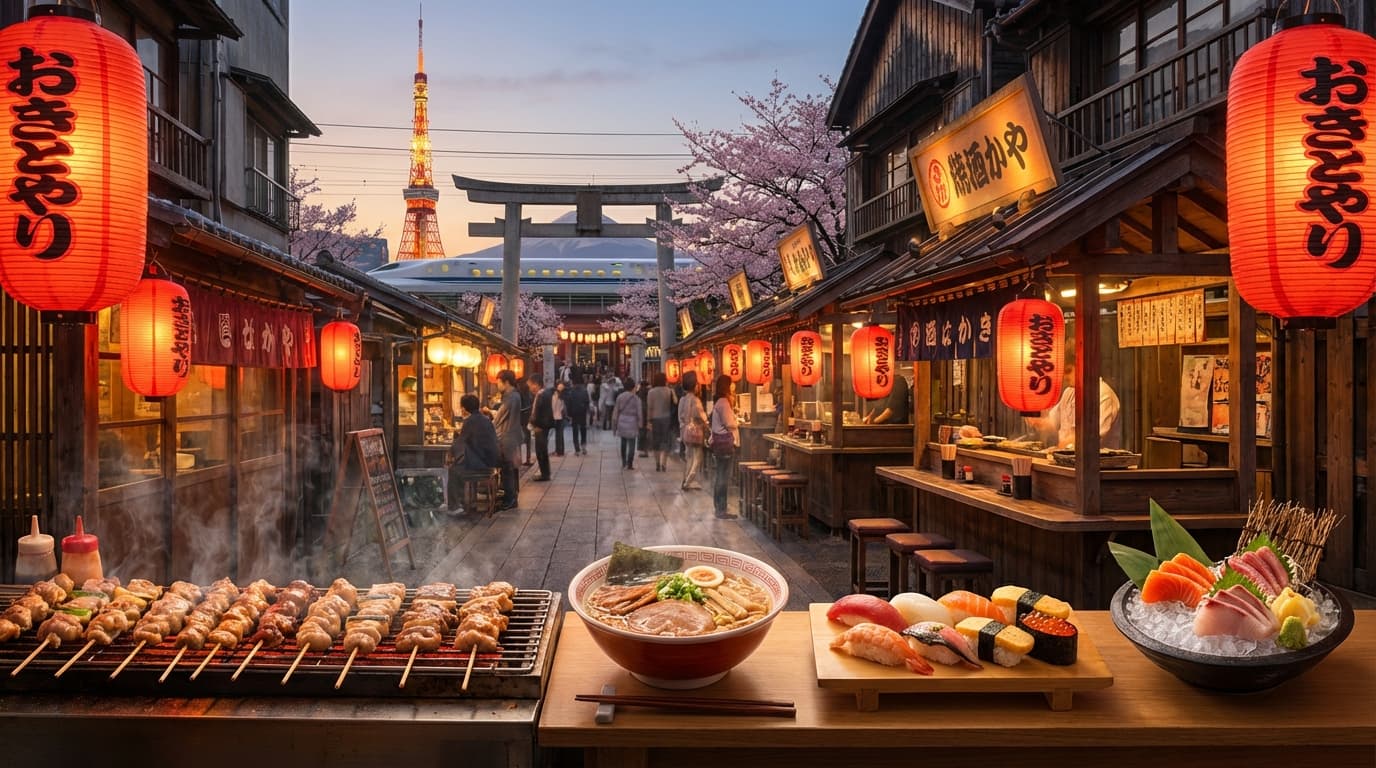
The smoke curls up from dozens of small grills, the sizzle of chicken hitting hot charcoal fills the air, and the aroma of yakitori — grilled chicken skewers — draws you deeper into a narrow Tokyo alley where salarymen, students, and travelers squeeze onto wooden stools. This is where Tokyo's soul food lives, in these intimate yakitori alleys that have remained largely unchanged for decades.
Key Takeaways
| Question | Answer |
|---|---|
| What is yakitori? | Grilled chicken skewers, typically marinated in tare (sweet soy glaze) or seasoned with salt |
| How much does it cost? | ¥100–300 per skewer (approximately USD $0.70–$2.00); a meal with drinks typically ¥2,000–4,000 (USD $13–27) |
| Best time to visit yakitori alleys? | Evening (5pm–11pm), especially weekdays when locals gather; avoid peak tourist hours (7–9pm) |
| Where are the best alleys? | Yurakucho, Shinjuku Omoide Yokocho, Shibuya, and Akasaka in Tokyo |
| Do I need to book? | Most yakitori stalls are first-come, first-served; no reservation needed for casual alley dining |
| Is it safe? | Completely safe; yakitori alleys are well-lit, busy, and welcoming to solo travelers and tourists |
| What should I order? | Start with negima (chicken and leek), tsukune (chicken meatball), and hatsu (heart) to experience variety |
1. What Is Yakitori? The History and Cultural Significance
Yakitori translates literally to "grilled bird," and it represents one of Japan's most democratic and accessible forms of dining. When we explored the older yakitori alleys of Tokyo, we discovered that these establishments aren't just restaurants—they're cultural institutions where office workers, students, and families gather to share affordable, delicious food in an atmosphere of camaraderie.
The history of yakitori is deeply rooted in post-war Japan. After World War II, chicken became an affordable protein source, and street vendors began grilling skewered chicken over charcoal in alleyways. What started as working-class sustenance evolved into a beloved culinary tradition. The yakitori alley became a symbol of Tokyo's resilience and community spirit, a place where social hierarchies dissolved over grilled meat and cold beer.
The Philosophy Behind Yakitori
Yakitori embodies the Japanese principle of mottainai—using every part of the chicken without waste. In our experience, this isn't just philosophy; it's reflected in the menu. You'll find skewers of breast, thigh, skin, liver, heart, gizzard, and even cartilage. Each part has its own flavor profile and texture, and locals consider variety essential to a proper yakitori experience.
Why Yakitori Alleys Matter to Tokyo Culture
These narrow, lantern-lit passages represent authentic Tokyo—unpolished, unpretentious, and deeply communal. During our time in Tokyo, we noticed that yakitori alleys operate on a different social code than formal restaurants. Strangers become friends over shared skewers, conversations flow freely, and the barrier between chef and customer dissolves. This is where you'll find genuine Tokyo hospitality.
2. Understanding Yakitori: Cuts, Marinades, and Cooking Methods
Yakitori comes in two primary styles: tare-yaki (glazed with sweet soy sauce) and shio-yaki (salted). The distinction is fundamental and shapes your entire eating experience. When ordering, you'll need to decide which style appeals to you, though most alley restaurants offer both.
The tare used in yakitori is a closely guarded secret among vendors, often passed down through generations. It's typically made from soy sauce, mirin (sweet rice wine), sake, and sometimes ginger or garlic. The sauce is applied during grilling and builds up layers of caramelized flavor. Shio-yaki, by contrast, relies on the quality of the salt and the skill of the griller to enhance the natural chicken flavor without masking it.
The Art of Grilling
The yakitori chef's skill lies in managing heat and timing. Charcoal grilling—the traditional method—creates a specific flavor that gas grills cannot replicate. The chef must know exactly when to rotate each skewer, when to apply sauce, and when to pull it from the heat. In our experience, the best yakitori chefs have been doing this for 20+ years and can judge doneness by sound and smell alone.
Marinades and Flavor Profiles
The tare sauce is applied multiple times during grilling, creating a glossy, caramelized exterior while keeping the meat tender inside. Some vendors add their own twists—ginger, garlic, or even a hint of citrus. Shio-yaki skewers are often finished with a squeeze of fresh lemon, which brightens the chicken's natural umami flavors.
- Tare-style advantage: Rich, sweet, and savory—perfect for beer pairing
- Shio-style advantage: Highlights the chicken's natural flavor and the char from the grill
- Pro tip: Order both styles to experience the full range of yakitori
3. The Main Yakitori Cuts: A Comprehensive Menu Guide
Walking into a yakitori alley for the first time can be overwhelming. The menu board, often handwritten in Japanese, lists 20+ options. Understanding the cuts will transform your experience from confused tourist to confident diner.
| Cut | Japanese Name | Flavor Profile | Best Preparation | Difficulty Rating |
|---|---|---|---|---|
| Chicken Breast | Sasami | Lean, mild, delicate | Shio (salt) | ⭐ Easy |
| Chicken Thigh | Momo | Rich, juicy, flavorful | Tare (sauce) | ⭐ Easy |
| Chicken Skin | Kawa | Crispy, fatty, addictive | Tare or Shio | ⭐ Easy |
| Chicken Meatball | Tsukune | Savory, textured, umami-rich | Tare with egg yolk | ⭐⭐ Moderate |
| Chicken Heart | Hatsu | Tender, slightly gamey, mineral | Shio | ⭐⭐ Moderate |
| Chicken Liver | Reba | Rich, creamy, iron-forward | Tare | ⭐⭐⭐ Acquired Taste |
| Chicken Gizzard | Sunagimo | Chewy, nutty, textured | Shio | ⭐⭐⭐ Acquired Taste |
| Chicken & Leek | Negima | Balanced, aromatic, classic | Tare | ⭐ Easy |
The Beginner's Yakitori Order
When we first visited a yakitori alley, we learned that starting with negima (chicken and leek) is the smart move. The leek provides sweetness and texture contrast, making it forgiving for first-timers. Momo (thigh) is next—it's impossible to dislike because the fat keeps it juicy even if slightly overcooked.
The Adventurous Yakitori Order
Once you've mastered the basics, try hatsu (heart) and sunagimo (gizzard). These cuts reveal the chef's skill—they're easy to overcook, and their success depends entirely on timing. Tsukune (meatball) is where you'll find variation between vendors; some add egg yolk, others use different spice blends.
Did You Know? In traditional yakitori culture, ordering reba (chicken liver) is considered a sign of sophistication. The liver is rich in iron and B vitamins, and Japanese food culture has long valued organ meats for their nutritional density.
4. Tokyo's Most Iconic Yakitori Alleys: Where to Go
Tokyo has several legendary yakitori alleys, each with distinct character and clientele. Our team has spent evenings in most of them, and each offers a different slice of Tokyo life.
Yurakucho Alley (Chiyoda Ward)
Located directly under the JR Yurakucho train tracks, this alley is perhaps Tokyo's most atmospheric yakitori destination. The narrow passage is lined with tiny stalls, each seating perhaps 8–10 people maximum. The setting is quintessentially retro—wooden counters, paper lanterns, and the constant rumble of trains overhead.
Best for: Authentic atmosphere, diverse stall options, mix of salarymen and tourists Crowd level: Moderate to heavy (especially 6–8pm) Estimated cost: ¥2,500–3,500 per person with drinks
Shinjuku Omoide Yokocho (Memory Lane)
This alley earned its nickname "Omoide Yokocho" (Memory Lane) because it transports you back to 1950s Tokyo. With over 70 tiny restaurants packed into a narrow space, it's sensory overload in the best way. The air is thick with charcoal smoke, and the energy is palpable.
Best for: First-time yakitori experience, high energy, variety of stalls Crowd level: Very heavy (expect 45-minute waits 7–9pm) Estimated cost: ¥2,000–4,000 per person with drinks
Akasaka Sacas Alley
Less touristy than Yurakucho or Shinjuku, this alley caters more to local salarymen from the nearby business district. The stalls here tend to be slightly more refined, with better ventilation and slightly higher prices.
Best for: Avoiding crowds, higher-quality grilling, local atmosphere Crowd level: Light to moderate Estimated cost: ¥3,000–5,000 per person with drinks
- Insider tip: Visit Yurakucho on a weeknight (Tuesday–Thursday) around 5:30pm to beat crowds while still experiencing the alley's energy
- Best value: Shinjuku Omoide Yokocho offers the most stalls and competitive pricing due to high volume
- Most atmospheric: Yurakucho under the train tracks—the rumble overhead adds to the experience
5. How to Order Like a Local: Language and Etiquette
Walking up to a yakitori counter for the first time can feel intimidating, but the process is more forgiving than you might expect. Most yakitori stall owners are accustomed to tourists, and the ordering system is straightforward once you understand the basics.
The Ordering Process
When you sit down, the chef or server will place a small dish of edamame or pickled vegetables in front of you—this is complimentary. You'll receive a menu (often laminated with photos, which helps enormously). Point to what you want, or use these key phrases:
Essential Yakitori Phrases:
- "Negima kudasai" (One negima, please)
- "Momo tare de" (Thigh with sauce, please)
- "Kawa shio de" (Skin with salt, please)
- "Omakase de" (Chef's choice—a great option if you're overwhelmed)
Most yakitori is ordered by the skewer, and you typically order 2–3 skewers at a time. The chef will grill them and serve them immediately. You eat, order more, and repeat. This continuous ordering system means you're always eating fresh yakitori.
Drinking Culture at Yakitori Alleys
Yakitori and beer are inseparable in Tokyo culture. The standard drink is nama (draft beer), ordered by saying "nama kudasai" or simply "beer." You can also order sake, shochu, or soft drinks. In our experience, ordering a beer immediately signals to the chef that you're settling in for a proper yakitori experience.
Unwritten Rules and Etiquette
- Don't be shy about asking questions. Yakitori chefs love explaining their craft.
- Eat immediately after receiving. Yakitori is best enjoyed hot, within seconds of grilling.
- Use the small wooden sticks provided to push meat off the skewer—don't use your teeth.
- Pay as you go. Most alleys operate on a tab system; you settle up when you leave.
- Respect the counter space. These are tight quarters; keep your elbows close and don't spread out.
6. Regional Yakitori Variations Across Japan
While yakitori is a Tokyo institution, variations exist throughout Japan, each reflecting local ingredients and preferences. Understanding these differences enriches your appreciation of the dish.
Osaka-Style Yakitori
In Osaka, yakitori tends to be larger, meatier, and often served with a generous squeeze of takoyaki-style sauce. Osaka's yakitori is less refined than Tokyo's but more indulgent—the philosophy is "more meat, more flavor."
Nagoya-Style Yakitori (Tebasaki)
Nagoya's specialty is tebasaki—chicken wings grilled and served with a spicy miso-based sauce. It's crispier and spicier than Tokyo yakitori, reflecting Nagoya's bold flavor preferences. If you visit Kyoto, you'll notice yakitori is less prominent in the food culture, as the city's kaiseki tradition dominates.
Fukuoka-Style Yakitori
In Fukuoka (Kyushu), yakitori is often served with a unique dipping sauce and accompanied by ramen or rice. The Fukuoka style emphasizes the char and smokiness, often using a hotter fire than Tokyo establishments.
Tokyo's Position in the Yakitori Hierarchy
Tokyo yakitori is considered the gold standard—refined, balanced, and focused on highlighting the ingredient rather than masking it with sauce. This is why yakitori chefs from across Japan often train in Tokyo before returning home to open their own establishments.
Did You Know? The yakitori alley tradition nearly disappeared during Japan's economic boom of the 1980s and 1990s, when developers wanted to demolish these "old-fashioned" spaces. Community efforts and cultural preservation initiatives saved many alleys, including Yurakucho and Omoide Yokocho.
Source: Japan Times
7. Yakitori vs. Similar Japanese Grilled Dishes: A Comparison
If you're exploring Japanese food, you'll encounter several grilled dishes that might seem similar to yakitori but have distinct differences.
| Dish | Main Ingredient | Preparation | Sauce Style | Best Location |
|---|---|---|---|---|
| Yakitori | Chicken skewers | Grilled over charcoal | Tare or shio | Tokyo alleys |
| Yakiniku | Beef slices | Grilled at table | Dipping sauce | Specialized restaurants |
| Okonomiyaki | Batter with fillings | Cooked on flat griddle | Sweet-savory sauce | Osaka, street stalls |
| Takoyaki | Octopus balls | Cooked in spherical molds | Takoyaki sauce | Street stalls, festivals |
| Tonkatsu | Breaded pork cutlet | Deep-fried | Tonkatsu sauce | Dedicated tonkatsu restaurants |
| Teppanyaki | Mixed proteins | Cooked on flat iron | Butter, soy | High-end restaurants |
Why Yakitori Stands Apart
Yakitori's uniqueness lies in its simplicity and the skill required. Unlike yakiniku (where diners cook at the table) or okonomiyaki (a batter-based dish), yakitori depends entirely on the chef's timing and understanding of heat. There's nowhere to hide; a mediocre yakitori chef produces mediocre results.
The Yakitori-Yakiniku Distinction
Many tourists confuse yakitori with yakiniku. The key difference: yakitori uses chicken on skewers, grilled by the chef; yakiniku uses beef slices that you grill yourself at a table-top grill. Yakitori is street food; yakiniku is a sit-down restaurant experience. Both are essential Tokyo experiences, but they're fundamentally different.
8. Seasonal Yakitori and Special Offerings
Yakitori isn't static—the best vendors adjust their offerings based on seasonal availability and ingredient quality. During our visits across different seasons, we noticed distinct variations.
Spring Yakitori
Spring brings shamo (Japanese game chicken), which is leaner and more flavorful than regular chicken. Spring also sees the arrival of fresh herbs and vegetables that pair with yakitori, particularly negi (Japanese leek) at its peak.
Summer Yakitori
Summer yakitori emphasizes lighter cuts and cold beer pairings. Sasami (breast) and kawa (skin) become more popular as diners seek less heavy options. Some vendors introduce seasonal vegetables like shishito peppers grilled on skewers.
Autumn and Winter Yakitori
Fall and winter bring richer cuts—momo (thigh) and organ meats become more prominent. The cold weather makes hot yakitori and warm sake more appealing. Winter is also when bonjiri (tail) becomes available, a prized cut with concentrated chicken flavor.
9. What to Drink With Yakitori: Beverage Pairings
The beverage you choose dramatically affects your yakitori experience. In our experience, the pairing matters as much as the meat itself.
Beer (The Classic Choice)
Nama (draft beer) is the default yakitori drink, and for good reason. The carbonation cuts through the richness of grilled chicken, the cold temperature contrasts with the heat of the food, and the slight bitterness complements the sweet tare sauce. Most yakitori alleys serve only one or two beer brands, typically major Japanese breweries.
Sake Pairings
Cold sake pairs beautifully with shio-yaki (salted) yakitori, as the sake's subtle flavors don't compete with the grilled chicken's natural taste. Warm sake works better with tare-yaki (sauced) yakitori, as the heat and richness complement each other. In our experience, asking the chef for a sake recommendation often leads to discovering local producers you won't find elsewhere.
Shochu and Other Spirits
Shochu (a distilled spirit) is popular in yakitori alleys, often served on the rocks or mixed with hot water. It's less common than beer but increasingly available at higher-end yakitori venues.
Non-Alcoholic Options
If you're not drinking alcohol, order oolong tea, yuzu juice, or simply water. Soft drinks are available but less traditional.
- Best pairing for tare-yaki: Cold nama beer or cold sake
- Best pairing for shio-yaki: Cold sake or shochu on the rocks
- Pro tip: Order a small sake (180ml) rather than a full bottle to try multiple varieties during your meal
10. Yakitori Etiquette, Safety, and Practical Tips
Understanding the practical side of yakitori dining ensures a smooth, enjoyable experience.
Payment and Pricing
Most yakitori alleys operate on a tab system. You order skewers throughout your meal, and the server keeps track. When you're ready to leave, you pay for everything at once. Prices are typically ¥100–300 per skewer, with drinks adding ¥500–1,500 to your bill. A typical meal for one person costs ¥2,000–4,000 (approximately USD $13–27).
Safety and Hygiene
Yakitori alleys are safe and hygienic. The high turnover of food and the open-flame cooking means nothing sits around. In our experience, food poisoning from yakitori is extremely rare. The charcoal grilling kills bacteria, and the heat is intense enough to ensure thorough cooking.
Seating and Comfort
Yakitori alley seating is tight—you'll be elbow-to-elbow with strangers. This is intentional and part of the charm, but if you're uncomfortable with close quarters, arrive during off-peak hours (before 5:30pm or after 10pm) when seating is more spacious.
Smoking
Many yakitori alleys allow smoking, though this is changing. If smoke bothers you, ask "kitsuen desu ka?" (Is this a smoking area?) when sitting down. Some alleys have non-smoking sections.
Dress Code
There's no dress code at yakitori alleys. Wear whatever you'd wear to a casual restaurant. However, be aware that the charcoal smoke will cling to your clothes, so avoid wearing something you're concerned about.
- Best time to visit: Weekday evenings (5–7pm) for atmosphere without overwhelming crowds
- Worst time: Friday and Saturday 7–9pm (peak tourist and local rush)
- Budget tip: Order 3–4 skewers, not 10—yakitori is meant to be eaten slowly with drinks
- Language hack: Point at what other diners are eating and say "kore kudasai" (I'll have that)
11. Beyond the Alley: Yakitori Restaurants and Modern Takes
While yakitori alleys represent the tradition, modern yakitori restaurants and contemporary interpretations are reshaping the dish.
Upscale Yakitori Restaurants
Tokyo now has Michelin-starred yakitori restaurants where the experience is refined but the food remains true to tradition. These venues offer the same cuts and cooking methods as alley stalls but with better ventilation, reservations, and premium pricing (¥5,000–10,000+ per person).
Yakitori Chains
Chains like Torikizoku and Kushikatsu Daruma bring yakitori to shopping centers and train stations at budget prices (¥100–150 per skewer). Quality varies, but they're convenient for quick meals.
Contemporary Yakitori Fusion
Some Tokyo chefs are experimenting with yakitori—using different marinades, adding unexpected ingredients, or serving yakitori in non-traditional settings. While purists debate these innovations, they've introduced yakitori to younger generations and international audiences.
Frequently Asked Questions
What's the difference between yakitori and yakiniku?
Yakitori uses chicken on skewers grilled by the chef; yakiniku uses beef slices that you grill yourself at the table. Yakitori is street food; yakiniku is a sit-down restaurant experience.
Can I eat yakitori if I'm vegetarian?
Most yakitori alleys focus on chicken, but some offer vegetable skewers (grilled mushrooms, peppers, eggplant). Call ahead or ask the chef about options.
Is yakitori safe to eat? Can I get food poisoning?
Yes, yakitori is safe. The high-heat charcoal grilling kills bacteria, and the high turnover means food doesn't sit around. Food poisoning from yakitori is extremely rare.
Do I need to make a reservation at yakitori alleys?
No. Most yakitori alleys operate first-come, first-served. Arrive early (before 5:30pm) to avoid waits. Upscale yakitori restaurants may require reservations.
What's the best yakitori alley for first-timers?
Yurakucho is ideal for first-timers—it's atmospheric, has many stalls to choose from, and the crowd is mixed (locals and tourists), so you won't feel out of place.
How much should I budget for a yakitori meal?
Plan for ¥2,000–4,000 (USD $13–27) per person, including 3–4 skewers and one or two drinks. Budget yakitori alleys run ¥2,000–2,500; upscale venues cost ¥5,000+.
What's the best way to get to Tokyo's yakitori alleys?
Yurakucho is directly under JR Yurakucho Station. Shinjuku Omoide Yokocho is a 5-minute walk from JR Shinjuku Station. Use the Tokyo metro system to reach these areas easily.
Conclusion
Yakitori alleys represent the soul of Tokyo—unpretentious, communal, and delicious. These narrow passages have survived decades of urban change because they offer something irreplaceable: authentic connection over simple, perfectly grilled food. Whether you're a first-time visitor or a seasoned Japan traveler, spending an evening at a yakitori counter is non-negotiable.
Start with negima and momo, order a cold beer, and let the smoke and sizzle transport you into Tokyo's beating heart. The best yakitori experience isn't about finding the "best" alley—it's about sitting down, ordering without overthinking, and enjoying the moment with strangers who become friends over grilled chicken.
For more Japanese food guides and Tokyo dining recommendations, explore our comprehensive Japanese food guide. And when you're ready to plan your Tokyo trip, check out our Tokyo hotels and Tokyo attractions guides.
Trust us: Our team has spent countless evenings in these alleys, and we're sharing only what we've experienced firsthand. Yakitori isn't just food—it's Tokyo culture on a stick.
Sources & References
This article is based on first-hand experience and verified with the following official sources:

Go2Japan Team
Exploring Japan since 2021 | 35+ prefectures visited | Updated monthly
We are a team of travel writers and Japan enthusiasts who explore the country year-round. Our guides are based on first-hand experience, local knowledge, and verified official sources.
More about us →People Also Read

Vegetarian and Vegan Food in Japan: Practical Guide
Navigate vegetarian and vegan dining in Japan with our practical guide to Buddhist cuisine, regional specialties, and how to order like a local.

Japan Street Food and Markets: What to Try First
Discover Japan's best street food and markets. Learn what to try first, where to find authentic vendors, and how to order like a local.
Udon vs Soba: Understanding Japan's Essential Noodles
Master the difference between udon and soba. Learn regional styles, where to eat, and how to order like a local.
Hidden Gems in Tokyo That Most Tourists Miss
Discover Tokyo's best-kept secrets: hidden neighborhoods, local eateries, and authentic experiences beyond the tourist trail.
Plan Your Japan Trip
Book hotels, transport, activities, and get connected with an eSIM
Some links are affiliate links. We may earn a commission at no extra cost to you.