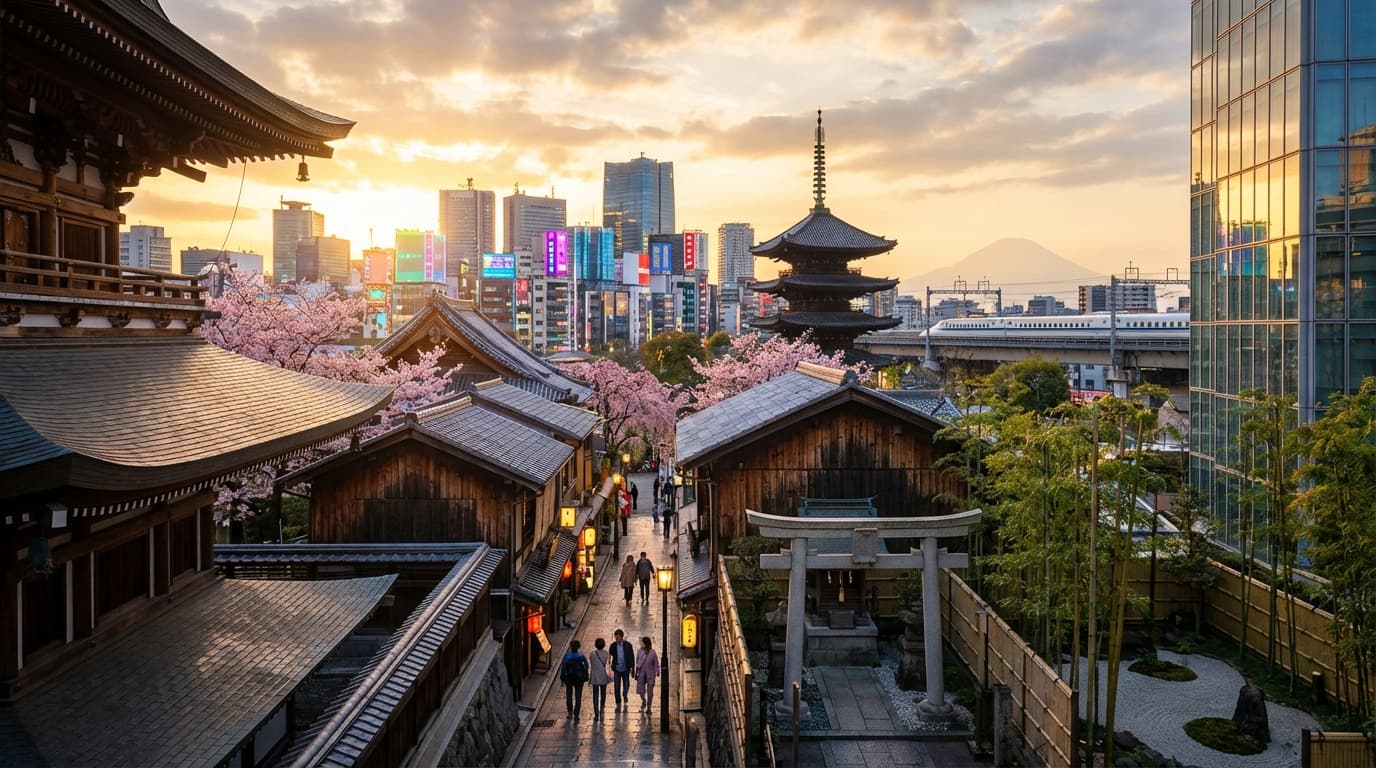
While millions of visitors flock to Shibuya Crossing and Senso-ji Temple each year, hidden gems in Tokyo remain tucked away in quiet neighborhoods where locals actually live, work, and eat. After two years exploring Tokyo on foot—from the neon-lit streets to the serene residential backstreets—we've discovered that the city's true magic lies not in the guidebook highlights, but in the places where tour buses never venture.
Key Takeaways
| Question | Answer |
|---|---|
| What is the best time to visit? | Spring (April-May) and autumn (September-November) offer pleasant weather and fewer crowds than peak summer and winter seasons |
| How much does it cost? | Budget ¥3,000–5,000 USD ($20–35) per day for food and transport; accommodation varies from ¥3,000–15,000+ per night |
| How do I get there? | Tokyo is served by Narita and Haneda airports; the Keisei Skyliner (¥2,500) connects Narita to central Tokyo in 60 minutes |
| Is it safe? | Tokyo is one of the world's safest major cities with excellent public transport and low crime rates |
| What should I book in advance? | Popular restaurants in hidden neighborhoods fill quickly; book 1–2 weeks ahead for dinner reservations |
| Do I need Japanese language skills? | English signage is limited in neighborhood gems; a translation app and willingness to explore are more valuable than fluency |
1. Yanaka: Tokyo's Nostalgic Time Capsule
Yanaka feels like stepping into 1970s Tokyo—narrow wooden machiya houses, independent bookstores, and family-run restaurants line streets where cars rarely venture. This historic neighborhood in Taito Ward has resisted the modernization that transformed much of the city, making it one of Tokyo's most atmospheric pockets. When we visited on a weekday morning, we had entire streets to ourselves, watching locals shuffle to the neighborhood bathhouse and elderly shopkeepers arranging flowers outside their storefronts.
The neighborhood's preservation is no accident. After World War II bombing, Yanaka escaped major redevelopment, and today it's protected as a cultural district. Walking the Yanaka Ginza shopping street—a narrow, covered pedestrian lane—feels like time travel. You'll find vintage clothing shops, small galleries, and kissaten (traditional coffee houses) where the same owner has been serving coffee for decades.
What to See and Do
Yanaka Cemetery is one of Tokyo's most beautiful green spaces, where cherry blossoms bloom in spring and the graves of famous artists and writers rest beneath towering trees. Unlike crowded parks, you'll find peaceful solitude here. The cemetery's main path stretches nearly 1 km and is lined with moss-covered stone monuments dating back centuries.
Yanaka Ginza is the neighborhood's beating heart—a 170-meter covered shopping street packed with independent shops. Stop at a vintage record store, grab fresh mochi from a family-run sweets shop, or sit in a tiny ramen counter where the owner has perfected their broth recipe over 30 years. In our experience, the best discoveries come from wandering without a plan, ducking into unmarked doorways, and following the aroma of grilling yakitori.
- Hidden Gem: The small wooden shrine tucked between residential buildings on the quieter western edge of Yanaka—locals visit daily, but tourists rarely find it
- Photo Spot: Early morning light filtering through the wooden eaves of machiya houses along Yanaka's side streets
- Budget Tip: Lunch sets at neighborhood ramen shops cost ¥800–1,200; dinner at sit-down restaurants ranges ¥1,500–3,000
Where to Eat in Yanaka
The neighborhood's food scene centers on traditional, no-frills establishments. Yanaka is famous for its soba shops—we recommend exploring the side streets near the cemetery where several family-run soba restaurants have operated for 40+ years. Japanese food here emphasizes simplicity and quality ingredients rather than presentation.
Did You Know? Yanaka is home to over 80 traditional wooden buildings (kura) dating back to the Edo and Meiji periods, making it one of Tokyo's largest concentrations of historic architecture.
Source: Tokyo Metropolitan Government
2. Koenji: Tokyo's Bohemian Underground
Koenji pulses with creative energy that feels worlds away from corporate Tokyo. This bohemian neighborhood in Suginami Ward is packed with vintage shops, live music venues, and street art—yet it remains largely unknown to international visitors. During our time exploring Koenji's backstreets, we discovered hidden live houses (intimate music venues), underground art galleries, and a thriving community of musicians, artists, and designers who've made this neighborhood their home.
The neighborhood's character stems from its postwar history as an entertainment district. While other areas gentrified, Koenji maintained its gritty, creative spirit. Today, it's a hub for Tokyo's indie music scene, with dozens of small venues hosting live performances nightly. The streets feel authentically Japanese—not designed for tourists, but genuinely lived-in.
Vintage Shopping and Street Culture
Koenji's vintage scene is legendary among Tokyo's fashion-conscious locals. Entire buildings are devoted to used clothing, with shops stacked floor-to-floor. Unlike the curated vintage boutiques in Harajuku, Koenji's shops feel like treasure hunts—you might find a 1980s leather jacket for ¥2,000 or rare band t-shirts from the 1990s. The neighborhood's pedestrian shopping streets are covered, making it perfect for rainy days.
Live Music and Nightlife
The neighborhood hosts over 20 live houses—small venues where local and touring bands perform nightly. Admission typically costs ¥2,000–3,500 with a drink minimum. Even if you don't attend a show, walking the backstreets at night reveals neon signs advertising upcoming performances, creating an atmosphere reminiscent of Tokyo's 1980s underground scene.
- Best Spot: Aji-Ichi Alley, a narrow pedestrian street lined with tiny izakayas and yakitori grills where locals gather after work
- Pro Tip: Visit on a weekday evening to experience the neighborhood as locals do, rather than weekend crowds
- Budget Option: Grab a beer and yakitori skewers from a street vendor for ¥1,000–1,500 total
3. Shimokitazawa: The Village Within the City
Shimokitazawa feels like a village transplanted into Tokyo—narrow streets barely wide enough for two people, tiny theaters tucked between residential buildings, and a bohemian community that's fiercely protective of their neighborhood's character. This creative enclave in Setagaya Ward has long been a hub for Tokyo's theater and arts scene, with over 40 small theaters and performance spaces within walking distance.
When we explored Shimokitazawa on a Saturday afternoon, we found ourselves in a completely different Tokyo—one where street musicians performed in alleyways, vintage bookstores occupied converted homes, and young artists worked in studio spaces above ramen shops. The neighborhood's narrow streets create natural boundaries that have protected it from the kind of corporate development that's transformed other parts of the city.
Theater and Performing Arts
Shimokitazawa's theater scene is world-renowned among Tokyo's creative community. Small theaters (some seating just 50 people) host experimental plays, dance performances, and comedy shows nightly. Many performances are in Japanese, but the intimate scale and visual nature of much of the work makes language less of a barrier. Tickets typically cost ¥2,000–4,000.
Vintage and Independent Shops
The neighborhood's shopping streets are lined with independent boutiques, used bookstores, and vintage clothing shops. Unlike commercial shopping districts, these shops feel like extensions of their owners' personalities—you might find a record store specializing in 1970s folk music, or a bookshop focused entirely on Japanese cinema. Prices are reasonable, and shopkeepers are generally happy to chat with curious visitors.
- Hidden Gem: The tiny ramen counter on the second floor of an unmarked building—ask locals for directions; it's been family-run for 40 years
- Best Time to Visit: Weekday mornings offer the most authentic neighborhood atmosphere; weekends draw crowds
- Budget Tip: Theater tickets average ¥2,500–3,500; lunch sets at neighborhood restaurants cost ¥900–1,500
4. Tsukiji Outer Market: Where Tokyo Eats
While Tsukiji's famous inner market moved to a new facility, the outer market remains a living, breathing food district where Tokyo's restaurants source their ingredients and locals do their daily shopping. This is not a tourist attraction—it's a working market where fishmongers, produce vendors, and restaurant owners haggle over prices and quality. During our early morning visits, we watched chefs from Michelin-starred restaurants selecting the day's fish, standing shoulder-to-shoulder with elderly women buying vegetables for family dinners.
The outer market stretches several blocks and contains hundreds of small shops, stalls, and restaurants. Unlike the sanitized inner market, this area feels raw and authentic. The energy is palpable—vendors shouting prices, the smell of grilled seafood, the constant flow of people navigating narrow aisles.
Eating at the Market
The market's restaurants and food stalls offer some of Tokyo's best value and freshest seafood. Small sushi counters serve omakase (chef's selection) for ¥3,000–5,000—a fraction of what you'd pay in Ginza. Grilled scallop stands, tempura counters, and ramen shops line the market's main streets. In our experience, the best meals come from following the crowds—if a stall has a line, it's worth the wait.
What to Buy
Fresh seafood, produce, and prepared foods are available at a fraction of supermarket prices. Even if you're staying in a hotel, the market's prepared foods (fresh sashimi, grilled fish, vegetable dishes) make excellent picnic lunches. The market is also famous for its kitchen knives—several shops specialize in professional-grade cutlery at reasonable prices.
- Best Time to Visit: Early morning (6:00–9:00 AM) when the market is most active and freshest ingredients are available
- Pro Tip: Bring cash; many small vendors don't accept cards
- Must-Try: Fresh uni (sea urchin) or toro (fatty tuna) at a market sushi counter—typically ¥500–1,000 per piece
5. Hatagaya and Okubo: Tokyo's International Hidden Neighborhoods
While Shinjuku dominates Tokyo's nightlife reputation, the quieter neighborhoods of Hatagaya and Okubo—just minutes away by train—offer authentic international communities and food scenes that reflect Tokyo's growing diversity. These neighborhoods are home to large communities of immigrants from Southeast Asia, South Asia, and Africa, creating food scenes that rival any international city.
When we spent an afternoon in Okubo, we discovered Vietnamese pho restaurants, Thai curry shops, and Indian spice markets that felt worlds away from central Tokyo. These aren't restaurants designed for tourists—they're neighborhood establishments where families gather for authentic home cooking. Prices are remarkably affordable, and the quality rivals restaurants in Bangkok or Hanoi.
Food and Markets
Okubo's main street is lined with Asian restaurants and markets. Vietnamese pho costs ¥800–1,200; Thai curry dishes ¥1,000–1,500; Indian thali sets ¥1,200–1,800. The neighborhood's markets sell fresh ingredients imported from across Asia—you'll find Thai basil, Vietnamese fish sauce, and Indian spices at prices lower than Japanese supermarkets.
Cultural Experience
These neighborhoods offer genuine cultural immersion without the tourist infrastructure. You'll hear multiple languages, see unfamiliar scripts on shop signs, and experience Tokyo as a genuinely international city. The neighborhoods lack the polished tourism of central Tokyo, but that's precisely what makes them authentic.
- Best Spot: The Vietnamese restaurants along Okubo's main street—ask locals for recommendations rather than relying on guidebooks
- Pro Tip: Visit on weekends when neighborhood communities gather for shopping and dining
- Budget Option: Lunch sets at neighborhood restaurants cost ¥800–1,500; significantly cheaper than central Tokyo
6. Nezu: Artsy Neighborhood with Shrine and Museum
Nezu, adjacent to Yanaka, offers a slightly more polished but still authentic neighborhood experience. The Nezu Shrine, one of Tokyo's oldest, sits at the neighborhood's heart—a peaceful sanctuary surrounded by dense forest despite being minutes from busy Ueno. The shrine's famous thousand vermillion torii gates create a tunnel of color that rivals more famous shrine destinations, yet it remains relatively quiet compared to Senso-ji Temple.
The neighborhood around the shrine has developed into an arts and culture hub, with contemporary art museums, galleries, and design-focused cafes. When we visited, we found a perfect balance—enough tourist infrastructure to make navigation easy, but still genuinely local in character.
Nezu Museum and Contemporary Art
The Nezu Museum houses an impressive collection of pre-modern Japanese and East Asian art, displayed in a beautifully designed building. The museum's garden is worth the admission alone—a peaceful retreat featuring stone lanterns, moss-covered paths, and seasonal plants. Admission costs around ¥1,600.
Neighborhood Cafes and Design Shops
The streets around Nezu are lined with independent cafes, design shops, and small galleries. Unlike Harajuku's commercialized fashion scene, Nezu's shops feel curated by people with genuine aesthetic interests. You'll find vintage furniture stores, independent bookshops, and cafes serving specialty coffee in converted wooden houses.
- Best Spot: The quiet streets west of Nezu Shrine, where wooden machiya houses have been converted into galleries and cafes
- Photo Opportunity: The thousand torii gates at Nezu Shrine, especially in early morning light before crowds arrive
- Budget Tip: Museum admission ¥1,600; lunch at neighborhood cafes ¥1,200–2,000
7. Nakano Broadway and Otaku Culture (Beyond the Stereotypes)
Nakano Broadway is famous as Tokyo's otaku (anime and manga fan) epicenter, but beyond the stereotypes lies a genuine subculture and creative community. The shopping complex houses multiple floors of anime merchandise, but the neighborhood itself—particularly the covered shopping streets—offers authentic local character. When we explored Nakano's backstreets, we found vintage record stores, independent bookshops, and small restaurants that serve the neighborhood's longtime residents.
The neighborhood's character reflects Tokyo's ability to contain multiple communities simultaneously. On one street, you'll find otaku culture; turn a corner and you're in a quiet residential area where elderly residents have lived for decades. This juxtaposition is quintessentially Tokyo.
Shopping and Collecting
Nakano Broadway is the place to find rare anime merchandise, vintage collectibles, and manga. Multiple floors contain hundreds of small shops, each specializing in different series or eras. Even if anime doesn't interest you, the shopping complex offers insight into Japanese fan culture and collecting practices.
Neighborhood Exploration
Beyond the famous shopping complex, Nakano's covered shopping streets (shotengai) offer authentic neighborhood shopping. Small restaurants, family-run shops, and local bars create an atmosphere that's remained largely unchanged for decades. In our experience, the most interesting discoveries come from wandering these side streets rather than focusing on the main attractions.
- Best Spot: The small ramen shops and izakayas along the covered shopping streets, where locals gather after work
- Pro Tip: Visit on weekday evenings to experience the neighborhood as residents do
- Budget Option: Lunch sets at neighborhood restaurants ¥900–1,500; shopping prices vary widely
8. Asakusa Beyond Senso-ji: Local Neighborhoods and Hidden Temples
While Senso-ji Temple draws millions of visitors annually, the neighborhoods surrounding it—particularly the residential areas west and north of the temple—offer authentic Asakusa that most tourists never experience. This historic district has been Tokyo's entertainment and shopping hub for centuries, and while the main temple street has become commercialized, the surrounding neighborhoods retain genuine character.
When we explored the quieter streets of Asakusa, we found small shrines, traditional restaurants, and neighborhoods where residents have lived for generations. The area's geography—with the Sumida River to the east and residential areas to the west—creates natural boundaries that have preserved neighborhood character despite tourism pressure.
Local Shrines and Temples
Beyond Senso-ji, Asakusa contains dozens of smaller shrines and temples. Kuramae Shrine, just south of Senso-ji, is far less crowded but equally atmospheric. The shrine's festivals draw local crowds, creating authentic community experiences. Several small temples are tucked into residential areas—you might stumble upon one while wandering side streets.
Traditional Restaurants and Shops
The neighborhoods west of Senso-ji contain traditional restaurants specializing in Edo-period cuisine. Tempura shops, soba restaurants, and traditional sweet shops have operated for generations. Prices are reasonable (¥1,500–3,000 for lunch), and the food reflects Tokyo's culinary traditions more authentically than tourist-oriented restaurants on the main temple street.
- Hidden Gem: The small residential streets north of Senso-ji, where traditional wooden houses and small family businesses create an atmosphere unchanged for decades
- Best Time to Visit: Weekday mornings, before crowds arrive at Senso-ji
- Budget Tip: Lunch at traditional neighborhood restaurants ¥1,200–2,000; significantly cheaper than Senso-ji's main street
Did You Know? Asakusa's Sumida River fireworks festival (Sumida River Fireworks) has been held annually since 1733, making it one of Japan's oldest summer traditions.
9. Roppongi Hills and Mori Art Museum: Art and Architecture
While Roppongi's nightlife reputation precedes it, the Mori Art Museum and surrounding Roppongi Hills complex offer world-class contemporary art in a setting that feels more like a vertical city than a traditional museum. The museum occupies the 52nd and 53rd floors of a skyscraper, offering both art exhibitions and panoramic views of Tokyo. When we visited, we found a sophisticated crowd of art enthusiasts rather than tourists—the museum attracts Tokyo's creative professionals and serious collectors.
The Mori Art Museum's exhibitions change regularly, featuring contemporary artists from Japan and internationally. The museum's design—with floor-to-ceiling windows overlooking Tokyo—makes the experience of viewing art inseparable from the city itself. Admission costs around ¥2,000–2,500 depending on exhibitions.
Architecture and Urban Design
Roppongi Hills itself is an architectural achievement—a mixed-use complex that integrates residential, commercial, and cultural spaces. The complex's design reflects Japanese urban planning philosophy, creating a self-contained neighborhood within the city. Even if you don't visit the museum, walking through the complex offers insight into contemporary Tokyo's urban development.
Surrounding Neighborhoods
The areas surrounding Roppongi Hills contain upscale restaurants, galleries, and bars that cater to Tokyo's international business community. While prices are higher than neighborhood gems, the quality and sophistication are exceptional. This is where Tokyo's creative professionals and international residents gather.
- Best Spot: The Mori Art Museum's observation deck, offering 360-degree views of Tokyo from the 52nd floor
- Pro Tip: Visit on weekday afternoons to avoid crowds; evening visits offer city lights views
- Budget Option: Museum admission ¥2,000–2,500; observation deck access included with museum ticket
10. Practical Tips for Exploring Tokyo's Hidden Gems
Getting Around
Tokyo's public transportation system is the world's best—efficient, affordable, and comprehensive. The Suica/Pasmo IC card (¥2,000 with ¥1,500 usable balance) works on all trains, buses, and even some convenience stores. Individual train rides cost ¥170–320 depending on distance. When exploring hidden neighborhoods, we recommend purchasing a day pass (¥900–1,000) if you plan multiple trips.
The Japan Rail Pass is useful for travel between cities but less valuable within Tokyo, where local train systems are cheaper and more convenient.
Language and Navigation
English signage is limited in neighborhood gems—this is part of their charm. Download Google Translate's camera feature; it translates signs and menus in real-time. Most neighborhood restaurants lack English menus, but pointing at dishes other customers are eating works universally. In our experience, locals appreciate genuine efforts to communicate, even if language is a barrier.
Timing Your Visits
Weekday mornings offer the most authentic neighborhood experiences—you'll see locals going about daily life rather than crowds of tourists. Weekends bring more people but also more neighborhood energy. Avoid visiting during major holidays (New Year, Golden Week in late April/early May, Obon in August) when neighborhoods become crowded.
Safety and Etiquette
Tokyo is exceptionally safe—violent crime is rare, and theft is uncommon. Neighborhoods that might appear rough or unfamiliar are genuinely safe. That said, respect local customs: don't eat while walking, be quiet on trains, and ask before photographing people or small shops.
Best Seasons to Visit
April and May (spring) and September through November (autumn) offer pleasant weather and lower humidity. Summer (June-August) is hot and humid; winter (December-February) is cold but clear. Cherry blossom season (late March-early April) brings crowds but also undeniable beauty.
Suggested Itineraries
1-Day Hidden Gems Itinerary
Morning (7:00–10:00 AM): Start at Tsukiji Outer Market. Arrive early to experience the market's energy and grab fresh sushi or seafood breakfast. Explore the market's small shops and food stalls.
Late Morning (10:00 AM–12:30 PM): Take the train to Yanaka. Walk the Yanaka Ginza shopping street, visit Yanaka Cemetery, and explore the neighborhood's side streets. Stop for coffee at a traditional kissaten.
Lunch (12:30–1:30 PM): Eat soba or ramen at a neighborhood restaurant.
Afternoon (1:30–5:00 PM): Explore Nezu—visit Nezu Shrine and the Nezu Museum. Walk the neighborhood's quiet streets and visit independent shops and galleries.
Evening (5:00–8:00 PM): Head to Asakusa. Explore the neighborhoods west of Senso-ji, visit a local shrine, and have dinner at a traditional restaurant.
3-Day Hidden Gems Itinerary
Day 1: Eastern Tokyo (Yanaka, Nezu, Asakusa)
- Morning: Tsukiji Outer Market
- Late morning: Yanaka neighborhood exploration
- Afternoon: Nezu Shrine and Museum
- Evening: Asakusa neighborhoods and dinner
Day 2: Western Tokyo (Shimokitazawa, Koenji)
- Morning: Shimokitazawa neighborhood exploration and vintage shopping
- Lunch: Neighborhood restaurant
- Afternoon: Theater performance or continued exploration
- Evening: Koenji's live music venues and dinner at Aji-Ichi Alley
Day 3: International Tokyo and Contemporary Art
- Morning: Okubo or Hatagaya neighborhood exploration and international food
- Lunch: Vietnamese, Thai, or Indian restaurant
- Afternoon: Mori Art Museum and Roppongi Hills
- Evening: Upscale dinner or return to a favorite neighborhood
Frequently Asked Questions
What's the best way to find hidden gems in Tokyo?
The best approach is to wander without a detailed plan. Download offline maps, use Google Translate for navigation, and follow your curiosity. Ask locals for recommendations—they're generally happy to suggest neighborhood favorites. Avoid guidebooks for hidden gems; by definition, they become less hidden once they're published.
Are hidden neighborhoods safe to explore alone?
Tokyo is exceptionally safe. Neighborhoods that might appear unfamiliar or rough are genuinely safe for solo exploration. That said, use common sense: avoid very late nights in unfamiliar areas, keep valuables secure, and trust your instincts about where you feel comfortable.
Do I need to speak Japanese to enjoy hidden neighborhoods?
No, but a translation app is invaluable. Many neighborhood restaurants lack English menus, but you can point at dishes, use Google Translate's camera feature to read menus, or ask other customers for recommendations. Locals appreciate genuine efforts to communicate, even if language is a barrier.
What's the best time to visit hidden neighborhoods?
Weekday mornings offer the most authentic experiences—you'll see locals going about daily life. Weekends bring more neighborhood energy but also more people. Avoid major holidays when neighborhoods become crowded.
How much should I budget for exploring hidden neighborhoods?
Budget ¥2,000–4,000 per day for food and transport. Train rides cost ¥170–320; lunch at neighborhood restaurants ¥1,000–2,000; museums and attractions ¥1,500–2,500. Hidden neighborhoods are generally cheaper than central Tokyo's tourist areas.
Can I visit multiple hidden neighborhoods in one day?
Yes, Tokyo's excellent public transportation makes it easy to visit 2–3 neighborhoods daily. Plan geographically—visit Yanaka and Nezu together (adjacent neighborhoods), or Shimokitazawa and Koenji together (both in western Tokyo). Allow 2–3 hours per neighborhood to genuinely experience the area.
Conclusion
Tokyo's hidden gems reveal a city far more complex and authentic than its famous landmarks suggest. From the nostalgic wooden houses of Yanaka to the bohemian energy of Koenji, from the international communities of Okubo to the creative spirit of Shimokitazawa, these neighborhoods showcase the diversity and depth that make Tokyo endlessly fascinating. The best part? These areas remain relatively undiscovered by international tourists, meaning you'll experience Tokyo as locals do—with genuine community character, authentic food, and the kind of serendipitous discoveries that make travel memorable.
Start with our suggested itineraries, but don't be afraid to deviate. The magic of Tokyo's hidden neighborhoods lies in wandering, getting slightly lost, and stumbling upon a tiny ramen shop or neighborhood shrine that wasn't in any guidebook. That's where you'll find the real Tokyo.
For more comprehensive planning, check out our Tokyo city guide and Tokyo attractions guide. And when you're ready to explore beyond Tokyo, our Japan travel guide 2026 covers the entire country.
Have you discovered hidden gems in Tokyo? Share your favorite neighborhood discoveries in the comments below—we'd love to hear about your authentic Tokyo experiences.
Sources & References
This article is based on first-hand experience and verified with the following official sources:

Go2Japan Team
Exploring Japan since 2021 | 35+ prefectures visited | Updated monthly
We are a team of travel writers and Japan enthusiasts who explore the country year-round. Our guides are based on first-hand experience, local knowledge, and verified official sources.
More about us →People Also Read

Japan eSIM and Internet Guide for Travelers: Complete 2026 Guide
Complete guide to staying connected in Japan: eSIM options, SIM cards, WiFi, costs, and setup steps for travelers.

Japan Visa Requirements 2026: Complete Tourist Guide
Complete 2026 guide to Japan visa requirements for tourists. Visa-free entry, tourist visas, eVisas, costs, and step-by-step application process.

Japan Coast Guide: Beach Towns, Islands and Routes
Explore Japan's best beaches, islands, and coastal towns. Island guides, activities, accommodation, and routes for every traveler.
Udon vs Soba: Understanding Japan's Essential Noodles
Master the difference between udon and soba. Learn regional styles, where to eat, and how to order like a local.
Plan Your Japan Trip
Book hotels, transport, activities, and get connected with an eSIM
Some links are affiliate links. We may earn a commission at no extra cost to you.