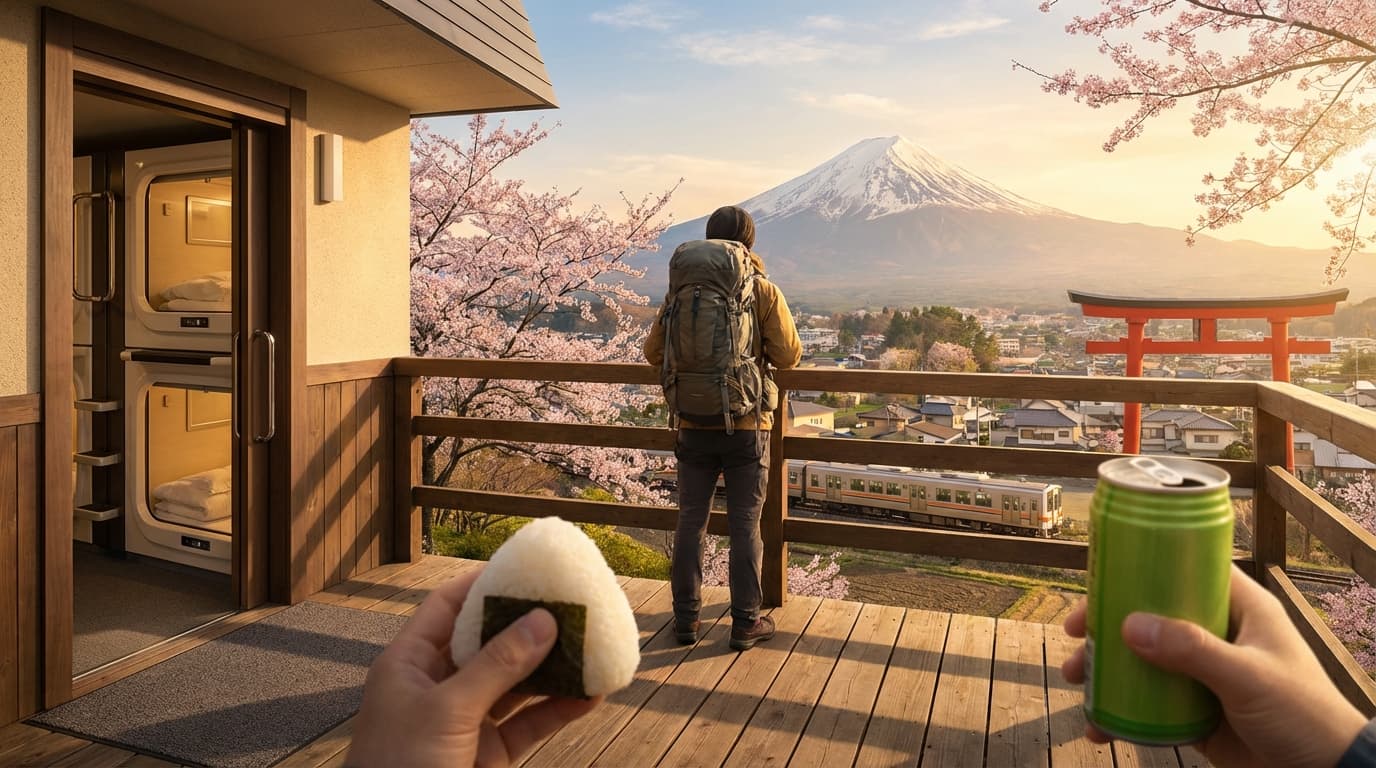
Free Things to Do in Kyoto: Complete Budget Travel Guide 2026
Kyoto doesn't require a fortune to experience its magic. When we spent three weeks exploring this ancient capital, we discovered that some of the most memorable moments—wandering through bamboo groves, sitting in temple gardens, and sampling street food—cost absolutely nothing. Free things to do in Kyoto range from exploring historic neighborhoods to hiking mountain trails, and this guide reveals exactly how to experience the city's best without breaking the bank.
Key Takeaways
| Question | Answer |
|---|---|
| What is the best time to visit? | April (cherry blossoms) or November (fall foliage), but free activities are great year-round |
| How much does it cost? | ¥0–¥3,000/day ($0–$20 USD) if you stick to free activities; ¥5,000–¥8,000/day ($35–$55 USD) with paid temples |
| How do I get there? | Train from Tokyo (2h 15m via Shinkansen) or Osaka (75 min via JR Kyoto Line) |
| Is it safe? | Extremely safe; Kyoto is one of Japan's safest cities with excellent public transport |
| What should I book in advance? | Accommodation (especially April/November); free activities need no booking |
| Best neighborhoods for free exploration? | Gion, Arashiyama, Higashiyama, and Philosopher's Path |
| Can I see temples for free? | Yes—many have free outer grounds; paid entries (¥600–¥1,000) unlock interiors |
1. Explore Gion's Historic Geisha District
Gion is Kyoto's most atmospheric neighborhood, and wandering its narrow lanes costs nothing. When we visited on an early morning in November, the streets were nearly empty—wooden machiya houses lined the lanes, lanterns hung above doorways, and the air felt genuinely timeless. The district sprawls across both sides of the Kamogawa River, with the eastern side (Higashiyama) being the most photogenic.
The best free experience is simply walking. Start from Shijo-Ohashi Bridge and head north along Hanami-koji Street, where you'll pass traditional tea houses, restaurants, and shops. If you're lucky, you might spot a geisha heading to an evening appointment (they're most active after 5 PM). The real magic happens in the quieter side streets—explore the alleys branching east toward the riverside, where locals live and work.
Best Walking Routes
Hanami-koji to Yasaka Pagoda: This 1.5 km walk takes you from the heart of Gion up to the iconic five-story pagoda (free to view from outside). The route passes through increasingly quiet streets as you climb toward Higashiyama. The pagoda itself sits within a paid temple complex, but the exterior and surrounding neighborhood are completely free.
Riverside Stroll: Walk along the Kamogawa's eastern bank between Shijo and Gojo bridges. During summer, restaurants set up outdoor platforms (yuka) over the water—you can watch diners from the free riverside path. In autumn, the reflections of temple lights on the water are stunning.
Did You Know? Gion has been Kyoto's entertainment district for over 300 years. The district's name comes from the Gion Shrine, and geisha still perform traditional dances here during the Gion Matsuri festival in July.
2. Walk the Philosopher's Path and Nanzenji Temple Grounds
The Philosopher's Path is a 2 km canal-side walk in the Higashiyama district that costs absolutely nothing and is one of Kyoto's most serene experiences. Named after the philosopher Nishida Kitaro, who supposedly walked here daily, the path follows a narrow canal lined with cherry trees (spectacular in April) and maple trees (stunning in November).
During our visit in late autumn, the path was carpeted with fallen leaves, and the only sounds were water trickling and the occasional bicycle bell. The walk takes about 45 minutes at a leisurely pace and connects several important temples—many of which have free outer grounds.
The Path and Adjacent Free Spaces
The Canal Walk Itself: The entire 2 km stretch is free. Start from the northern end near Ginkakuji Temple (which charges ¥2,500/$17 for entry) and walk south. You don't need to pay to enter Ginkakuji; simply walk past it and continue along the canal. The path passes through quiet residential neighborhoods and eventually reaches Nanzenji Temple.
Nanzenji Temple Grounds: This is crucial—Nanzenji's outer grounds and the famous red brick aqueduct are completely free to explore. You'll see the iconic arched aqueduct that appears in countless Kyoto photos. The temple's main hall and gardens require paid entry (¥800/$5.50), but you can photograph the aqueduct, walk around the outer grounds, and enjoy the temple's setting for free. The surrounding neighborhood has excellent free walking routes through smaller shrines and residential areas.
Money-Saving Tip
Skip the paid temple interiors initially. On a tight budget day, walk the Philosopher's Path, explore Nanzenji's free areas, and visit the free shrines along the way. Save paid temple entries (¥600–¥2,500/$4–$17 each) for 1–2 major temples you really want to see in detail.
3. Discover Free Shrines and Temple Exteriors Throughout Higashiyama
Higashiyama is Kyoto's most temple-dense neighborhood, and here's the secret: many shrines have no entrance fee at all. During our three days exploring this district, we found dozens of small shrines tucked into alleyways, with no entrance gates or admission charges. These aren't minor sites—they're genuine places of worship where locals pray daily.
The Higashiyama district stretches roughly from Gojo Station in the south to Ginkakuji in the north. The eastern side of the Kamogawa River is where most temples concentrate. Walking here, you'll stumble upon small shrines every few blocks, each with its own character and history.
Free Shrines Worth Finding
Kiyomizu-dera Exterior: While the main temple charges ¥1,200/$8 for entry, the approach (Sannenzaka and Ninenzaka streets) is completely free. These charming shopping streets leading up to the temple are lined with traditional shops, tea houses, and street food stalls. The atmosphere is quintessentially Kyoto, and you can walk these streets for hours without paying anything.
Smaller Neighborhood Shrines: As you wander Higashiyama's side streets, you'll find shrines like Yasui Kompira Shrine and countless unnamed local shrines. These are free, peaceful, and offer authentic glimpses into how Kyoto residents interact with their spiritual spaces. Many have beautiful gardens, stone lanterns, and moss-covered grounds.
Pro Tip for Temple Hunting
Visit temples in the late afternoon (after 4 PM). Many temples close their paid sections at 4–5 PM, but their grounds remain accessible. You can explore the exterior architecture, gardens, and surroundings without paying. This is especially true for smaller temples in residential areas.
4. Hike Arashiyama's Bamboo Grove and Mountain Trails
The Arashiyama Bamboo Grove is one of Kyoto's most famous sights, and—here's the key—it's completely free. The grove is a public pathway through a forest of giant bamboo stalks, and you can walk through it anytime. The trick is timing: arrive before 8 AM or after 5 PM to avoid the crowds of paid tour groups.
When we hiked here at 6:30 AM on a November morning, we had the grove almost entirely to ourselves. The bamboo towered overhead, sunlight filtered through the stalks, and the only sounds were our footsteps on the gravel path. This is what makes Arashiyama special—not the bamboo itself, but the experience of moving through it.
Free Arashiyama Experiences
The Bamboo Grove Walk: The main pathway through the grove is about 400 meters long and takes 10–15 minutes to walk. It's free, open 24/7, and requires no tickets. The surrounding neighborhood has additional free walking paths through smaller bamboo groves and residential areas.
Mountain Trails from Arashiyama: Several excellent hiking trails start in or near Arashiyama and are completely free. The Okochi Villa Trail (also called the Sagaogurumacho Trail) is a 2 km mountain walk with stunning views over the Arashiyama valley. The trail passes through forest, past small shrines, and offers photo opportunities of the city below. No entrance fee, no crowds.
Togetsukyo Bridge and Riverside: The iconic arched bridge in Arashiyama is free to cross and photograph. The surrounding riverside area has free walking paths, and you can sit by the water without paying. In autumn, the reflections of maple trees in the river are spectacular.
Budget Option for Arashiyama
Combine free exploration with one paid temple. Spend the morning hiking trails and exploring the bamboo grove (free), then pay ¥800/$5.50 to enter Tenryu-ji Temple if you want to see a major temple's interior gardens. This gives you a full day of Arashiyama for under ¥1,000/$7.
5. Visit Fushimi Inari Shrine's Thousands of Free Torii Gates
Fushimi Inari Shrine is famous for its thousands of vermillion torii (gate) tunnels, and the entire experience is free. This is one of Japan's most important shrines, dedicated to Inari, the kami of rice and prosperity. The shrine sits on a mountainside, and hiking through the torii-lined paths is a unique Kyoto experience that costs nothing.
The main shrine building is at the base (free), and from there, trails wind up the mountain through increasingly dense torii tunnels. Most visitors hike for 30 minutes to an hour and then return, but you can spend 2–3 hours exploring the quieter upper trails. The further you go, the fewer people you encounter.
Exploring Fushimi Inari
The Main Shrine: The central shrine complex at the base is free to explore. You'll see the famous red torii gates, prayer halls, and smaller shrine buildings. This area is crowded (especially midday), but it's still worth seeing.
The Mountain Trails: The real magic happens on the hiking trails above the main shrine. Thousands of torii create tunnel-like passages as you climb. The trails branch in multiple directions, so you can choose your own route. Most paths are well-maintained and safe, though some are steep. Hiking to the summit and back takes 2–3 hours.
Best Time to Visit: Early morning (before 7 AM) or late afternoon (after 4 PM) are dramatically less crowded. We visited at 6 AM in early November and had entire sections of the torii tunnels to ourselves—a completely different experience from the midday crowds.
Did You Know? Fushimi Inari Shrine is one of Japan's oldest shrines, with origins dating back to 711 CE. The torii gates are donated by businesses and individuals as offerings, with each gate inscribed with the donor's name and date.
6. Stroll Philosopher's Path's Sister Route: The Canal Path in Nanzenji
While the Philosopher's Path gets most attention, the Canal Path in Nanzenji is equally beautiful and far less crowded. This route follows another canal through the Nanzenji neighborhood, passing smaller temples, tea houses, and residential areas. The entire walk is free.
The path runs roughly parallel to the Philosopher's Path but is slightly south. It's less famous, which means you'll encounter far fewer tourists. When we walked this route in November, we passed only a handful of other people despite the beautiful weather.
The Nanzenji Canal Route
The Main Walk: The canal path stretches about 1.5 km through the Nanzenji neighborhood. It's lined with maple trees (stunning in autumn), small shrines, and traditional houses. The path is peaceful and feels genuinely local—you'll see residents walking dogs, children playing, and neighbors chatting.
Connecting to Other Areas: From the Nanzenji Canal Path, you can walk to the Philosopher's Path, explore the Ginkakuji area, or head toward the Higashiyama district. This makes it easy to create a full day of free walking without retracing your steps.
7. Explore Arashiyama's Okochi Villa Trail and Sagano Bamboo Forest
Beyond the famous Bamboo Grove, Arashiyama has excellent free hiking trails. The Okochi Villa Trail (also called the Sagaogurumacho Trail) is a 2 km mountain path that offers panoramic views over Kyoto's western valleys. The trail is completely free and far less crowded than the main bamboo grove.
The trail passes through forest, past small shrines, and offers several viewpoints where you can see across the Arashiyama valley toward the city. On clear days, you can see all the way to the mountains beyond Kyoto. The hike takes about 45 minutes to an hour, depending on how often you stop for photos.
Trail Details and Tips
Starting Point: The trail begins near the Okochi Villa area in Sagano, about 1 km north of the main Bamboo Grove. It's accessible by walking through residential streets or by taking a local bus.
Difficulty Level: The trail is moderately easy—some uphill sections, but nothing steep. It's suitable for most fitness levels. Wear comfortable walking shoes with good grip, as the path can be muddy after rain.
What to Bring: Bring water and snacks. There are no shops on the trail itself, though you'll find restaurants and convenience stores in Arashiyama village at both ends.
8. Walk Kyoto's Geisha Districts: Gion, Pontocho, and Kamishichiken
Beyond Gion, Kyoto has two other historic geisha districts worth exploring for free: Pontocho and Kamishichiken. Each has its own character, and walking through them costs nothing.
Pontocho is the smallest and most atmospheric of Kyoto's geisha districts. It's a narrow alley running along the Kamogawa River's western bank, lined with traditional wooden tea houses. The alley is barely 2 meters wide in places, and the buildings lean so close together that they almost touch overhead. Walking here feels like stepping into another era. The best time to visit is early evening (5–7 PM) when geisha begin arriving for work, though you can walk the alley anytime.
Kamishichiken is in the northwest part of the city, near Kinkakuji Temple. It's less touristy than Gion and has a more residential feel. The district is smaller but equally charming, with traditional wooden buildings and quiet streets. It's a good option if you want to experience a geisha district without the crowds.
Visiting the Geisha Districts
Photography Etiquette: You can photograph the buildings and streets freely, but never photograph geisha directly without permission. If you see a geisha, be respectful and keep your distance.
Evening Visits: Geisha are most active in the early evening (5–8 PM) when they're heading to appointments. This is the best time to visit if you want to see them, though they move quickly and may not stop for photos.
Combine with Dinner: Many restaurants in these districts offer affordable meals (¥1,500–¥3,000/$10–$20). You can walk the district for free, then eat dinner while watching the evening activity.
9. Visit Maruyama Park and Surrounding Free Spaces
Maruyama Park is a large public park in the Higashiyama district, completely free to enter and explore. The park is famous for its large weeping cherry tree (spectacular in April) and serves as a gathering place for locals year-round. When we visited in November, the park was quiet and peaceful, with fallen leaves covering the paths.
The park connects to several temples and shrines, some of which have free outer grounds. You can spend 1–2 hours exploring the park and surrounding areas without paying anything. The park has benches, water fountains, and open spaces where you can sit and rest.
What to Do in Maruyama Park
The Main Park: Walk the paths, enjoy the open spaces, and sit by the pond. The park is well-maintained and peaceful, even when moderately crowded.
Adjacent Shrines: Yasaka Shrine sits at the park's edge and is free to explore. The shrine has beautiful grounds and is less crowded than major temples.
Connecting Walks: From Maruyama Park, you can walk to the Philosopher's Path, explore Higashiyama's side streets, or head toward Gion. The park is a good central point for free exploration of eastern Kyoto.
10. Explore Nijo Castle's Exterior and Surrounding Neighborhoods
While Nijo Castle's interior requires paid entry (¥1,300/$9), the castle's exterior walls, moat, and surrounding neighborhoods are free to explore. The castle is a UNESCO World Heritage site and an important piece of Kyoto's history, even if you don't enter the paid areas.
Walk around the castle's perimeter to see the impressive stone walls and moat. The surrounding neighborhood has several smaller shrines and quiet streets worth exploring. In spring, cherry blossoms bloom around the castle walls, making it a beautiful free photo opportunity.
Budget Castle Experience
Combine exterior exploration with paid entry on a selective day. If you're interested in samurai history and castle architecture, pay the ¥1,300/$9 entry fee to see the interior. If you're on a very tight budget, the exterior and surrounding neighborhood provide free cultural context.
Sample Daily Budgets for Kyoto
Here's what a realistic day in Kyoto costs, based on our experience:
| Budget Level | Daily Breakdown | Total JPY | Total USD |
|---|---|---|---|
| Ultra-Budget (Free Activities Only) | Walking tours, shrines, parks, street food | ¥1,000–¥2,000 | $7–$14 |
| Budget (1–2 Paid Temples) | Free walking + 1–2 temple entries (¥600–¥1,200 each) + meals | ¥4,000–¥6,000 | $27–$41 |
| Mid-Range (Multiple Temples + Dining) | 3–4 temple entries + restaurant meals + transport | ¥8,000–¥12,000 | $55–$82 |
| Comfortable (Temples + Experiences) | Multiple temples + guided tours + nice meals | ¥15,000–¥20,000 | $103–$137 |
Sample Ultra-Budget Day (¥1,500/$10)
- 6:30 AM: Hike Fushimi Inari Shrine (free) — 2 hours
- 9:00 AM: Breakfast at convenience store (¥500/$3.50)
- 10:00 AM: Walk Philosopher's Path (free) — 1.5 hours
- 12:00 PM: Lunch at ramen shop (¥800/$5.50)
- 2:00 PM: Explore Higashiyama shrines and streets (free) — 2 hours
- 5:00 PM: Walk through Gion (free) — 1 hour
- 7:00 PM: Dinner at convenience store (¥200/$1.50)
- Total: ¥1,500/$10
Sample Budget Day with One Temple (¥4,500/$31)
- 8:00 AM: Arashiyama Bamboo Grove hike (free) — 1.5 hours
- 10:00 AM: Breakfast at local café (¥1,000/$7)
- 11:00 AM: Tenryu-ji Temple entry (¥800/$5.50)
- 1:00 PM: Lunch near Arashiyama (¥1,200/$8)
- 3:00 PM: Walk Okochi Villa Trail (free) — 1 hour
- 4:30 PM: Explore Sagano neighborhood (free) — 1.5 hours
- 6:30 PM: Dinner at ramen shop (¥800/$5.50)
- Total: ¥4,800/$33
Money-Saving Tips for Kyoto
Visit in shoulder seasons. April (cherry blossoms) and November (fall foliage) are peak season with inflated prices. Visit in March, May, September, or October for better deals on accommodation and fewer crowds.
Buy a Kyoto Bus Pass. A one-day unlimited bus pass costs ¥1,100/$7.50 and covers all city buses. If you plan more than 3–4 bus rides, it pays for itself. Many free attractions are accessible by bus.
Eat at convenience stores strategically. Convenience store meals (¥500–¥1,000/$3.50–$7) are cheap and surprisingly good. Use them for breakfast or lunch, then splurge on one nice dinner.
Visit temples on free-entry days. Some temples offer free or discounted entry on specific days. Check ahead—Kyoto tourism websites list these dates.
Stay in hostels or budget hotels outside central Kyoto. Accommodation in Gion or central Kyoto costs ¥8,000–¥15,000/$55–$103 per night. Stay in Kurama, Arashiyama, or near Kyoto Station and save ¥3,000–¥5,000/$20–$35 per night.
Walk instead of taking buses. Kyoto is compact, and many areas are walkable. Walking is free, gives you better neighborhood views, and helps you discover hidden shrines and restaurants.
  </div>
  <p style="color:#4B5563;margin:0 0 12px 0;font-size:15px;line-height:1.5;">Compare hotels, ryokans, and hostels across Japan with free cancellation on most bookings.</p>
  <a href="https://booking.tpo.lv/2PT1kR82" target="_blank" rel="noopener noreferrer sponsored" style="display:inline-block;background:#2563EB;color:white;padding:10px 20px;border-radius:8px;text-decoration:none;font-weight:600;font-size:14px;">Search Hotels on Booking.com →</a>
</div>
<a href="https://booking.tpo.lv/2PT1kR82" target="_blank" rel="noopener noreferrer sponsored" style="flex-shrink:0;text-align:center;text-decoration:none;">
  <img src="/images/qrcodes/qrcode-booking.com.jpeg" alt="Scan to visit Book Your Stay" style="width:72px;height:72px;border-radius:8px;border:1px solid #3B82F633;" />
  <span style="display:block;font-size:10px;color:#6B7280;margin-top:4px;">Scan me</span>
</a>
Getting to Kyoto on a Budget
From Tokyo, the Shinkansen (bullet train) is fastest but expensive (¥13,320/$91 one-way). Budget travelers can take overnight buses (¥4,000–¥6,000/$27–$41) or cheaper local trains (¥7,000–¥9,000/$48–$62).
From Osaka, take the JR Kyoto Line (75 minutes, ¥1,100/$7.50) or the cheaper Hankyu Railway (about 40 minutes, ¥400/$2.75).
Where to Stay on a Budget
Budget accommodation in Kyoto ranges from ¥3,000–¥8,000/$20–$55 per night:
- Hostels: ¥3,000–¥5,000/$20–$35 per bed in shared dorms
- Budget Hotels: ¥5,000–¥8,000/$35–$55 for private rooms
- Guesthouses: ¥4,000–¥7,000/$27–$48 for traditional machiya stays
Stay near Kyoto Station, in Arashiyama, or in quieter neighborhoods like Kurama to save money while remaining close to attractions.
Frequently Asked Questions
Can I see Kyoto's temples for free?
Many temples have free outer grounds and gardens. The most famous temples (Kinkakuji, Ginkakuji, Kiyomizu-dera) charge ¥1,200–¥2,500/$8–$17 for entry, but smaller temples and shrines throughout the city are completely free. You can easily spend a full day exploring free shrines and temple exteriors.
What's the best time to visit Kyoto on a budget?
Visit in March, May, September, or early October. These shoulder seasons have fewer crowds and lower accommodation prices than April (cherry blossoms) and November (fall foliage). You'll still see beautiful scenery and have a more authentic experience.
Is Kyoto safe for solo travelers?
Yes, Kyoto is extremely safe. The city has low crime rates, excellent public transportation, and is very walkable. Solo travelers of any gender can explore freely, even late at night. Locals are generally helpful to tourists.
How many days do I need in Kyoto?
For a relaxed budget trip, 3–4 days is ideal. This gives you time to explore multiple neighborhoods, hike trails, and visit a few temples without rushing. You can see highlights in 2 days, but 3–4 days allows for a deeper experience.
Can I visit Kyoto as a day trip from Osaka?
Yes, many travelers visit Kyoto as a day trip from Osaka (75 minutes by train). However, this is rushed. Kyoto deserves at least 2–3 days to experience properly. If you only have one day, focus on one neighborhood (Arashiyama or Higashiyama) rather than trying to see everything.
What free food experiences should I try in Kyoto?
Visit Nishiki Market (free to walk through; pay only for food you buy), explore street food in Sannenzaka and Ninenzaka streets near Kiyomizu-dera, and eat at convenience stores for budget meals. Kyoto's local specialties like yudofu (hot pot) and kaiseki can be expensive, but casual restaurants and street vendors offer affordable options.
Conclusion
Free things to do in Kyoto prove that you don't need a large budget to experience one of Japan's most beautiful cities. From hiking mountain trails and exploring historic geisha districts to wandering through thousands of torii gates and peaceful temple grounds, Kyoto offers incredible experiences at no cost.
Our approach was simple: spend mornings and afternoons on free activities (hiking, walking, shrine exploration), eat affordable meals at local restaurants and convenience stores, and selectively pay for 1–2 major temples if your budget allows. This strategy gave us an authentic, memorable Kyoto experience for ¥4,000–¥6,000/$27–$41 per day.
For more budget travel tips across Japan, check out our Japan Travel Guide 2026 and explore other Kansai region destinations. If you're planning a longer trip, our Tokyo Budget Guide covers similar money-saving strategies for Japan's capital.
Kyoto rewards curious, budget-conscious travelers. Walk early, explore neighborhoods beyond the famous temples, and you'll discover the city that locals know and love.
Sources & References
This article is based on first-hand experience and verified with the following official sources:

Go2Japan Team
Exploring Japan since 2021 | 35+ prefectures visited | Updated monthly
We are a team of travel writers and Japan enthusiasts who explore the country year-round. Our guides are based on first-hand experience, local knowledge, and verified official sources.
More about us →People Also Read
Free Things to Do in Kyoto: Complete Budget Travel Guide 2026
Discover 10 free things to do in Kyoto with exact costs, money-saving tips, and sample day budgets for budget travelers.
Best Temple and Shrine Walks in Kyoto: Complete Guide to Sacred Routes
Discover Kyoto's best temple and shrine walks. Expert routes, costs, booking tips, and insider recommendations from local travel writers.
Kyoto Temple Guide: 15 Must-Visit Temples & Shrines
Guide to Kyoto's 15 best temples and shrines. Includes Fushimi Inari, Kinkaku-ji, Kiyomizu-dera, tips on etiquette, timing, and suggested itineraries.

Japan in Peak Season vs Low Season: Honest Comparison
Peak vs low season in Japan: crowds, costs, weather, and festivals compared. Plan smarter with honest pros and cons for each season.
Plan Your Japan Trip
Book hotels, transport, activities, and get connected with an eSIM
Some links are affiliate links. We may earn a commission at no extra cost to you.