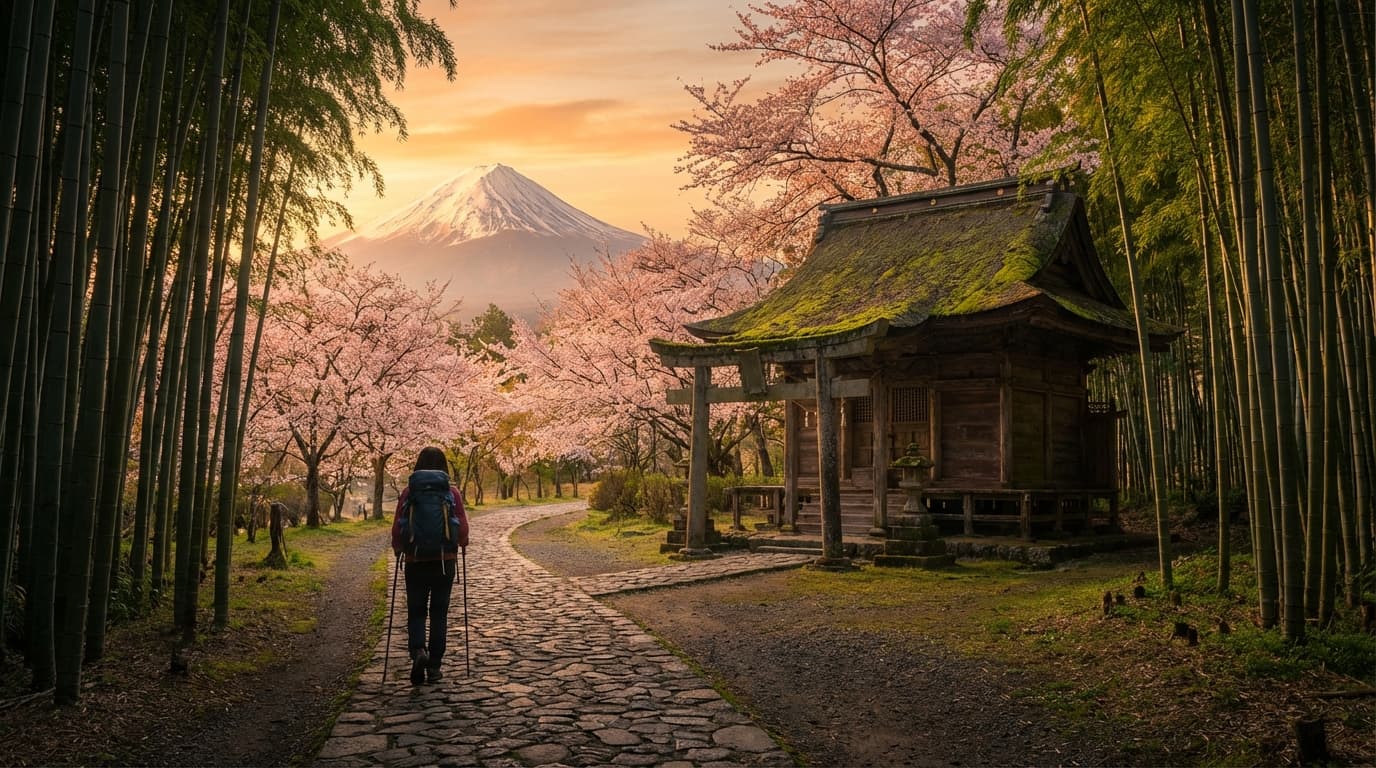
Best Temple and Shrine Walks in Kyoto: Complete Guide to Sacred Routes
Kyoto's temples and shrines aren't just architectural masterpieces—they're living spiritual spaces where centuries of Japanese culture unfold beneath towering torii gates and moss-covered stone paths. Temple and shrine walks in Kyoto offer far more than typical tourist attractions; they're meditative journeys through Japan's soul. During our extended time exploring Kyoto, we discovered that the most transformative experiences happen not in the crowded main halls, but on the quiet walking routes connecting these sacred sites.
Key Takeaways
| Question | Answer |
|---|---|
| What is the best time to visit? | Early morning (6-8 AM) or late afternoon (4-6 PM) to avoid crowds; spring (March-May) and autumn (October-November) offer ideal weather |
| How much does it cost? | ¥500-1,000 per temple entrance; guided walks ¥3,000-8,000 per person |
| How do I get there? | Kyoto Station via bullet train from Tokyo (2h 15min); local buses and bicycles for temple routes |
| Is it safe? | Extremely safe; well-marked trails with clear signage throughout |
| What should I book in advance? | Guided walks during peak season (April, November); accommodation near Higashiyama district |
| What's the best walking distance? | 5-8 km per day allows time for contemplation and photography |
| Do I need special clothing? | Comfortable walking shoes essential; modest dress recommended (covered shoulders/knees) |
1. The Fushimi Inari Thousand Gates Walk
The vermillion torii gates of Fushimi Inari Shrine create one of Japan's most iconic images, but most visitors experience only the first 20 minutes of what's actually a 4-5 km mountain trail. When we visited early on a misty morning, we discovered an entirely different shrine experience beyond the Instagram crowds—a genuine pilgrimage route where locals still come to pray.
The walk begins at the main shrine (free entry) and ascends through increasingly narrow passages lined with thousands of vermillion gates donated by businesses over centuries. The trail splits into multiple routes, with the upper reaches offering solitude and sweeping views across Kyoto's southern districts. The entire experience takes 2-3 hours if you explore thoroughly, with the most rewarding sections occurring after the first 45 minutes when casual tourists turn back.
Getting There and Logistics
Fushimi Inari is located in south Kyoto, approximately 30 minutes from Kyoto Station via the JR Nara Line (¥150). Exit at Inari Station and follow the 5-minute walk uphill to the main shrine entrance. Arrive before 7 AM to experience the gates in near-solitude; by 9 AM, the lower sections become congested with tour groups.
What to Expect on the Trail
- Elevation gain: Approximately 230 meters over 4 km
- Surface: Stone steps, dirt paths, and wooden boardwalks—wear proper hiking shoes
- Facilities: Minimal; bring water and snacks from Kyoto Station
- Photography: The best light occurs 6-8 AM and 4-5 PM; midday creates harsh shadows on the gates
Did You Know? Fushimi Inari Shrine is dedicated to Inari, the kami of rice, agriculture, and prosperity, with over 30,000 sub-shrines throughout Japan.
2. The Philosopher's Path to Nanzen-ji Temple Route
The Philosopher's Path represents everything we love about Kyoto's temple walks—a 2 km canal-side trail lined with cherry trees, connecting dozens of smaller temples and traditional machiya houses. Named after philosopher Nishida Kitarō, who walked this path daily, the route feels more like a neighborhood stroll than a tourist attraction, especially outside cherry blossom season.
Our team spent an entire afternoon walking this route in October, stopping at unexpected shrines tucked between residential gardens. The walk culminates at Nanzen-ji Temple, one of Kyoto's most important Zen temples, where the famous brick aqueduct and expansive grounds justify the ¥600 entrance fee. The entire experience—from path to temple exploration—takes 3-4 hours at a leisurely pace.
Route Details and Highlights
The path begins near Ginkakuji Temple (the Silver Pavilion) in the north and flows south toward Nanzen-ji. Along the way, you'll pass Ōtani Mausoleum, several small neighborhood shrines, and the charming Nanzenji Monzeki temple. The route is entirely flat and paved, making it accessible for most fitness levels.
Best Seasons and Timing
- Spring (late March-April): Cherry blossoms create a tunnel effect over the canal; expect crowds
- Autumn (October-November): Maple trees turn brilliant red; fewer tourists than spring
- Summer (June-August): Early morning walks before 8 AM avoid heat; the canal provides cooling shade
- Winter (December-February): Peaceful and atmospheric; bring layers as mornings are cold
3. The Arashiyama Bamboo Grove and Temple Circuit
The Arashiyama Bamboo Grove is undeniably touristy, but the surrounding temple circuit transforms the area into a legitimate spiritual walk. We initially avoided Arashiyama due to its reputation for crowds, but discovered that extending the walk beyond the famous grove to include Tenryu-ji Temple, Okochi Villa, and the Sagano area reveals why this district has been sacred for over 1,200 years.
The bamboo grove itself (free, open 24 hours) occupies just 400 meters, but arriving before 6:30 AM grants you 30 minutes of near-solitude among the 16,000 bamboo stalks. The real walk begins after exiting the grove—a 6-7 km circuit through temples, traditional gardens, and mountain paths that most tourists never explore.
The Extended Arashiyama Circuit
Morning segment (2-3 hours): Bamboo Grove → Okochi Villa (¥1,000 entry) → Sagano scenic overlook
Afternoon segment (2-3 hours): Tenryu-ji Temple (¥800 garden, ¥1,600 with building access) → Arashiyama Park → Togetsukyo Bridge area
The walk includes significant elevation changes, particularly on the mountain sections between Okochi Villa and the Sagano viewpoint. Proper hiking shoes are essential; the paths are well-maintained but steep in places.
Practical Considerations
- Crowds: Bamboo grove reaches maximum capacity 8 AM-4 PM; visit outside these hours
- Facilities: Numerous cafes and restaurants near Togetsukyo Bridge; limited options on mountain sections
- Cost: ¥1,800-2,400 total for temple entries; no entrance fee for the bamboo grove itself
- Duration: 5-7 hours for the complete circuit; can be split across two days
Did You Know? Tenryu-ji Temple is one of Kyoto's Five Great Zen Temples and a UNESCO World Heritage Site, with gardens designed by the legendary monk-artist Muso Soseki.
4. The Higashiyama District Walking Tour
The Higashiyama district offers the most authentic temple-walking experience in Kyoto, with a 3-4 km route connecting Kiyomizu-dera, Sannenzaka shopping street, and the atmospheric Ninenzaka alley. Unlike the crowded Arashiyama, Higashiyama maintains a neighborhood feel while offering world-class temples and shrines.
When we explored Higashiyama on a weekday morning, we found ourselves alone in the courtyards of smaller temples, able to sit in meditation gardens without interruption. The district's charm lies in its layering—major temples sit alongside family-run shops, traditional tea houses, and hidden shrines accessible only to those willing to wander off the main paths.
Key Temples on the Higashiyama Route
Kiyomizu-dera Temple (¥400 entry) dominates the district with its famous wooden stage overlooking Kyoto. Arrive by 7 AM to experience the temple before crowds; the morning light on the wooden architecture is exceptional. The temple's name means "pure water," referencing the waterfall within its grounds believed to grant wishes.
Sannenzaka and Ninenzaka streets connect Kiyomizu-dera to the lower district, lined with traditional shops, cafes, and smaller shrines. These aren't tourist traps—they're genuine neighborhood streets where locals shop for tea, pottery, and traditional sweets. We recommend stopping at a small shrine tucked between shops rather than rushing through to the next major temple.
Navigation and Logistics
- Starting point: Kiyomizu-Gojo Station (Keihan Line) or Gojo Station (Hankyu Line)
- Route distance: 3-4 km, mostly downhill from Kiyomizu-dera
- Duration: 3-4 hours including temple visits
- Best time: Weekday mornings (Tuesday-Thursday) before 9 AM
- Facilities: Numerous cafes on Sannenzaka; convenience stores on Ninenzaka
Comparison: Higashiyama vs. Arashiyama
| Route | Best For | Distance | Cost | Crowds |
|---|---|---|---|---|
| Higashiyama | Authentic temples, shopping, photography | 3-4 km | ¥400-800 | Moderate (manageable) |
| Arashiyama | Nature, scenic views, famous sites | 6-7 km | ¥1,800-2,400 | High (especially grove) |
| Philosopher's Path | Peaceful walks, small temples, locals | 2 km | ¥600-1,200 | Low to moderate |
| Fushimi Inari | Spiritual experience, hiking, solitude | 4-5 km | Free-¥500 | Variable by time |
5. The Gion District and Maruyama Park Route
Gion is famous as Kyoto's geisha district, but its temple heritage runs equally deep. The 2-3 km walk connecting Yasaka Shrine, Maruyama Park, and the surrounding neighborhood temples offers a different perspective on Kyoto—one where spirituality intersects with the district's artistic traditions.
Yasaka Shrine (free entry) sits at the heart of Gion, with a peaceful forested precinct despite its central location. The shrine's main gate, visible from Higashiyama district, marks the beginning of a route that descends through Maruyama Park's wooded paths toward the geisha houses and traditional restaurants of Gion proper.
The Gion Walking Experience
Upper section: Yasaka Shrine → Maruyama Park (free) → Shoren-in Temple (¥600)
Lower section: Gion streets → Kiyomizu-dera connections → Higashiyama district
The park itself contains several smaller shrines and meditation spots overlooked by most visitors. We discovered a small waterfall shrine where locals leave coins and prayers—the kind of authentic moment that defines meaningful temple walks in Kyoto.
Gion-Specific Considerations
- Photography: Respect geisha and maiko (apprentice geisha) by not photographing them without permission
- Timing: Visit early morning (before 8 AM) to see geisha returning from evening appointments; evening (5-7 PM) to see them heading out
- Dining: Gion offers exceptional Japanese food, from casual noodle shops to Michelin-starred restaurants
- Atmosphere: The district transforms from peaceful temple space (morning) to lively entertainment area (evening)
6. The Kurama and Kibune Mountain Temple Walk
For those seeking a more adventurous temple walk, the Kurama-Kibune route offers a 6-7 km mountain trail connecting two important shrines in Kyoto's northern mountains. This walk requires proper hiking preparation but rewards visitors with solitude, natural beauty, and authentic spiritual spaces untouched by mass tourism.
Kurama Shrine (free entry) sits at 570 meters elevation, accessible via cable car or a steep 30-minute hike. The shrine is dedicated to the fire god Bishamonten and features a dramatic red torii gate marking the entrance. From Kurama, the trail descends through forest to Kibune Shrine, a water deity shrine where locals come to pray for rain during droughts.
Kurama-Kibune Route Details
Difficulty level: Moderate to challenging; significant elevation changes and uneven terrain
Duration: 2-3 hours for the main trail; 4-5 hours including both shrines and surrounding exploration
Best seasons: Spring (April-May) and autumn (October-November); avoid summer heat and winter snow
What to bring: Proper hiking boots, water (2+ liters), snacks, and a light rain jacket even on clear days
Accessing the Route
- From Kyoto Station: 45 minutes via Keihan Line to Kurama Station
- Cable car option: ¥900 round trip to Kurama Shrine (saves 30 minutes of steep climbing)
- Return route: Descend to Kibune Shrine, then take bus back to Kurama Station area
Did You Know? Kibune Shrine is one of Japan's oldest shrines, with records dating back 1,300 years. During summer, visitors dine on platforms suspended over the cool mountain stream—a tradition called "kawadoko."
Source: Kyoto Official Tourism Guide
7. The Arashiyama to Sagano Scenic Loop
This 8-9 km loop combines the famous Arashiyama area with the quieter Sagano neighborhood, offering a full-day temple and nature walk. The route includes several lesser-known temples that rival the famous sites in beauty but see a fraction of the visitors.
Okochi Villa (¥1,000) sits at the route's highest point, offering panoramic views and a tea ceremony experience (additional ¥500). The villa's gardens are meticulously maintained, and the surrounding forest provides cooling shade even in summer. From here, the trail descends through bamboo groves toward Sagano's traditional neighborhoods.
Route Highlights
- Okochi Villa gardens: Designed to frame views of Kyoto's distant mountains
- Sagano bamboo paths: Less crowded than the main Arashiyama grove
- Tenryu-ji Temple: UNESCO site with exceptional garden design
- Togetsukyo Bridge: Iconic photo spot; visit early morning to avoid crowds
Practical Walking Information
- Total distance: 8-9 km with 300+ meters elevation gain
- Duration: 5-7 hours including temple visits
- Cost: ¥2,400-3,000 for all temple entries
- Best for: Full-day excursion; bring packed lunch or plan restaurant stops
- Footwear: Sturdy hiking shoes essential for forest sections
8. Guided Temple Walks vs. Self-Guided Routes
Our experience comparing guided walks to independent exploration reveals distinct advantages to each approach. Guided temple walks typically cost ¥3,000-8,000 per person and include cultural context, temple access, and sometimes meals. Self-guided walks cost only entrance fees (¥500-1,000 per temple) but require more planning and miss insider knowledge.
When to Choose Guided Walks
- Language barriers: English-speaking guides explain temple history and architecture
- Cultural depth: Guides share stories about specific statues, gardens, and spiritual practices
- Efficiency: Pre-planned routes maximize temple visits in limited time
- Photography: Professional guides know optimal light and composition angles
- Group experience: Social aspect appeals to solo travelers
When Self-Guided Works Better
- Flexible timing: Spend hours in a single temple without group constraints
- Budget consciousness: Entrance fees only, no guide markup
- Personal pace: Meditate, sketch, or photograph without group pressure
- Authentic interaction: More likely to encounter locals and smaller shrines
- Repeat visits: Return to favorite temples without guide repetition
Did You Know? Many Kyoto temples offer early morning meditation sessions (zazen) for visitors—a deeply authentic experience unavailable on standard guided tours. Sessions typically cost ¥500-1,000 and last 45 minutes.
Source: Lonely Planet Japan
9. Seasonal Considerations and Best Times to Walk
Spring (March-May) brings cherry blossoms and warm weather but also massive crowds. We recommend visiting temples before 7 AM or after 4 PM to experience the spiritual atmosphere rather than the tourist spectacle. Accommodation fills quickly; book 2-3 months in advance.
Autumn (October-November) offers ideal weather, maple foliage, and moderate crowds. This is genuinely the best season for temple walks—temperatures are cool, light is golden, and most temples are less congested than spring. However, popular sites still fill with visitors; early morning visits remain essential.
Summer (June-August) presents heat and humidity challenges but offers the fewest tourists. Early morning walks (starting 6-7 AM) are rewarding; afternoon temple exploration becomes uncomfortable. Many temples offer evening illuminations during summer, creating magical nighttime experiences.
Winter (December-February) brings cold mornings and occasional snow but exceptional peace. Kyoto's temples in winter light are stunning—bare branches reveal architectural details hidden by foliage in other seasons. Fewer tourists mean you can sit undisturbed in temple gardens.
Monthly Visitor Patterns
- Peak months: April, May, October, November (book guides 2-3 months ahead)
- Moderate months: March, June, September, December
- Quiet months: January, February, July, August (best for self-guided walks)
10. Practical Booking Guide and Logistics
Getting to Kyoto
From Tokyo, the Shinkansen (bullet train) reaches Kyoto Station in 2 hours 15 minutes (¥13,320 standard class). The Japan Rail Pass covers this journey if you have a multi-day pass. From Osaka, local trains reach Kyoto in 75-90 minutes (¥560-1,100).
Local Transportation
Buses: Kyoto's bus system is extensive and tourist-friendly. The ICOCA card (¥2,000, ¥1,500 usable) works on all buses and trains. A day pass (¥700) covers unlimited bus travel—excellent value for temple-hopping days.
Bicycles: Renting a bicycle (¥1,000-1,500/day) is popular for Arashiyama and Higashiyama routes. Several rental shops operate near Kyoto Station; reserve ahead during peak season.
Walking: Most temple routes are designed for pedestrians; comfortable shoes are non-negotiable.
Accommodation Recommendations
Stay in the Higashiyama district for proximity to major temples and authentic neighborhood atmosphere. Kyoto hotels range from budget guesthouses (¥3,000-5,000/night) to luxury ryokans (¥20,000+/night). We recommend mid-range options (¥8,000-15,000) offering comfort without excessive cost.
Booking Guided Walks
Reputable operators offer English-language temple walks:
- Local tour companies: Often provide specialized routes (early morning, photography-focused, meditation-focused)
- Hotel concierge: Can arrange walks and provide recommendations
- Online platforms: Various booking sites offer pre-arranged tours with reviews
- Prices: ¥3,000-8,000 per person depending on group size and inclusions
What to Pack
- Comfortable walking shoes: Non-negotiable; temple paths include stone steps and uneven surfaces
- Modest clothing: Covered shoulders and knees show respect; some temples require shoe removal
- Sun protection: Hat, sunscreen, and sunglasses for full-day walks
- Water bottle: Refillable bottles work; fountains exist at major temples
- Small backpack: 15-20 liters sufficient for day walks; keeps hands free for photography
Frequently Asked Questions
What's the best temple walk for first-time visitors?
The Philosopher's Path to Nanzen-ji route offers the ideal introduction—manageable distance (2 km), flat terrain, and a mix of famous temples and quiet neighborhood shrines. It's accessible year-round and doesn't require early morning planning to avoid crowds.
Can I do multiple temple walks in one day?
Yes, but not all of them. The Higashiyama district walk (3-4 km) pairs well with an afternoon visit to Gion and Maruyama Park (2-3 km) for a 5-7 hour full day. Attempting Arashiyama plus Philosopher's Path in one day leads to exhaustion rather than appreciation.
Are temple walks safe for solo travelers?
Absolutely. Kyoto is extremely safe, routes are well-marked, and you'll encounter other walkers throughout the day. Solo travelers often report that temple walks feel meditative and enriching precisely because of the solitude.
Do I need to speak Japanese?
Not necessary. Major temples have English signage, and most routes are intuitive. However, learning basic phrases ("excuse me," "thank you," "water") enhances interactions with locals and temple staff.
What's the best way to avoid crowds?
Arrive at major temples before 7 AM or after 4 PM. Weekday visits (Tuesday-Thursday) see fewer tourists than weekends. Visiting during shoulder seasons (May-June, September) balances good weather with manageable crowds.
Can I visit temples in any order, or are there traditional routes?
Temples can be visited in any order, but certain routes (like Philosopher's Path to Nanzen-ji) flow naturally. Traditional pilgrimage routes exist but aren't required for meaningful visits. Create your own route based on interests and energy levels.
Conclusion
Temple and shrine walks in Kyoto represent far more than sightseeing—they're opportunities to experience Japan's spiritual heritage firsthand, moving at a pace that allows genuine contemplation rather than rushed photo collection. Whether you choose the meditative Philosopher's Path, the adventurous Kurama-Kibune mountain route, or the culturally rich Higashiyama circuit, the key is arriving early, walking slowly, and remaining open to unexpected discoveries in quiet temple gardens.
Our team's experience across Kyoto's temple routes confirms that the most memorable moments happen not at famous sites during peak hours, but in smaller shrines, on forest paths, and in the spaces between major attractions. Start with the routes outlined above, but don't hesitate to wander down unmarked paths—some of Kyoto's most rewarding temples hide in neighborhoods where few tourists venture.
For comprehensive planning, visit our Kyoto attractions guide and Kyoto hotels page for accommodation and additional activity recommendations. Consider pairing your temple walks with Kyoto food experiences to complete your cultural immersion in this extraordinary city.
Ready to plan your temple walk adventure? Start with early morning visits to avoid crowds, invest in comfortable shoes, and allow yourself to move at a contemplative pace. Kyoto's temples have welcomed pilgrims for over 1,200 years—you're simply continuing a tradition that transcends tourism.
Sources & References
This article is based on first-hand experience and verified with the following official sources:

Go2Japan Team
Exploring Japan since 2021 | 35+ prefectures visited | Updated monthly
We are a team of travel writers and Japan enthusiasts who explore the country year-round. Our guides are based on first-hand experience, local knowledge, and verified official sources.
More about us →People Also Read
Kyoto Temple Guide: 15 Must-Visit Temples & Shrines
Guide to Kyoto's 15 best temples and shrines. Includes Fushimi Inari, Kinkaku-ji, Kiyomizu-dera, tips on etiquette, timing, and suggested itineraries.
Free Things to Do in Kyoto: Complete Budget Travel Guide 2026
Discover 10 free things to do in Kyoto with exact costs, money-saving tips, and sample day budgets for budget travelers.
Free Things to Do in Kyoto: Complete Budget Travel Guide 2026
Discover 10+ free things to do in Kyoto. Budget guide with exact costs in JPY/USD, sample day budgets, and insider money-saving tips.
Japanese Etiquette Guide: 20 Do's and Don'ts
20 essential Japanese etiquette rules for travelers -- from train behavior and onsen rules to temple customs and tipping. What to do, what to avoid, and why it matters.
Plan Your Japan Trip
Book hotels, transport, activities, and get connected with an eSIM
Some links are affiliate links. We may earn a commission at no extra cost to you.