Best Day Trips from Tokyo: Kamakura, Nikko, Hakone & More
Best Day Trips from Tokyo: Kamakura, Nikko, Hakone & More
Tokyo is one of the world's great cities, but some of Japan's most memorable experiences sit within 1--2 hours of its train stations. A twelfth-century samurai capital with a giant outdoor Buddha. A mountain town where Japan's most ornate shrine complex glows gold in the forest. An onsen valley with views of Mount Fuji across a volcanic lake. All reachable before lunch. This guide covers the best day trips from Tokyo, with exact transport details, what to prioritize, and how long you actually need.
Quick Comparison: Day Trips at a Glance
| Destination | Travel Time | Cost (one-way) | Best For |
|---|---|---|---|
| Kamakura | 1 hr | ¥940 | Temples, Buddha, coastal walk |
| Nikko | 2 hrs | ¥2,720 | Ornate shrines, waterfalls, nature |
| Hakone | 85 min | ¥2,470 | Onsen, Mt. Fuji views, art |
| Yokohama | 25--40 min | ¥290--480 | Chinatown, waterfront, museums |
| Kawaguchiko (Fuji area) | 2 hrs | ¥1,750 | Mt. Fuji, lakes, hiking |
| Nikko | 2 hrs | ¥2,720 | Shrines, nature, Kegon Falls |
| Chichibu | 1.5 hrs | ¥790 | Rural temples, nature, wisteria |
1. Kamakura: The Ancient Capital by the Sea
Travel time: ~1 hour | Best value day trip
Kamakura was Japan's political capital from 1185 to 1333 under the Kamakura Shogunate. Today it is a compact coastal town packed with over 65 temples and shrines, the famous Kotoku-in Great Buddha (Daibutsu), and walking trails connecting them all through forested hills. It is also about 5 minutes from the beach in summer.
How to Get There
Take the JR Yokosuka Line from Tokyo Station to Kamakura Station: approximately 56 minutes, ¥940 one-way. No pass or reservation needed -- just tap your IC card. The same line connects from Shibuya and Shinagawa with shorter journey times.
What to See
Kotoku-in Temple and the Great Buddha (Daibutsu): The 13.35-meter bronze Buddha was cast in 1252 and has sat outdoors since the hall housing it was destroyed by a tsunami in 1498. Entry ¥300. You can enter the hollow statue for ¥20 extra.
Hase-dera Temple: A short walk from the Daibutsu, with a beautiful garden, sea views, and a golden 11-headed Kannon statue at the main hall. Entry ¥400.
Tsurugaoka Hachimangu Shrine: The heart of Kamakura, connected to the station by a long approach lined with cherry trees (sakura) in spring. Free entry.
Hokokuji Temple (Bamboo Temple): East of Kamakura, a small Zen temple with a dense grove of madake bamboo in its garden. Entry ¥300 including tea.
Komachi-dori: The covered street between the station and Hachimangu lined with shops selling ningyo-yaki (stuffed cakes), local cookies, and handmade goods.
The Daibutsu Hiking Trail
A 2-hour trail connects several temples through the hills above Kamakura, ending at the Great Buddha. It is well-signposted, low-difficulty, and passes through quiet forest that feels a world away from the tourist trails below.
Enoshima Side Trip
Thirty minutes by the Enoden Line from Kamakura (¥260), the island of Enoshima has a seaside shrine, caves, and views of Mount Fuji on clear days. Add 2--3 hours to your day.
Kamakura in a Day
- Morning: Tsurugaoka Hachimangu, Komachi-dori
- Late morning: Hase-dera and Great Buddha
- Afternoon: Hokokuji bamboo grove, coastal walk, or Enoshima
- Evening: Early dinner before returning to Tokyo
2. Nikko: Gold Shrines in the Mountain Forest
Travel time: ~2 hours | Best for history and grandeur
Nikko sits in the forested mountains of Tochigi Prefecture, 140km north of Tokyo. It is home to Toshogu Shrine -- the mausoleum of Tokugawa Ieyasu, the shogun who unified Japan -- and one of the most elaborately decorated shrine complexes in the country. The surrounding area also has dramatic waterfalls, mountain lakes, and some of Japan's best autumn foliage in November.
How to Get There
Tobu Railway: Tobu-Asakusa to Tobu-Nikko on the Tobu Nikko Limited Express "Spacia" -- about 2 hours, ¥2,720 one-way including seat reservation. The Nikko Pass (¥4,780) covers the round-trip rail plus unlimited buses within Nikko for 2 days -- excellent value.
JR Shinkansen alternative: Tokyo Station to Utsunomiya by Shinkansen (50 minutes, ¥4,290), then the JR Nikko Line to Nikko Station (45 minutes, ¥770). Faster but more expensive and JR Pass holders can use this route.
What to See
Toshogu Shrine: The centerpiece. Five national treasures and 42 buildings designated as important cultural properties. The famous Nemuri-neko (Sleeping Cat) carving above the gate, the three monkeys (Hear No Evil, See No Evil, Speak No Evil) relief, and the main hall's gold and lacquer decorations are extraordinary. Entry ¥1,300.
Rinno-ji Temple: A Tendai Buddhist temple at the entrance to the shrine complex, housing three large gilt Buddha statues. Entry ¥1,000.
Futarasan Jinja: The oldest shrine in Nikko, quieter and more atmospheric than the busy Toshogu. Entry ¥200.
Kegon Falls: An 18-minute bus ride from Nikko Station leads to one of Japan's most famous waterfalls, dropping 97 meters into a gorge. A lift descends to an observation platform at the base (¥570). Peak beauty is in autumn.
Yumoto Onsen: Further into the mountains (45-min bus from Chuzenji), a small onsen village at 1,478 meters. If you want to extend the day into the evening or stay overnight.
Nikko Timing
Autumn (late October to mid-November) is Nikko's best season -- foliage surrounds the shrine complex in deep red and orange. Spring cherry blossoms also bloom along the approach road. Summer is green and cool (the elevation makes it pleasant).
Nikko in a Day
- 8:00: Depart from Asakusa, arrive ~10:00
- 10:00--13:00: Toshogu, Rinno-ji, Futarasan
- 13:00--14:00: Lunch near the shrine (yuba -- tofu skin -- is Nikko's local specialty)
- 14:00--16:00: Kegon Falls and Chuzenji Lake by bus
- 17:00: Return bus to station, evening train back to Tokyo
3. Hakone: Onsen, Mount Fuji Views, and Volcanic Art
Travel time: ~85 minutes | Best for onsen and scenery
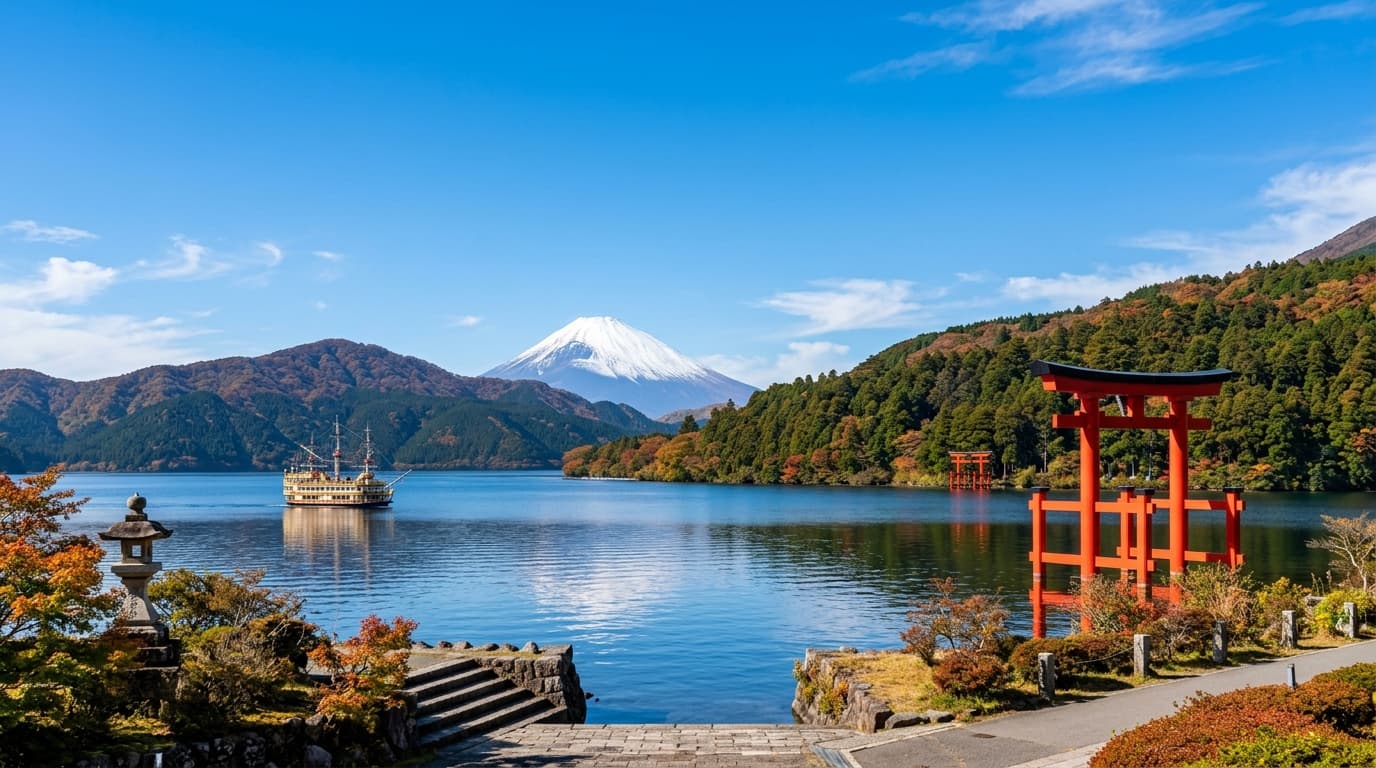
Hakone sits in a volcanic caldera in Kanagawa Prefecture, close enough to Mount Fuji for clear-day views and rich enough in geothermal activity to have produced some of Japan's best onsen (hot spring) bathing towns. The area also holds an extraordinary open-air art museum, a volcanic sulphur field, and a lake cruise overlooked by Fuji on good days.
How to Get There
Odakyu Romancecar: Shinjuku to Hakone-Yumoto, approximately 85 minutes, ¥2,470 including seat reservation fee. The train is comfortable and scenic.
Hakone Free Pass: ¥6,100 from Shinjuku (2-day version). Covers the Romancecar (minus seat reservation fee), the Hakone Tozan Mountain Railway, the Hakone Ropeway, Togendai Cable Car, and the Pirate Ship cruise on Lake Ashi. Essential for seeing the whole area without calculating individual fares.
What to See
Hakone Open-Air Museum: One of Japan's finest sculpture parks, with works by Rodin, Giacometti, Henry Moore, and a dedicated Picasso gallery. Open daily. Entry ¥1,600, included in some passes.
Owakudani: A volcanic sulphur field accessible by the Hakone Ropeway. You can see active steam vents and eat kuro-tamago -- eggs hard-boiled in the sulphur springs, their shells blackened. Said to add 7 years to your life per egg. Entry to the area is included in the ropeway ticket; ropeway is included in the Hakone Free Pass.
Lake Ashi and the Pirate Ships: Cruise from Togendai to Hakone-machi or Moto-Hakone, with Fuji visible over the lake on clear days. The torii gate of Hakone Shrine stands in the water near the Moto-Hakone landing.
Hakone-Yumoto Onsen: The main onsen town at the start of the Hakone area. Dozens of ryokan and public baths. If you want a day-use onsen (¥1,000--2,000), several facilities near the station accept visitors without an overnight stay.
Mount Fuji Views
Views are clearest in winter (December--February) and in autumn mornings. Summer brings cloud cover most afternoons. Check the Fujisan webcam the night before; if it is clear at night it will likely be visible in the morning.
Hakone in a Day
- 8:00: Romancecar from Shinjuku
- 9:30: Arrive Hakone-Yumoto, start the mountain railway
- 10:00--12:00: Hakone Open-Air Museum
- 12:00--14:00: Ropeway to Owakudani, eat black eggs, Fuji views
- 14:00--15:30: Cable car to Togendai, Pirate Ship to Moto-Hakone
- 15:30--16:30: Hakone Shrine, lakeside walk
- 17:00: Bus to Hakone-Yumoto, optional onsen dip
- 19:00: Romancecar back to Shinjuku
4. Yokohama: The City Just South of Tokyo
Travel time: 25--40 minutes | Best for easy half-day
Yokohama is Japan's second-largest city and sits so close to Tokyo that it barely counts as a day trip -- yet it offers a genuinely different character. Japan's largest Chinatown (Chukagai), a working port waterfront (Minato Mirai), and the Red Brick Warehouse cultural complex all cluster within walking distance.
How to Get There
JR Tokaido Line from Tokyo Station to Yokohama: 30 minutes, ¥480. Alternatively the Toyoko Line from Shibuya to Yokohama in 25 minutes.
What to See
Chinatown (Chukagai): Over 600 restaurants and shops in a dense few blocks. Best for lunch (dim sum, Peking duck, Yokohama-style ramen).
Minato Mirai 21: The bay area with the Landmark Tower (observation deck ¥1,000), Yokohama Museum of Art, and Cosmo World amusement park (free entry, rides extra).
Yamashita Park and the Hikawa Maru: A seafront park with a retired ocean liner you can board. Free park, ¥300 ship entry.
Sankeien Garden: A traditional Japanese garden 30 minutes by bus from Yokohama Station, housing relocated historic buildings from across Japan. Entry ¥500.
5. Kawaguchiko (Fuji Five Lakes Area): The Mount Fuji Base
Travel time: ~2 hours | Best for Fuji views and outdoor activities
Lake Kawaguchi is the most accessible of the Fuji Five Lakes and offers the iconic view of Mount Fuji reflected in still water. It is also the base for the Fuji Climb Trail for those doing the ascent (season: July--early September only).
How to Get There
Highway bus: Shinjuku Bus Terminal (Busta Shinjuku) to Kawaguchiko -- approximately 2 hours, ¥1,750 one-way. Book ahead via the Fujikyu website. Return buses run until evening.
Fujikyu Railway: Otsuki (JR Chuo Line from Shinjuku, ~75 min) to Kawaguchiko by Fujikyu Railway (50 min). Slower but scenic.
What to See
Kawaguchiko Ohashi Bridge area: Classic Fuji reflection shots at dawn. The lake's north shore has the best angles.
Chureito Pagoda (Arakurayama Sengen Park): A 5-story pagoda above Fujiyoshida with Fuji framed behind it -- one of Japan's most photographed views. Reach it by train to Fujisan Station, then a 15-minute walk and 398-step climb. Free.
Fujikyuhighland: A theme park at the base of Fuji with some of Japan's best roller coasters (Fujiyama, Takabisha). Entry ¥2,700 (park entry) + rides.
Oshino Hakkai: Eight spring-fed ponds fed by snowmelt from Mount Fuji -- a short bus ride from Kawaguchiko, exceptionally clear water. Entry ¥500.
Planning Your Day Trips
Start early. The biggest difference between a great day trip and a frustrating one is leaving before 8am. Major sights are 30--50% less crowded before 10am. Kamakura and Nikko are especially dramatic in the early morning light.
Check the IC card balance. Day trip transport often costs more than a city day -- top up your Suica before departure.
Consider combination trips. Kamakura and Enoshima pair naturally. Hakone and a Fuji-area stop can be combined with a 2-day Hakone Free Pass. Nikko and Mashiko (a pottery town) work on a 2-day pass.
Avoid Golden Week and sakura peak for Kamakura. Kamakura's main temple road becomes extremely crowded during Golden Week (late April--early May) and cherry blossom peak. Either go very early or choose a different destination during those windows.
From Tokyo, the day trips available to you are exceptional -- ancient temple towns, volcanic mountains, lake shores, and forest shrines, all within 2 hours. The hard part is deciding which ones to leave off the list.
Sources & References
This article is based on first-hand experience and verified with the following official sources:

Go2Japan Team
Exploring Japan since 2021 | 35+ prefectures visited | Updated monthly
We are a team of travel writers and Japan enthusiasts who explore the country year-round. Our guides are based on first-hand experience, local knowledge, and verified official sources.
More about us →People Also Read
Japan Itinerary: How to Plan 7, 10 and 14 Days
Discover how to craft the perfect Japan itinerary for 7, 10, or 14 days, covering Tokyo, Kyoto, and more with practical tips, sights, and routes.
Onsen Guide: Japanese Hot Spring Etiquette & Best Spots
Complete guide to Japanese onsen -- how to use a hot spring bath correctly, tattoo policies, the best onsen towns in Japan, and what to expect at a ryokan.
Nikko Travel Guide: Japan's Ornate Mountain Shrine Town
Discover Nikko's ornate shrines, mountain scenery, and autumn colors. Complete guide with itineraries, where to stay, eat, and practical tips.

Japan in Peak Season vs Low Season: Honest Comparison
Peak vs low season in Japan: crowds, costs, weather, and festivals compared. Plan smarter with honest pros and cons for each season.
Plan Your Japan Trip
Book hotels, transport, activities, and get connected with an eSIM
Some links are affiliate links. We may earn a commission at no extra cost to you.