Japanese Etiquette Guide: 20 Do's and Don'ts
Japan operates on a deeply embedded set of social rules that rarely need to be stated out loud -- because everyone already knows them. As a visitor, you are given significant latitude. Nobody expects perfection. But learning the basics shows respect, avoids genuinely awkward situations, and transforms how locals respond to you. These 20 rules cover the situations you will actually encounter: trains, restaurants, onsen, temples, shoes, money, and public behavior.
On Trains and Public Transport
1. DO: Keep your phone on silent
In Japan, phones are set to silent mode on public transport -- always. This is not optional or widely ignored; it is genuinely universal. Ringtones on trains draw attention the same way loudly burping would. Set your phone to silent before you board.
2. DON'T: Make phone calls in the train car
Step off onto the platform or move to the vestibule between cars for a call. The convention is sign-posted in carriages and followed closely. If you must take an urgent call, answer quietly in the vestibule and keep it brief.
3. DO: Move to the back of the train
Stand away from the doors if the carriage is not full. During rush hour in Tokyo and Osaka, take your bag off your back and hold it in front of you or store it in the overhead rack. This is not a written rule -- it is simply what everyone does.
4. DON'T: Eat on local trains
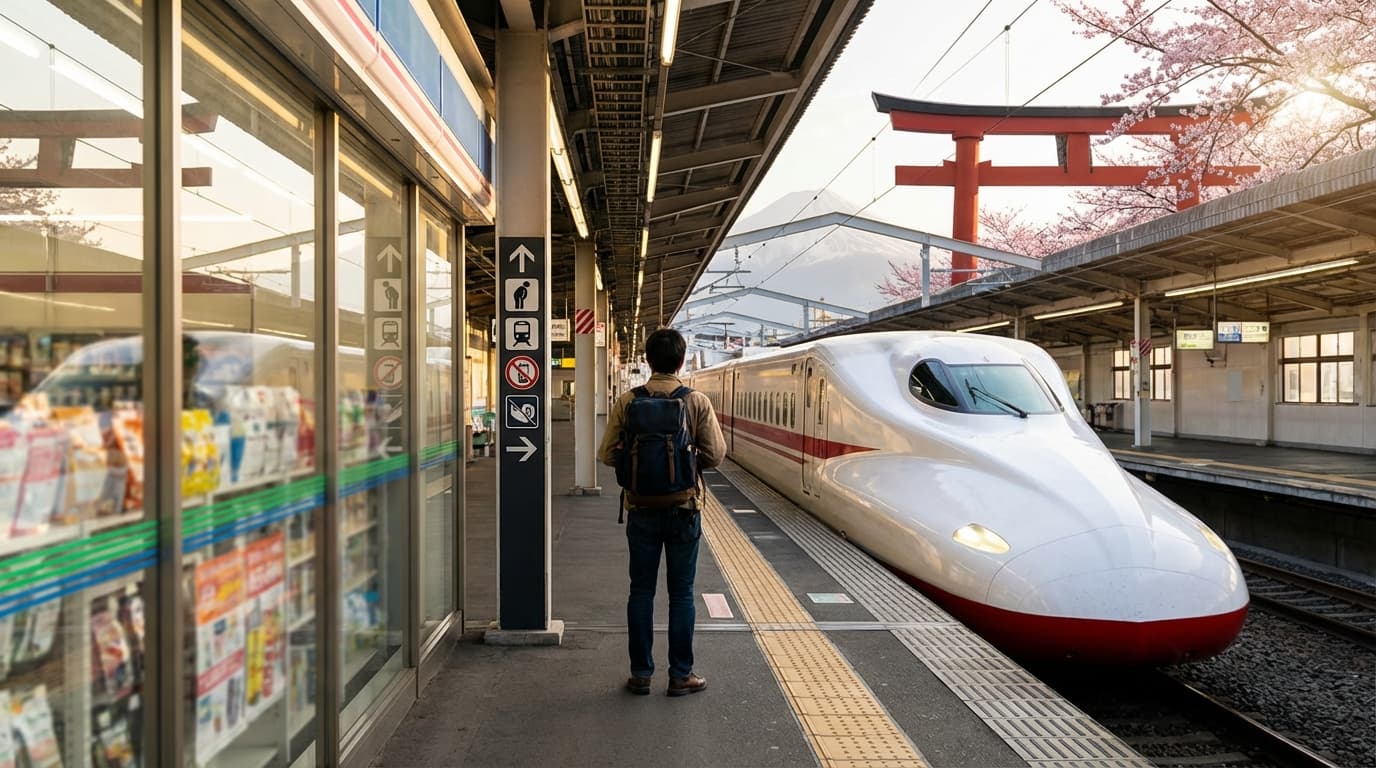
Long-distance shinkansen (bullet trains) and some limited express services provide fold-down trays and sell bento at the station specifically for eating on board -- that is fine. But eating on local metro, subway, and commuter trains is considered poor form and is rarely done by Japanese passengers.
5. DO: Offer your seat (or use the priority seat rules correctly)
Priority seats (near the doors, usually a different color) are reserved for elderly passengers, pregnant women, those with disabilities, and those caring for small children. If you are young and healthy, do not use them when the train is moderately full. On ordinary seats, offering your seat to someone elderly or visibly in need is always the right thing to do.
At Temples and Shrines
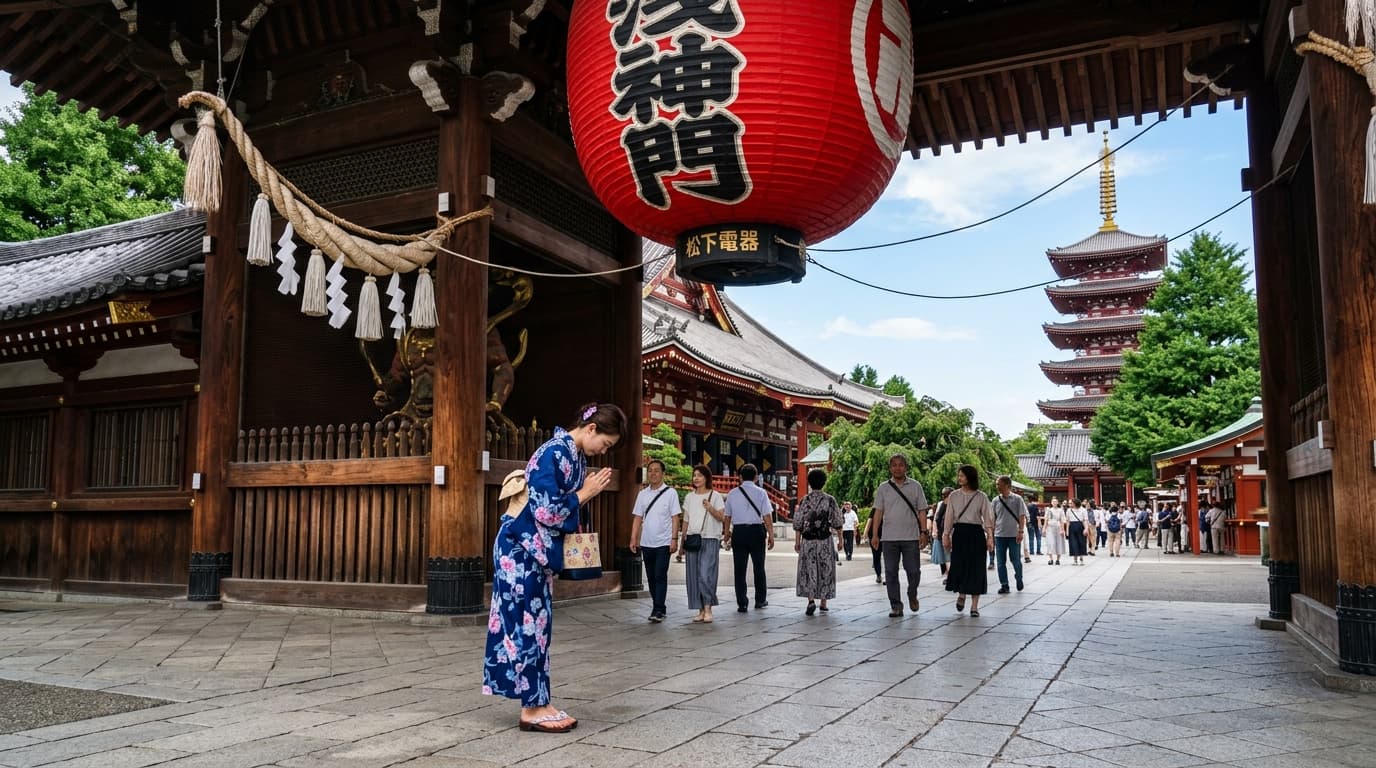
6. DO: Wash your hands at the temizuya
At the entrance to most Shinto shrines, you will find a water basin (temizuya or chozuya). The purification ritual: take the ladle with your right hand and pour water over your left hand. Switch the ladle to your left hand, pour water over your right hand. Then pour water into your cupped left hand, rinse your mouth (spit the water to the side, not back into the basin), and finally rinse your left hand again. This is a ritual, not just hygiene -- treating it as such is appropriate.
7. DON'T: Walk through the center of the torii approach path
The central path (sando) leading to the main shrine hall is considered the path of the kami (Shinto deities). Many Japanese people walk to the side of the center path out of respect. You do not have to know every detail of this, but avoiding strutting down the exact center is a small courtesy.
8. DO: Follow the photography rules
Many temple halls and some inner shrine sanctuaries prohibit photography. Look for signs -- a camera with an X through it is universal. When in doubt, ask or put the camera away. Outdoor temple gardens, approach paths, and most exterior areas are generally fine to photograph.
9. DON'T: Touch sacred objects or step over ritual boundaries
Ropes, fences, and barriers around statues, trees, and buildings are not suggestions. The giant rope (shimenawa) around sacred trees, for example, marks a boundary that you should not cross or touch the rope unnecessarily. Treat shrines and temple grounds as active places of worship -- because they are.
With Food and at Restaurants
10. DO: Say "itadakimasu" before eating
Before a meal, Japanese people say "itadakimasu" -- roughly meaning "I humbly receive this." It is an expression of gratitude for the food and to those who prepared it. You are not required to say it as a visitor, but saying it -- even imperfectly -- is always well-received. After the meal, "gochisosama deshita" (thank you for the meal) is appropriate.
11. DON'T: Tip
Tipping is not done in Japan. Not in restaurants, not in taxis, not in ryokan, not at hair salons. Exceptional service is not rewarded with extra money -- it is simply what is expected in Japanese service culture. Leaving money on the table is confusing at best. Some servers will chase you out of the restaurant to return it.
12. DO: Use both hands when receiving a business card or gift
When someone presents their meishi (business card), receive it with both hands, look at it briefly with genuine attention, and do not immediately stuff it in your pocket. The same principle applies to receiving any item, payment, or gift from someone -- using both hands indicates respect and attention.
13. DON'T: Stick chopsticks upright in rice
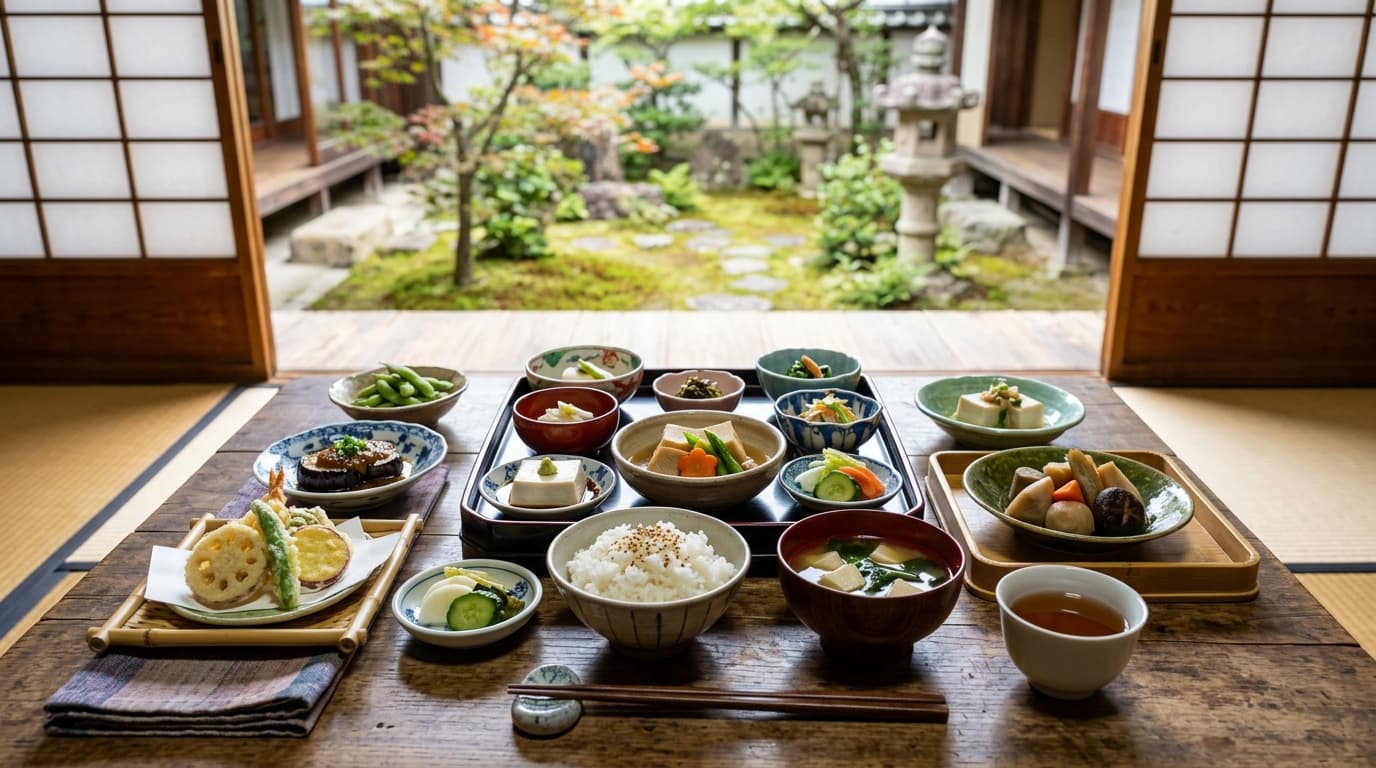
This mimics the incense sticks placed upright in sand at funerals and is associated with death. Rest chopsticks on the chopstick rest (hashioki) provided, or lay them across the top of your bowl. Similarly, do not pass food chopstick-to-chopstick -- this also mirrors a funeral ritual.
14. DO: Slurp your ramen and noodles
This one surprises most Western visitors: slurping noodles loudly is not impolite in Japan. It is a normal and accepted way to eat hot noodles -- the slurp aerates the broth and helps cool the noodles. You do not have to force yourself to slurp, but you will not cause any offence by doing so.
At Onsen and Public Baths
15. DO: Wash thoroughly before entering
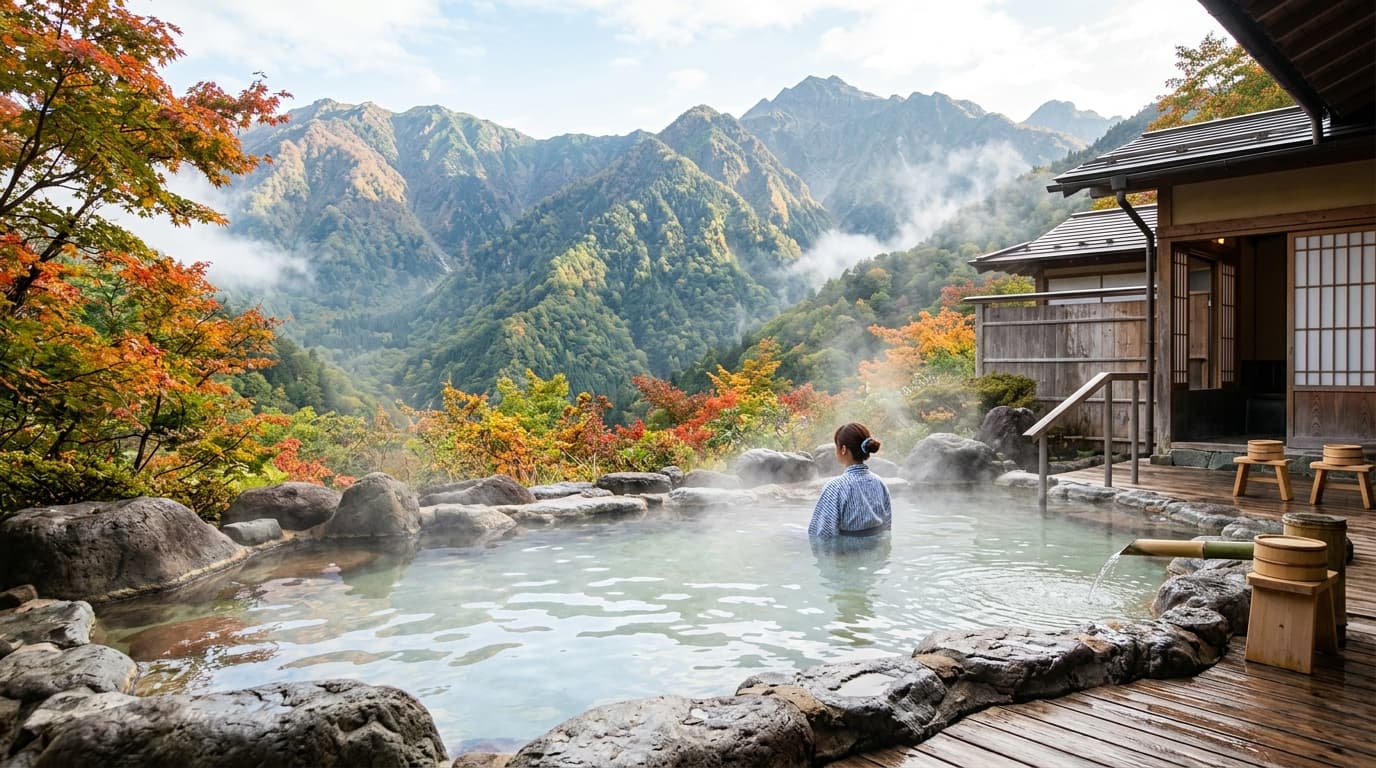
The water in an onsen (hot spring bath) is shared and is for soaking, not washing. Before entering the bath, you must sit at the small shower station along the wall and wash your entire body with soap and shampoo. Rinse completely. Then and only then do you enter the bath. Entering without washing is the number one onsen etiquette violation.
16. DON'T: Put your towel in the water
You are given a small modesty towel (kogaisha) when entering the changing room. This towel is for moving between the changing room and the bath with some modesty, and for resting on your head while you soak. It must not enter the bath water. Leave it on the edge of the bath or fold it on your head.
17. DO: Be aware of tattoo policies
Many public onsen in Japan prohibit tattooed guests. The reasons are complex -- historical association with yakuza (organized crime) -- but the policies are real and enforced at traditional establishments. Some newer facilities, and many in tourist-heavy areas, now welcome tattooed guests or have private baths available. Check ahead. For more detail see our onsen guide.
Shoes, Greetings, and General Behavior
18. DO: Remove shoes where indicated
At private homes, traditional restaurants with tatami seating, ryokan, some temples, and certain cultural venues, you remove shoes at the entrance (genkan). You will see a step up into the main space and/or a shoe rack. Remove shoes and step up -- the threshold itself is sacred in Japanese tradition, so step over it cleanly, not on it. Slippers may be provided for indoor use; bathroom slippers are kept in the bathroom only.
19. DON'T: Blow your nose in public
Or if you must, do so as discreetly as possible and never at a table. The politely Japanese approach is to sniff rather than blow while in public, and to step away to deal with anything more involved. This is one of the more significant cultural gaps for Western visitors and is worth being aware of -- especially in formal or quiet environments.
20. DO: Queue properly and wait your turn
Japan's queuing culture is serious. Orderly lines form at train doors (yellow marks on platforms show exactly where to stand), bus stops, and popular restaurants. Cutting in line, even accidentally, is noticeable. Watch how others are queuing and follow the same pattern.
The Underlying Principle
Most of Japanese etiquette comes down to one concept: meiwaku, which roughly means "causing trouble or inconvenience to others." The social contract in Japan is built around not burdening the people around you -- not with noise, mess, smell, or disruption. If something you are about to do would likely inconvenience or disturb the people nearby, the Japanese instinct is not to do it.
You do not need to speak Japanese or know every rule perfectly to travel well here. Sincere effort and basic courtesy go further than precise knowledge. A bow, a "sumimasen" (excuse me), a two-handed receipt of a card -- these small gestures communicate respect clearly, and they are always noticed.
For more on practical travel in Japan, see our guides to Japanese food, navigating Tokyo, and using konbini.
Sources & References
This article is based on first-hand experience and verified with the following official sources:

Go2Japan Team
Exploring Japan since 2021 | 35+ prefectures visited | Updated monthly
We are a team of travel writers and Japan enthusiasts who explore the country year-round. Our guides are based on first-hand experience, local knowledge, and verified official sources.
More about us →People Also Read
Onsen Guide: Japanese Hot Spring Etiquette & Best Spots
Complete guide to Japanese onsen -- how to use a hot spring bath correctly, tattoo policies, the best onsen towns in Japan, and what to expect at a ryokan.
Japanese Etiquette Guide: Do's and Don'ts for Visitors
Master Japanese etiquette with our comprehensive guide. Learn essential do's and don'ts for temples, restaurants, trains, and public spaces.
Vegetarian & Vegan Guide to Japan
Complete guide to eating vegetarian and vegan in Japan -- navigating dashi, finding plant-based restaurants, useful Japanese phrases, and the best cities for meat-free travel.
Best Temple and Shrine Walks in Kyoto: Complete Guide to Sacred Routes
Discover Kyoto's best temple and shrine walks. Expert routes, costs, booking tips, and insider recommendations from local travel writers.
Plan Your Japan Trip
Book hotels, transport, activities, and get connected with an eSIM
Some links are affiliate links. We may earn a commission at no extra cost to you.