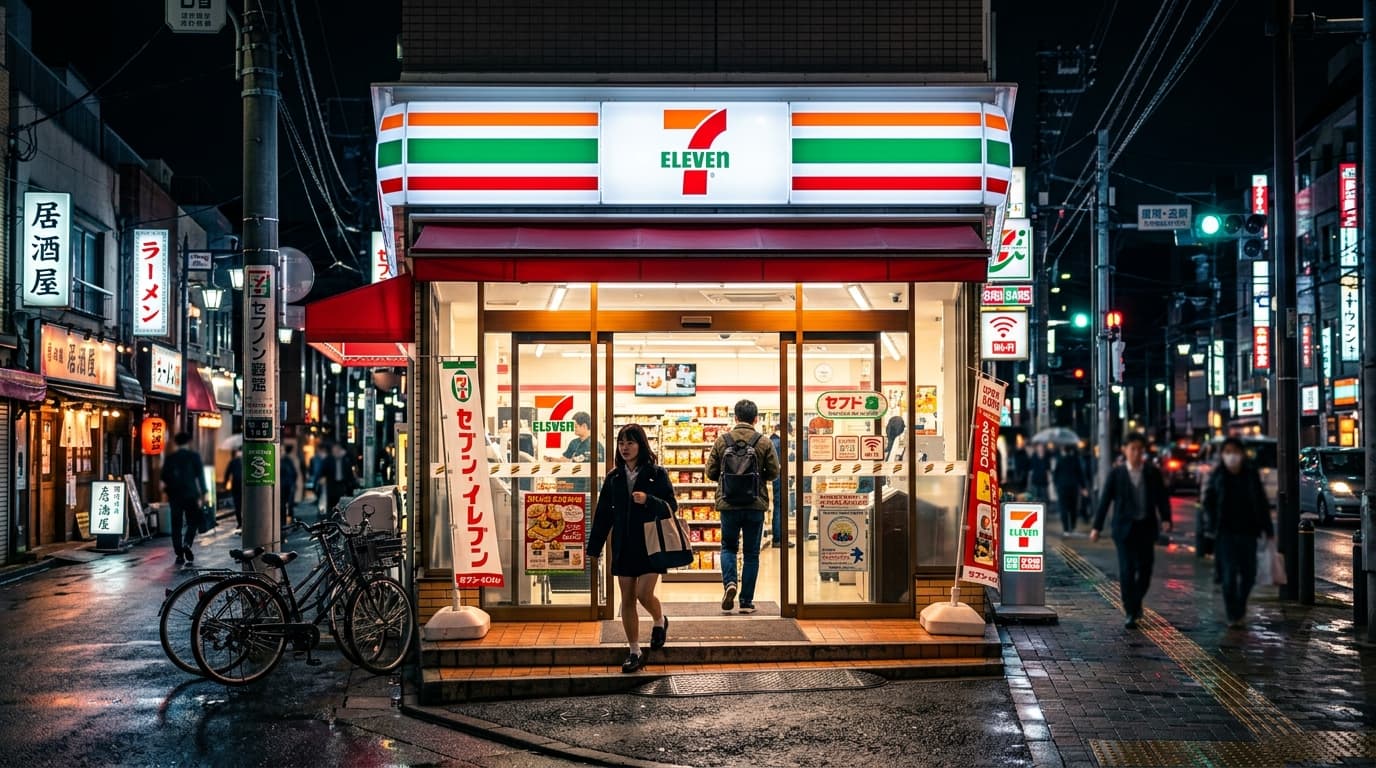
Complete Guide to Japanese Convenience Stores (Konbini)
The Japanese convenience store -- konbini -- is one of the country's genuinely great institutions. More than 50,000 konbini operate across Japan, open 24 hours a day, 365 days a year. They are clean, well-stocked, and staffed with polite efficiency. And the food is, by any honest measure, significantly better than the name suggests. This guide covers what to eat, what services to use, how the major chains differ, and how to use konbini strategically as a traveler.
What Makes Japanese Konbini Different
Spend five minutes in a 7-Eleven in Tokyo and you will understand why Japanese travelers abroad miss konbini. The food is genuinely fresh -- onigiri (rice balls), sandwiches, and bento boxes are delivered and restocked multiple times per day. The hot counter at the register sells karaage fried chicken, nikuman (steamed buns), croquettes, and oden (winter hot pot stew) that are actually good. The desserts rival many cafés.
Japanese convenience store chains also compete intensely on food quality. This competition drives constant innovation: limited-edition seasonal flavors, collaboration products with famous chefs and brands, and regional specialties available only at stores in certain prefectures. Walking into a Lawson in Osaka and a Lawson in Hokkaido might give you an entirely different set of regional items.
Beyond food, konbini function as genuine service hubs -- particularly for travelers navigating Japan without a Japanese bank account or local carrier.
The Big Three: Which Chain to Choose
7-Eleven (Seven-Eleven)
Japan's dominant convenience store chain with over 21,500 locations as of 2026. 7-Eleven's private label range, "Seven Premium," sets the quality benchmark for the entire industry. Their onigiri are consistently excellent. ATMs at every location reliably accept foreign debit and credit cards (Visa, Mastercard, American Express, China UnionPay).
Best for: Overall food quality, ATM access for foreign visitors, the widest footprint.
Don't miss: 7-Eleven's egg salad sandwich (tamago sando) is frequently cited as one of the best convenience store items in Japan. Their cream puffs (shukurimu) and premium ice cream bars change seasonally.
FamilyMart
Over 16,500 locations Japan-wide. FamilyMart's signature item is the Famichiki -- a fried chicken piece sold at the hot counter that has its own loyal following. Their FamiPort terminal handles ticket purchases (concerts, events, transport) and parcel management.
Best for: Fried chicken, desserts, and ticket services.
Don't miss: Famichiki, the menchi-katsu (minced meat cutlet) from the hot counter, and their seasonal soft-serve ice cream (especially regional flavors like sweet potato in autumn).
Lawson
Around 14,500 locations. Lawson is the undisputed leader for baked goods and pastries -- their in-store bakery section (depending on location) offers danishes, melon pan (sweet bread), curry bread (kare pan), and filled croissants. The premium snack and dessert line under the Uchi Café brand includes chocolate bars, puddings, and fruit tarts that compete with cake shop quality.
Best for: Bread and pastries, premium desserts, Karaage-kun (Lawson's branded karaage chicken).
Don't miss: Natural Lawson (a sub-brand found in some urban locations) focuses on healthier, organic options -- useful for travelers who want more vegetable-based meals.
Mini Stop (Honorable Mention)
Fewer than 2,000 locations, mostly in western Japan and Okinawa. Known for soft-serve ice cream made with real milk and its parfait selection. Not a primary stop, but worth visiting if you encounter one in the south.
What to Eat: The Essential Konbini Foods
Onigiri (Rice Balls)
The cornerstone of konbini food. A triangular rice ball wrapped in nori (seaweed), filled with one of a dozen different ingredients. Sold individually for ¥120--160. The packaging is cleverly engineered: numbered tear tabs keep the nori crisp and separate from the rice until you open it.
Top fillings:
- Tuna mayo (ツナマヨ) -- the most popular
- Salmon (鮭 / sake)
- Umeboshi (sour pickled plum)
- Chicken teriyaki
- Grilled beef (yakiniku)
- Mentaiko (spicy cod roe)
- Kombu (seasoned kelp)
Vegan/vegetarian tip: Konbu and umeboshi onigiri are typically fish-free. Check the label: "ツナ" means tuna, "鮭" means salmon, "魚" means fish. See our vegetarian Japan guide for more advice on navigating ingredients.
Hot Counter Foods
The glass-fronted hot case near the register is usually one of the first things you encounter. Rotate regularly and contain:
- Nikuman (steamed meat bun): A fluffy white bun with pork filling. ¥130--160. Available year-round but particularly satisfying in winter. FamilyMart's pizza-man (pizza filling) and curry-man are also popular.
- Karaage chicken: Fried Japanese-style chicken pieces. Lawson's Karaage-kun and FamilyMart's Famichiki are the benchmarks.
- Corn dogs and croquettes: Standard across all chains. Cheap and filling.
- Oden (winter only): A slow-simmered hot pot with daikon radish, fish cakes, tofu, and eggs in a dashi broth. Order from the container near the register, priced per item (¥100--200 each). Deeply Japanese and excellent on a cold night.
Sandwiches and Wraps
Japanese convenience store sandwiches are made daily with crustless shokupan (milk bread) and high-quality fillings. The egg salad sandwich (tamago sando) -- thick, mildly sweet egg salad on soft white bread -- is iconic. Available at all chains; 7-Eleven's version is consistently ranked the best.
Bento Boxes
Pre-made boxed meals with rice, protein, vegetables, and pickles. Priced ¥450--750. Quality ranges from adequate to genuinely tasty. You can ask at the register to have your bento heated (atamet[e] kudasai). Hot bento for ¥600 is a real meal.
Desserts
This is where konbini genuinely distinguish themselves. Premium lines across all three chains include:
- Pudding (purin): A firm, rich caramel custard in a plastic cup. ¥150--220.
- Cream puffs (shukurimu): Fresh choux pastry with whipped cream. ¥200--280.
- Parfaits: Layered cups with ice cream, granola, fruit, and cream. Best at FamilyMart and Lawson. ¥300--450.
- Roll cake slices: Swiss rolls with light cream filling. ¥250--380.
- Seasonal limited editions: Sakura-flavored in spring, sweet potato in autumn, chestnut in November, strawberry in winter.
Coffee
The drip coffee machine at the register is consistently good and cheap. Ask for "hot coffee" or point at the menu. Sizes range from S (¥100) to L (¥200). Pour it yourself from the machine after paying. Canned and bottled coffees from the refrigerators are also excellent -- Georgia Coffee, UCC Black, and the 7-Eleven branded cans all have devoted followings.
Konbini Services for Travelers
ATMs
7-Eleven ATMs are the gold standard for foreign visitors. They accept Visa, Mastercard, Maestro, American Express, China UnionPay, and several other international cards. Available in English, Chinese, Korean, and other languages. Fee: ¥110--220 per transaction. Japan Post ATMs (in post offices and some Lawson locations) are equally reliable.
Printing and Scanning
Every major konbini has a multifunction copier/printer accessible for a small fee. Print from a USB drive, from your smartphone (via the dedicated app or a QR code), or by uploading to a shared cloud system from home. Print from ¥10 (black and white) or ¥50--80 (color) per page. Useful for printing tickets, visa documents, or maps.
Parcel Pickup and Shipping
Konbini are major nodes in Japan's parcel delivery network. Pick up Amazon orders or packages from other retailers. Send parcels via Yamato Transport (TA-Q-BIN) or Sagawa Express -- fill out a waybill at the counter and hand over the parcel. Sending luggage (takuhaibin) from one city to the next is a popular strategy for travelers who do not want to drag bags on the train -- send from your current hotel to your next hotel the day before travel.
Ticket Purchases
FamiPort terminals at FamilyMart and Loppi terminals at Lawson are full-service ticket machines for concerts, sporting events (sumo, baseball), theme parks, transport passes, and more. Some events sell only through these terminals and not online. This requires navigating Japanese-language menus, but staff can assist.
Bill Payments
Pay utility bills, national health insurance, parking fines, and even some tax payments at the konbini counter. You hand over the barcode slip (koukoku) from your bill. This is primarily useful if you are resident in Japan but good to know.
IC Card Top-Up
Top up your Suica or Pasmo transport IC card at the register or at dedicated machines. No fee, instantly done.
Konbini as a Budget Travel Strategy
Eating at konbini is not a compromise -- it is a legitimate approach to budget travel in Japan. Here is a realistic day's eating from konbini:
| Meal | Item | Cost |
|---|---|---|
| Breakfast | 2 onigiri + canned black coffee | ¥380 |
| Lunch | Bento box + green tea | ¥700 |
| Snack | Nikuman + small pocky | ¥230 |
| Dinner | Sandwich + salad + 100-yen coffee | ¥500 |
| Total | ¥1,810 (~$12 USD) |
Combine one konbini meal with one sit-down restaurant meal per day and you can eat very well for ¥2,500--3,000 per day total.
Quick Phrases at the Konbini Register
When paying, staff will ask a few standard questions:
- "Oatame shimasuka?" -- "Would you like this heated?" (for bento/hot foods)
- "Ohashi wa?" -- "Would you like chopsticks?"
- "Fukuro wa?" -- "Would you like a bag?" (there is a small charge for bags in Japan)
- "Point card wa?" -- "Do you have a point card?"
Simply saying "hai" (yes) or "kekkodesu" (no thank you) to each question is sufficient. You can also nod and point.
For more on eating in Japan affordably, see our Japan on a budget guide and Japanese food guide.
Sources & References
This article is based on first-hand experience and verified with the following official sources:

Go2Japan Team
Exploring Japan since 2021 | 35+ prefectures visited | Updated monthly
We are a team of travel writers and Japan enthusiasts who explore the country year-round. Our guides are based on first-hand experience, local knowledge, and verified official sources.
More about us →People Also Read

Japan in Peak Season vs Low Season: Honest Comparison
Peak vs low season in Japan: crowds, costs, weather, and festivals compared. Plan smarter with honest pros and cons for each season.

Japan Travel Budget 2026: Real Daily Costs, Sample Budgets & Money-Saving Tips
Real 2026 Japan travel costs: daily budgets from ¥3,000–¥15,000+, accommodation, food, transport & activities. Save money without sacrificing experiences.

Cheap Places to Stay in Japan: Hostels, Guesthouses and Budget Hotels
Complete guide to cheap places to stay in Japan with exact prices in JPY and USD. Hostels, guesthouses, budget hotels, and money-saving tips.
What to Eat in Japan: Local Food Guide for Travelers
Explore Japan's iconic dishes like sushi and ramen with cultural insights, regional tips, and ordering advice for an authentic food adventure.
Plan Your Japan Trip
Book hotels, transport, activities, and get connected with an eSIM
Some links are affiliate links. We may earn a commission at no extra cost to you.