Vegetarian & Vegan Guide to Japan
Japan's food culture is extraordinary -- but it was not built with vegetarians in mind. A cuisine that has refined the art of extracting flavor from fish bones, fermented seafood, and bonito stock over centuries presents real challenges for meat-free travelers. The good news: with preparation, the right vocabulary, and knowledge of which dishes and regions work in your favor, eating well as a vegetarian or vegan in Japan is entirely possible. This guide explains the actual obstacles, how to navigate them, and where the best plant-based food is hiding.
The Core Challenge: Invisible Dashi
The most important thing a vegetarian or vegan visiting Japan needs to understand is dashi.
Dashi is the foundational stock of Japanese cooking -- the way French cuisine is built on fond de veau, Japanese cuisine is built on dashi. The most common form is made by simmering katsuobushi (dried, fermented, smoked bonito fish flakes) with kombu (dried kelp). This clear, deeply savory liquid forms the base of miso soup, ramen broth, noodle broth (udon, soba), sauces, marinades, and many simmered vegetable dishes.
The problem for vegetarians: a dish with no meat, no obvious seafood, and entirely vegetable ingredients will very often contain fish-based dashi in the broth or cooking liquid. "Vegetable ramen" frequently means vegetable toppings in a fish-based broth. "Miso soup" typically contains fish dashi. Even seemingly safe dishes like boiled spinach (ohitashi) or simmered root vegetables (nimono) are often cooked in or dressed with fish-based stock.
This is not deliberate deception -- it reflects how deeply dashi is embedded in Japanese culinary tradition. The concept of a savory stock made purely from vegetables (yasai dashi) exists but is far less common outside vegetarian-focused restaurants.
Kombu dashi -- made only from dried kelp -- is the primary exception. It is fish-free, vegan, and used at some traditional Buddhist restaurants and increasing numbers of modern vegetarian establishments.
What Is Safe to Eat
Reliably Vegetarian (With Caveats)
Onigiri (rice balls) -- specific fillings:
- Umeboshi (pickled sour plum): fish-free
- Kombu (seasoned kelp): fish-free
- Nattō (fermented soybeans): fish-free but strong flavor
- Avoid: tuna mayo (ツナマヨ), salmon (鮭), bonito flakes (おかか), or anything labeled with fish kanji
Sushi -- vegetable rolls:
- Kappa maki (cucumber rolls): vegan
- Oshinko maki (pickled radish): vegan
- Avocado maki: vegan
- Inari-zushi (tofu skin stuffed with sweetened rice): vegan but check -- sushi rice sometimes uses dashi
- Avoid: miso soup served alongside (usually contains fish dashi)
Tofu dishes:
- Hiyayakko (cold tofu with toppings): typically soy sauce and ginger -- check the soy sauce brand
- Agedashi tofu: deep-fried tofu in a broth -- the broth is usually fish dashi; ask
- Tofu dengaku (grilled tofu with miso glaze): usually safe, but verify the miso base
Tempura -- vegetable only:
- Yasai tempura (vegetable tempura): the batter is flour and egg (not vegan, but vegetarian)
- Dipping sauce (tentsuyu) often contains dashi -- ask for plain salt (shio) instead
- Available at dedicated tempura counters and as lunch specials
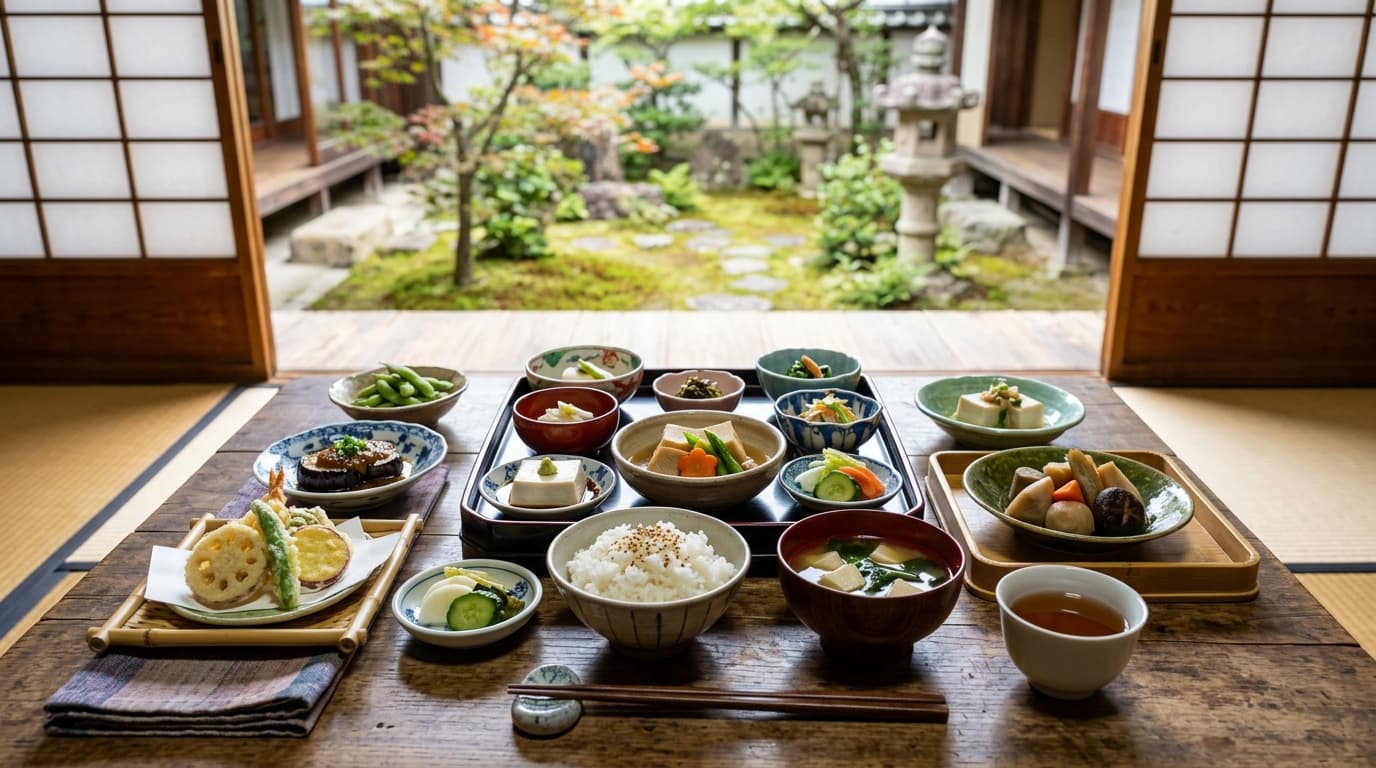
Shojin Ryori: Fully plant-based, traditionally served at Buddhist temples. No meat, fish, eggs, dairy -- and traditionally no garlic, onion, or leek (considered stimulating to the passions by some Buddhist traditions, though this restriction is not universal today). A formal shojin ryori meal is beautiful and filling, typically including multiple tofu preparations, sesame dishes, pickles, seasonal vegetables, rice, and miso soup made with kombu dashi. Widely available in Kyoto.
Natto: Fermented soybeans with a sticky, pungent character that is an acquired taste for most non-Japanese visitors. But it is fully vegan, nutritionally dense, and available at virtually every konbini and Japanese breakfast spread.
Fresh fruits and some sweets: Most wagashi (traditional Japanese sweets) use only bean paste, rice, sugar, and water -- fully vegan. Yokan (sweet bean jelly), mochi (pounded rice cake), and most matcha-flavored sweets are typically plant-based. Check for egg or dairy in more elaborate confections.
Foods to Approach with Caution
Ramen: Most ramen broth is tonkotsu (pork bone), shoyu (soy, often with chicken or pork), shio (salt, often seafood-based), or miso -- with dashi in almost every version. Fully vegan ramen exists and is growing in availability, especially in Tokyo and Osaka, but requires specifically seeking it out.
Soba and udon: The noodles themselves are typically vegan. The broth (tsuyu) is almost universally made with fish dashi. Asking for "kake udon nashi dashi" (udon without fish-based broth) will confuse most staff. Better to seek a vegetarian-labeled noodle restaurant or order cold soba (zaru soba) with separate dipping sauce and ask explicitly.
Miso soup: Nearly always contains fish dashi. The exception is at specifically vegetarian or vegan restaurants.
Soy sauce (shoyu): Pure soy sauce is vegan. Most quality Japanese soy sauce is simply soybeans, wheat, water, and salt. However, some dishes use ponzu (citrus soy sauce sometimes containing bonito extract) or tsuyu (noodle dipping sauce containing dashi).
Gyoza and dumplings: Almost always contain pork. Vegetarian gyoza exist but must be specifically ordered or sought.
Okonomiyaki and takoyaki: Okonomiyaki (savory pancake) typically contains pork belly and bonito flakes; takoyaki (octopus balls) contains octopus. Vegetable-only okonomiyaki can be requested at some establishments.
Useful Japanese Phrases
Carry a printed or saved card with your dietary restrictions. This approach has a very high success rate in Japan -- staff take written communication seriously and will make genuine effort to accommodate what you show them.
Vegetarian card (copy and print/save):
私は菜食主義者です。肉と魚と魚を使っただし(かつおぶし・いりこ・あごだし)を食べません。野菜、豆腐、納豆、海藻、果物は食べられます。食べられるものを教えていただけますか?
I am vegetarian. I do not eat meat, fish, or fish-based stock (bonito, sardine, or flying fish dashi). I can eat vegetables, tofu, natto, seaweed, and fruit. Could you tell me what I can eat?
Vegan card (add to the above):
また、卵と乳製品も食べません。
I also do not eat eggs or dairy products.
Quick verbal phrases:
- "Niku wa tabenai desu" -- I don't eat meat
- "Sakana wa tabenai desu" -- I don't eat fish
- "Dashi wa nashi de onegaishimasu" -- Without fish stock, please
- "Yasai dashi desuka?" -- Is this made with vegetable stock?
- "Tamago nashi de onegaishimasu" -- Without egg, please
Best Restaurants and Apps
HappyCow
The most reliable global app for finding vegan and vegetarian restaurants. Filter by city, distance, price, and cuisine type. Coverage in Japan -- particularly in Tokyo and Kyoto -- is good and updated regularly. Essential to download before your trip.
Seeking Out Vegetarian Restaurants by City
Kyoto: The most vegetarian-friendly major city in Japan. Abundant shojin ryori restaurants (particularly near major temples like Nanzen-ji and Tenryu-ji), as well as a growing number of modern vegan cafés in the Nishiki and Shimogamo areas. The Buddhist culinary tradition here is 1,200 years old and the infrastructure around vegetarian cooking reflects that.
Tokyo: The widest absolute number of vegan and vegetarian restaurants, with particular concentration in Shimokitazawa (hip, artsy neighborhood with many plant-based cafés), Shinjuku, and Harajuku. Afuri Ramen (vegan yuzu shio ramen option), T's TanTan at Tokyo Station (dedicated vegan ramen), and a growing number of Indian, Thai, and Italian restaurants offering fully plant-based menus.
Osaka: Plant-based options are growing but still less abundant than Tokyo. Osaka's food culture is deeply carnivorous (takoyaki, tonkatsu, yakiniku). Best approach: seek Indian restaurants (many are vegan-friendly), dedicated vegetarian establishments found via HappyCow, and the newer café culture in Nakatsu and Honmachi.
Nara: Proximity to Buddhist temples and a long vegetarian tradition mean shojin ryori is available at several establishments near the main park area. Tofu cuisine is a local specialty.
Konbini and Quick Vegetarian Meals
Japanese convenience stores -- 7-Eleven, FamilyMart, Lawson -- are better than you might expect for vegetarian options, but require label-reading:
Safe at konbini:
- Umeboshi or kombu onigiri
- Plain steamed rice bowls (check toppings)
- Edamame (packs in refrigerated section)
- Banana, apple, and packaged fruits
- Salads (check dressing for anchovy)
- Plain tofu (found in refrigerated section)
- Yakimochi (plain grilled rice cakes)
- Some instant noodles labeled "yasai" (vegetable) -- still check for fish extract
- Most wagashi sweets (mochi, yokan)
- Soy milk cartons
Avoid at konbini:
- Most hot counter items (meat-based)
- Pre-packaged noodle soups (almost all contain fish dashi or pork-based stock)
- Most bento boxes (contain meat or fish)
Department Store Food Halls (Depachika)
Department store basement food halls in major cities carry dedicated tofu shops, vegetable-focused prepared foods, and sometimes a shojin ryori counter. In Kyoto's Isetan and Tokyo's Takashimaya and Isetan Shinjuku, you can find a range of clearly labeled vegetarian prepared items.
Vegetarian at a Ryokan
Traditional ryokan multi-course dinners (kaiseki) are typically built around seafood and meat. Most ryokan can prepare vegetarian kaiseki if notified at the time of booking -- not on arrival. Email ahead with your specific restrictions (fish-free, egg status, dairy status). Better ryokan will accommodate this gracefully; some budget properties may substitute basic vegetable dishes rather than a full vegetarian kaiseki. Worth asking explicitly.
Final Practical Notes
Japan is genuinely improving for vegetarian and vegan travelers. The 2020s have seen a significant expansion of dedicated plant-based restaurants in major cities, growing awareness of international dietary needs among hospitality staff, and increasing labeling of dishes as vegetarian or vegan at tourist-oriented establishments.
The challenge is still real outside major cities and dedicated vegetarian restaurants. But with a dietary card in Japanese, the HappyCow app, an understanding of dashi, and knowledge of which dishes are reliably safe, you can eat very well. The food culture here rewards curiosity -- shojin ryori alone is worth the trip for anyone interested in what centuries of refined plant-based cooking looks like.
For more on eating in Japan, see our Japanese food guide, konbini guide, and budget travel tips.
Sources & References
This article is based on first-hand experience and verified with the following official sources:

Go2Japan Team
Exploring Japan since 2021 | 35+ prefectures visited | Updated monthly
We are a team of travel writers and Japan enthusiasts who explore the country year-round. Our guides are based on first-hand experience, local knowledge, and verified official sources.
More about us →People Also Read

Vegetarian and Vegan Food in Japan: Practical Guide
Navigate vegetarian and vegan dining in Japan with our practical guide to Buddhist cuisine, regional specialties, and how to order like a local.
What to Eat in Japan: Local Food Guide for Travelers
Explore Japan's iconic dishes like sushi and ramen with cultural insights, regional tips, and ordering advice for an authentic food adventure.
Complete Guide to Japanese Convenience Stores (Konbini)
Everything you need to know about Japanese convenience stores (konbini) -- the best foods to try, useful services, chain differences, and how to use them as a budget traveler.
Japanese Etiquette Guide: 20 Do's and Don'ts
20 essential Japanese etiquette rules for travelers -- from train behavior and onsen rules to temple customs and tipping. What to do, what to avoid, and why it matters.
Plan Your Japan Trip
Book hotels, transport, activities, and get connected with an eSIM
Some links are affiliate links. We may earn a commission at no extra cost to you.