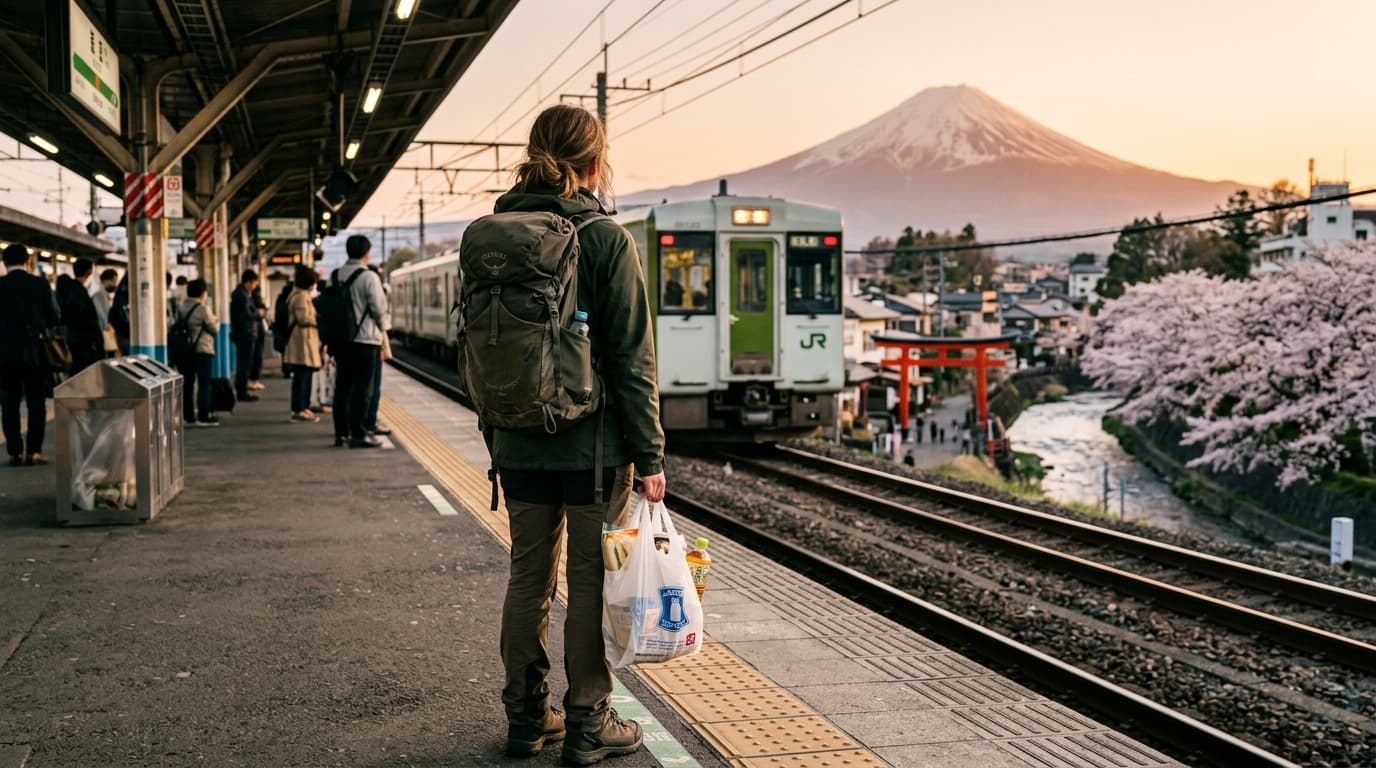
Konbini Food Guide: Eating Well in Japan for Under $10 a Day
Can you really eat well in Japan on a shoestring budget? Absolutely—if you know where to look. Konbini food (convenience store meals) has become the secret weapon of budget travelers across the country, offering fresh, delicious, and genuinely affordable options that rival sit-down restaurants. During our two years living in Tokyo and exploring everything from the Kansai region guide to rural Hokkaido, we've learned that Japan's convenience stores aren't just for emergencies—they're gateways to authentic, wallet-friendly eating that locals actually rely on every day.
Key Takeaways
| Question | Answer |
|---|---|
| What's the daily food budget? | ¥800–¥1,200 ($5.50–$8.20 USD) for three meals |
| Which konbini chains are best? | 7-Eleven, FamilyMart, and Lawson offer similar quality and pricing |
| What are the cheapest meals? | Onigiri (¥100–¥150), instant ramen (¥200–¥400), bento boxes (¥400–¥700) |
| When do prices drop? | 8 PM onwards; many items marked down 30–50% |
| Is the food safe? | Yes—Japanese food safety standards are among the world's highest |
| Can I eat well, not just cheap? | Yes; konbini food is fresh, nutritious, and surprisingly varied |
Some links in this article are affiliate links — if you book through them, we earn a small commission at no extra cost to you. This helps us keep go2-japan.com free and up to date.
1. Understanding Japan's Konbini Culture
Japan has roughly 56,000 convenience stores nationwide, and they're far more than quick-stop shops—they're cultural institutions. When we first arrived in Tokyo, we were shocked to discover that konbini food was genuinely good. Unlike convenience stores in many Western countries, Japanese chains maintain strict quality standards, rotate stock frequently, and source fresh ingredients daily. The food isn't just edible; it's often better than what you'd find in a casual restaurant.
The three major chains—7-Eleven, FamilyMart, and Lawson—dominate the market and offer nearly identical products at nearly identical prices. Each store updates its inventory multiple times per day, meaning you're never eating yesterday's onigiri or sandwich. This obsession with freshness is built into Japanese retail culture, and it directly benefits budget travelers.
Why Konbini Beats Other Budget Options
Consistency across Japan: Unlike local ramen shops or street food stalls that vary wildly by region, konbini prices and quality remain stable whether you're in Tokyo travel guide or a small mountain town. You always know what you're getting and how much it costs.
Speed and convenience: When you're exploring temples in Kyoto travel guide or hiking the Japanese Alps, konbini meals mean you don't waste precious sightseeing time hunting for restaurants. Grab, eat, move on.
The Hidden Advantage: Timing Matters
Most travelers don't realize that konbini pricing follows a predictable pattern. Around 8 PM, stores begin marking down prepared foods—bento boxes, sushi, fried chicken, and sandwiches—to clear inventory before closing. We've regularly bought ¥800 bento boxes for ¥400 (50% off) during evening shopping runs. This single strategy can cut your food costs by 20–30% if you're flexible with meal timing.
Did You Know? Japan's convenience stores serve approximately 20 million customers daily, and prepared food accounts for roughly 35% of konbini sales.
2. The Essential Konbini Staples Under ¥200
Let's start with the absolute foundation of budget eating in Japan: items under ¥200 ($1.35 USD). These are the meals and snacks that make a sub-$10 daily food budget possible.
Onigiri (rice balls) are the MVP of konbini shopping. A single onigiri costs ¥100–¥150 and contains roughly 150–200 calories of carbohydrates, making it perfect for breakfast or a quick snack. Flavors rotate seasonally, but you'll always find classics like umeboshi (pickled plum), salmon, tuna mayo, and kombu (seaweed). During our time in Osaka travel guide, we'd grab two onigiri and a bottle of green tea for breakfast—total cost ¥350, and we'd stay full until lunch.
Instant ramen costs ¥200–¥400 depending on the brand and style. The catch: you need hot water. Most konbini will provide free hot water if you ask (say "oyu kudasai"), though it's polite to buy something. Alternatively, many konbini have eating areas where you can sit and eat. Add a soft-boiled egg (¥100) or a package of instant noodles with vegetables (¥300–¥500) for a complete meal under ¥600.
Budget Staples Breakdown
Best value items:
- Onigiri: ¥100–¥150 per piece; buy 2–3 for a meal
- Edamame (boiled soybeans): ¥150–¥200; high protein, filling
- Yogurt cups: ¥100–¥150; good for breakfast or snacks
- Banana or apple: ¥100–¥200; fresh fruit is cheaper than you'd expect
- Instant ramen: ¥200–¥400; add hot water and you're done
During our exploration of rural areas, we discovered that prices in smaller towns are often lower than in Tokyo or Kyoto, sometimes by 10–15%. A ¥150 onigiri in central Tokyo might be ¥130 in a small prefecture. This is one reason why backpacking through regional Japan can be even cheaper than major cities.
3. Bento Boxes and Prepared Meals: The Sweet Spot
Bento boxes are where konbini food truly shines. A typical bento includes rice, a protein (usually chicken, pork, or fish), vegetables, and sometimes a small side dish—all for ¥400–¥700 during regular hours. These aren't fancy kaiseki meals, but they're nutritionally balanced, genuinely tasty, and a far better value than eating at a casual restaurant.
When we spent a week in Nara travel guide, we ate konbini bento for nearly every lunch, rotating between chicken karaage (fried chicken), tonkatsu (breaded pork cutlet), and grilled fish. The quality was consistent, portions were reasonable, and we never felt like we were "slumming it" with cheap food.
Types of Bento and Their Costs
| Bento Type | Regular Price | Evening Discount Price | Best For |
|---|---|---|---|
| Chicken Karaage | ¥550–¥650 | ¥300–¥350 | Protein, satisfying |
| Tonkatsu (Pork Cutlet) | ¥600–¥750 | ¥350–¥400 | Hearty, flavorful |
| Grilled Fish | ¥500–¥650 | ¥280–¥350 | Light, healthy |
| Vegetable & Tofu | ¥450–¥550 | ¥250–¥300 | Budget-conscious, vegan-friendly |
| Mixed Sushi | ¥600–¥800 | ¥350–¥450 | Special occasion feel |
The evening discount strategy is crucial here. If you're willing to eat dinner between 7 PM and 10 PM, you can grab a full bento for ¥300–¥400 instead of ¥600. Over a week, this saves you ¥2,000–¥3,000 (roughly $14–$20 USD). We've made this our standard practice: light breakfast with onigiri, modest lunch with a sandwich or salad, and a discounted bento for dinner.
4. Drinks and Beverages: Staying Hydrated on Budget
Water is free at konbini (ask for "mizu kudasai"), but Japan's beverage culture offers incredible value beyond plain water. Green tea, canned coffee, and soft drinks are all remarkably affordable.
Bottled water and tea cost ¥100–¥150 for a 500 mL bottle. Canned coffee—hot or cold depending on the season—runs ¥150–¥200 and is genuinely good quality. During our hiking trips in the Japanese Alps, we'd buy canned matcha or canned tea for around ¥150 instead of paying ¥500+ at a mountain café. The savings add up quickly.
Beverage Budget Strategy
Cheapest options:
- Free water: Ask at the counter; always available
- Canned tea or coffee: ¥150–¥200; satisfying and energizing
- Bottled water: ¥100–¥150 for 500 mL
- Soft drinks: ¥150–¥250; more expensive but occasional treat
- Chuhai (canned cocktail): ¥200–¥350; if you want alcohol on a budget
One underrated option: buying a large bottle of tea or water (¥200–¥300 for 1–2 liters) and refilling your own bottle. This is especially smart if you're staying in an Airbnb or hostel with a fridge. We'd buy one large bottle every 2–3 days and save money compared to buying individual bottles daily.
5. The Art of Discount Shopping: Timing and Strategy
The single biggest money-saving hack in Japanese konbini culture is understanding the discount cycle. Most stores follow a predictable pattern: heavy markdowns between 8 PM and 10 PM, with the deepest discounts 30–60 minutes before closing.
During our time in Tokyo, we mapped out nearby konbini and their closing times. A 24-hour 7-Eleven near our apartment had a Lawson next door that closed at midnight. We'd visit the Lawson around 11:30 PM and find bento boxes, sushi, and sandwiches marked down 40–50%. This wasn't occasional luck—it was systematic, predictable, and available every single night.
Discount Shopping Rules
When to shop:
- Best time: 8 PM–11 PM (deepest discounts)
- Second best: 6 PM–8 PM (moderate discounts, better selection)
- Avoid: 11 AM–6 PM (full price, peak hours)
What gets discounted:
- Prepared bento boxes (almost always)
- Sushi and sashimi (frequently)
- Sandwiches and wraps (usually)
- Fried chicken and karaage (often)
- Salads and fresh items (sometimes)
What doesn't:
- Onigiri (rarely discounted; they sell too quickly)
- Instant noodles (no discount; shelf-stable)
- Drinks (occasionally, but not reliably)
- Packaged snacks (rarely)
The strategy is simple: buy your discounted dinner around 8–9 PM, eat it that evening or the next day (konbini food stays fresh for 24 hours if refrigerated), and repeat. We've sustained entire weeks on this system, eating well for ¥600–¥800 per day ($4–$5.50 USD).
Did You Know? Japanese convenience stores donate unsold prepared food to food banks rather than throwing it away, but the discount system means most items sell before that point.
Source: Japan Times
6. Sample Daily Budgets: Real Numbers
Let's get concrete. Here are three realistic daily eating scenarios we've actually executed:
Budget Day (¥800 / $5.50 USD):
- Breakfast: 2 onigiri (¥300) + green tea (¥150) = ¥450
- Lunch: Instant ramen with hot water (¥200) + banana (¥150) = ¥350
- Dinner: Discounted bento box (¥400, marked down from ¥800)
- Total: ¥1,200 (Note: This assumes you catch the evening discount; without it, you'd spend ¥1,600)
Balanced Day (¥1,000 / $6.85 USD):
- Breakfast: Onigiri (¥150) + yogurt (¥120) + canned coffee (¥180) = ¥450
- Lunch: Sandwich (¥350) + salad (¥300) = ¥650
- Dinner: Discounted karaage bento (¥350, marked down from ¥700)
- Total: ¥1,450 (Again, with evening discount; ¥1,900 without)
Comfortable Day (¥1,200 / $8.20 USD):
- Breakfast: Onigiri + edamame + canned tea = ¥500
- Lunch: Proper bento box (¥600, regular price)
- Dinner: Discounted sushi or tonkatsu (¥400, marked down from ¥800)
- Total: ¥1,500 (with discount; ¥2,100 without)
The math is clear: if you're willing to eat dinner between 8–10 PM and catch the discounts, you can eat three meals daily for ¥800–¥1,200. Without the discount strategy, expect ¥1,400–¥1,800 daily. This is still incredibly cheap compared to sit-down restaurants, where a single meal easily costs ¥1,500–¥3,000.
7. Nutritional Balance: Eating Healthy on Konbini Food
A common concern: Is konbini food actually nutritious, or are you just surviving on salt and carbs? In our experience, it's genuinely balanced if you're intentional about choices.
Most bento boxes include rice, protein, and vegetables. A typical karaage bento has fried chicken (protein), rice (carbs), pickled vegetables (fiber and probiotics), and sometimes a small salad. It's not a nutritionist's dream, but it's far more balanced than, say, fast food burgers in the US. The key is variety—rotate between different proteins, include fresh fruit when possible, and grab salads or vegetable sides.
Nutritional Strategy
Protein sources (¥150–¥400):
- Grilled fish or salmon (healthiest)
- Boiled eggs (¥100–¥150; buy 2–3)
- Chicken karaage (fried, but satisfying)
- Tofu or edamame (vegetarian, high protein)
Vegetables and fiber (¥150–¥300):
- Pre-made salads (¥300–¥500)
- Edamame (¥150–¥200)
- Pickled vegetables in bento boxes
- Fresh fruit (¥100–¥250)
Carbs (¥150–¥400):
- Rice in bento boxes
- Onigiri
- Instant ramen (add vegetables if possible)
- Bread or sandwiches
During our week-long hike through the Japanese Alps, we relied almost entirely on konbini food and never felt undernourished. We'd grab a bento for lunch, onigiri and fruit for snacks, and a discounted dinner bento. The variety of options meant we weren't eating the same thing twice.
8. Regional Variations and Hidden Gems
Konbini food varies slightly by region, and knowing these differences can enhance your budget eating strategy. When we explored the Hokkaido region guide, we noticed that seafood-based bento boxes were more common and often cheaper than in Tokyo. In Kyushu region guide, we found more regional specialties like Hakata ramen cups and local chicken dishes.
Tokyo and Osaka konbini tend to be more expensive (¥50–¥100 more per item) than smaller cities and rural areas. If you're traveling between regions, you'll notice these price differences. A bento that costs ¥700 in Tokyo might be ¥600 in a smaller prefecture. This is why getting around Japan by train and exploring beyond major tourist areas can actually save you money on food.
Regional Specialties to Try
Hokkaido: Seafood-based bento, ramen cups, corn snacks Kansai (Kyoto/Osaka): Okonomiyaki-style items, takoyaki, regional sushi Kyushu: Hakata ramen, local chicken dishes, shoyu-based prepared foods Chubu: Mountain vegetables, miso-based dishes
We've also discovered that smaller konbini chains in rural areas sometimes have better prices than the big three. A family-run convenience store in a small mountain town might have bento boxes for ¥400 that would cost ¥600 in Tokyo. The quality is identical, but the overhead is lower.
9. What to Avoid: Tourist Traps and Overpriced Items
Not everything in a konbini is a bargain. Some items are genuinely overpriced, especially if you're comparing them to supermarket alternatives or sit-down restaurants.
Avoid these:
- Branded coffee drinks (¥500+): You're paying for the brand, not the quality
- Pre-made smoothies (¥600+): Expensive for what you get; buy fruit instead
- Imported snacks: Often 2–3x the price of Japanese equivalents
- Convenience store sushi at premium prices (¥1,000+): Good sushi exists, but not at this price point in konbini
- Bottled juice (¥300+): Tea or water is cheaper and healthier
We've also noticed that items near the register are often overpriced impulse buys. The real deals are in the refrigerated sections and on the shelves. Don't let the attractive packaging fool you—read the price tag.
One more thing: avoid eating at konbini during peak tourist hours in famous areas. A konbini near Fushimi Inari in Kyoto will have slightly higher prices than one five blocks away. It's not dramatic, but it's noticeable.
10. Combining Konbini with Other Budget Eating Options
Konbini food is your foundation, but it works best as part of a broader budget eating strategy. During our travels, we'd combine konbini meals with occasional visits to local ramen food guide shops, street food, and supermarket prepared foods.
A typical week for us: 12–14 meals from konbini (mostly discounted), 2–3 meals from local ramen shops (¥700–¥900 per bowl), and 2–3 meals from supermarket prepared foods or street stalls. This variety kept meals interesting while maintaining a budget of ¥900–¥1,100 daily.
Budget Eating Hierarchy
Cheapest (konbini discounts): ¥300–¥500 per meal Budget-friendly (konbini regular price): ¥500–¥800 per meal Good value (local ramen, udon): ¥700–¥1,000 per meal Occasional splurge (casual restaurant): ¥1,500–¥3,000 per meal
The beauty of Japan's food culture is that even casual restaurants are affordable compared to Western countries. A bowl of ramen at a proper shop (not konbini) costs ¥800–¥1,000 and is genuinely better than konbini instant ramen. If you budget ¥1,000–¥1,200 daily for food, you can do konbini for most meals and splurge on a proper restaurant meal every few days.
We've also found that supermarkets (especially larger chains) have prepared food sections that rival konbini quality at slightly lower prices. Visiting a supermarket around 7–8 PM yields similar discounts to konbini. If you're staying in one place for a few days, exploring the local supermarket is worth the effort.
Frequently Asked Questions
Is konbini food safe to eat?
Absolutely. Japanese food safety standards are among the world's highest. Konbini chains rotate stock multiple times daily and discard unsold prepared foods regularly. We've eaten konbini food for weeks without any issues. The only caveat: avoid items that look old or damaged, though this is rare.
Can I eat vegetarian or vegan on konbini food?
Yes, though it requires more planning. Edamame, tofu, vegetable bento boxes, onigiri with vegetable fillings, and salads are all available. Most konbini have at least 3–5 vegetarian options at any time. Vegan is trickier (many items contain fish-based dashi broth), but salads, certain onigiri, and instant ramen can work.
What's the best time to visit a konbini for discounts?
Between 8 PM and 10 PM is ideal, with the deepest discounts 30–60 minutes before the store's closing time. If a konbini closes at midnight, expect the best deals around 11:15 PM–11:45 PM.
Do I need to speak Japanese to buy konbini food?
No. Point at what you want, hand over cash or a card, and you're done. Most konbini staff are used to tourists. If you want hot water for instant ramen, say "oyu kudasai" (oh-yoo koo-dah-sigh), but even gesturing works.
Are there konbini in rural areas, or only in cities?
Konbini are everywhere in Japan, including small towns and rural areas. You might find fewer options in very remote mountain villages, but even small towns typically have at least one 7-Eleven or FamilyMart.
How much can I realistically save using konbini food?
If you eat three meals daily from konbini with evening discounts, expect ¥800–¥1,200 daily ($5.50–$8.20 USD). Without discounts, budget ¥1,400–¥1,800. Compared to casual restaurants (¥1,500–¥3,000 per meal), you're saving 50–70%.
Can I refrigerate konbini food, or must I eat it immediately?
Most konbini food stays fresh for 24 hours if refrigerated. Bento boxes, sushi, and sandwiches are fine overnight. Onigiri and instant ramen can last longer. If you're staying in a hostel or Airbnb with a fridge, buying dinner one evening and eating it the next day is perfectly safe.
Conclusion
Japan's konbini food culture isn't a compromise—it's a genuine advantage for budget travelers. With strategic timing, smart choices, and an understanding of the discount cycle, you can eat three nutritious, satisfying meals daily for under ¥1,200 ($8.20 USD). We've done it for weeks at a time across Tokyo, Osaka, Kyoto, and rural areas, and we've never felt like we were eating poorly.
The key is embracing the system rather than fighting it. Shop for discounts in the evening, rotate between proteins and vegetables, and don't hesitate to occasionally splurge on a proper ramen bowl or local specialty. Combined with our comprehensive Japan travel guide, this approach makes Japan one of the most affordable developed countries to travel in.
Ready to start your budget Japan adventure? Check out our Japan 50 dollars per day budget guide for a complete breakdown of accommodation, transport, and activities alongside food costs.
Trust us: Japan's convenience stores have fed millions of locals and travelers. You're in good hands.
Sources & References
This article is based on first-hand experience and verified with the following official sources:

Go2Japan Team
Exploring Japan since 2021 | 35+ prefectures visited | Updated monthly
We are a team of travel writers and Japan enthusiasts who explore the country year-round. Our guides are based on first-hand experience, local knowledge, and verified official sources.
More about us →People Also Read
Japan on $50 Per Day: A Realistic Budget Travel Guide
Travel Japan on $50/day with our realistic budget guide. Exact costs in JPY/USD, sample day budgets, and insider money-saving tips.
Japan on a Budget: How to Travel for Under $100/Day
Japan on a budget is entirely achievable. This guide breaks down real daily costs for accommodation, food, transport, and activities -- with a clear path to staying under $100/day.

Japan in Peak Season vs Low Season: Honest Comparison
Peak vs low season in Japan: crowds, costs, weather, and festivals compared. Plan smarter with honest pros and cons for each season.

Japan Travel Budget 2026: Real Daily Costs, Sample Budgets & Money-Saving Tips
Real 2026 Japan travel costs: daily budgets from ¥3,000–¥15,000+, accommodation, food, transport & activities. Save money without sacrificing experiences.
Plan Your Japan Trip
Book hotels, transport, activities, and get connected with an eSIM
Some links are affiliate links. We may earn a commission at no extra cost to you.