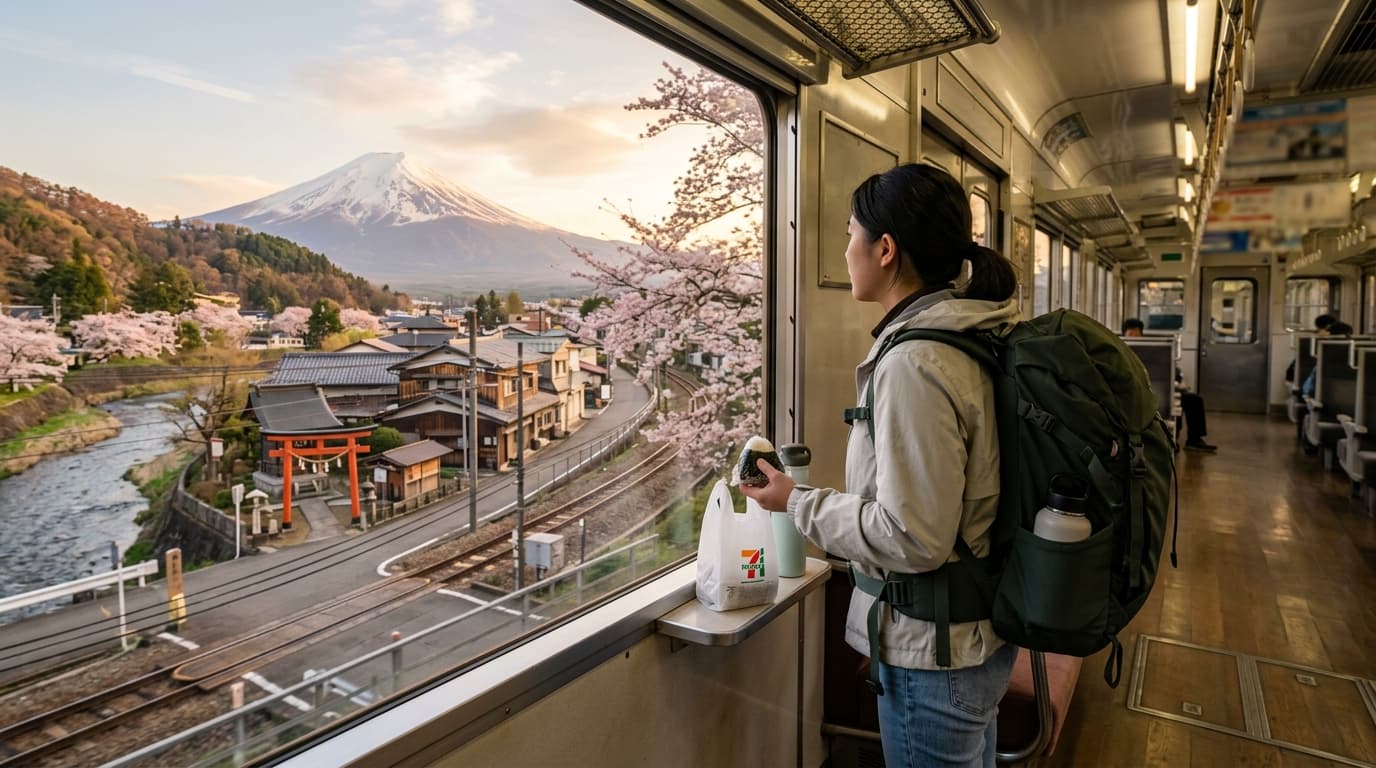
Can you really travel Japan on $50 per day? Yes—but you'll need to be strategic about where you splurge and where you save. During our two years living in Tokyo and exploring everything from Kyoto's temples to Hokkaido's backcountry, we've learned exactly how to stretch a tight budget without sacrificing the experiences that make Japan magical.
Key Takeaways
| Question | Answer |
|---|---|
| What is the best time to visit? | Shoulder seasons (April-May, September-October) offer cheaper rates than peak cherry blossom and summer holidays |
| How much does it cost? | ¥5,000-5,500 per day ($33-37 USD) is achievable; $50/day gives you breathing room |
| How do I get there? | Book flights 6-8 weeks in advance; budget airlines like Peach and Vanilla Air offer cheap domestic routes |
| Is it safe? | Japan is extremely safe; budget travel doesn't compromise security |
| What should I book in advance? | Japan Rail Pass (if doing multiple cities), accommodation in popular areas, and domestic flights |
| Where do budget travelers stay? | Hostels (¥2,500-3,500/$17-23), guesthouses, and Airbnb shared rooms offer the best value |
| Can I eat well cheaply? | Absolutely—convenience store meals, ramen, and standing soba shops are delicious and under ¥1,000 ($7) |
Some links in this article are affiliate links — if you book through them, we earn a small commission at no extra cost to you. This helps us keep go2-japan.com free and up to date.
1. Understanding the Real Cost of Travel in Japan
Japan has a reputation for being expensive, and it's partially deserved—but only if you're staying in luxury hotels and eating at Michelin-starred restaurants. The reality is that budget travel in Japan is entirely feasible, especially outside Tokyo and Kyoto's tourist centers. We've spent weeks living on ¥5,000-6,000 per day ($33-40) without feeling deprived.
The key is understanding where costs concentrate. Accommodation typically eats 40-50% of a daily budget, transport another 15-20%, and food the remaining 30-40%. By optimizing each category, you can comfortably stay within $50/day.
Breaking Down the Daily Budget
A realistic $50/day budget breaks down like this:
- Accommodation: ¥2,500-3,500 ($17-23)
- Food: ¥1,500-2,000 ($10-13)
- Transport & activities: ¥1,000-1,500 ($7-10)
This assumes you're staying in hostels, eating at casual restaurants and convenience stores, and using public transport or walking. It's tight but sustainable.
Regional Price Variations
Tokyo is the most expensive city—expect to pay 20-30% more than in regional areas. Kyoto is similarly pricey due to tourism. Osaka and smaller cities like Takayama or Kanazawa offer much better value. During our time in Osaka, we found excellent ramen for ¥750 ($5) and hostels for ¥2,500 ($17).
Did You Know? Japan's convenience stores (konbini) are open 24/7 and stock thousands of items—many travelers save 30-40% by eating breakfast and lunch from Family Mart or Lawson rather than restaurants.
2. Accommodation: Where Budget Travelers Sleep
Accommodation is your biggest expense, so choosing wisely makes or breaks your budget. Japan has excellent options for budget travelers, from traditional hostels to capsule hotels and guesthouses.
Hostels and Dormitories
Hostels are the backbone of budget travel in Japan. Most charge ¥2,500-3,500 ($17-23) per night for a dorm bed. Major hostel chains like Nui Hostel (Tokyo), Len Kyoto Kawaramachi, and Khaosan Tokyo Kabuki offer clean, social environments. When we stayed at a hostel in Osaka's Dotonbori area, we paid ¥2,800 ($19) and met travelers from six countries—the social aspect is part of the value.
Best budget hostels by region:
- Nui Hostel (Tokyo) – ¥2,800-3,200, excellent common areas
- Khaosan Tokyo Kabuki (Tokyo) – ¥2,500-3,000, great for solo travelers
- Len Kyoto Kawaramachi (Kyoto) – ¥3,000-3,500, prime location
- Cross Hotel Osaka (Osaka) – ¥2,600-3,000, modern facilities
Capsule Hotels and Budget Hotels
Capsule hotels (カプセルホテル) are uniquely Japanese and offer a quirky, affordable experience at ¥3,000-4,500 ($20-30). They're compact but clean, with shared bathrooms. Budget business hotels run ¥4,000-6,000 ($27-40) for a private room—worth it if you want privacy without breaking the bank.
Airbnb and Guesthouses
Shared rooms on Airbnb range from ¥2,500-4,000 ($17-27), often with kitchen access (saving money on meals). Traditional Japanese guesthouses (minshuku) in rural areas cost ¥3,000-5,000 ($20-33) and include dinner and breakfast.
3. Food on a Budget: Eating Like a Local
Japan's food culture is democratic—you can eat incredibly well for very little money. The secret is eating where locals eat, not where tourists congregate.
Convenience Store Strategy
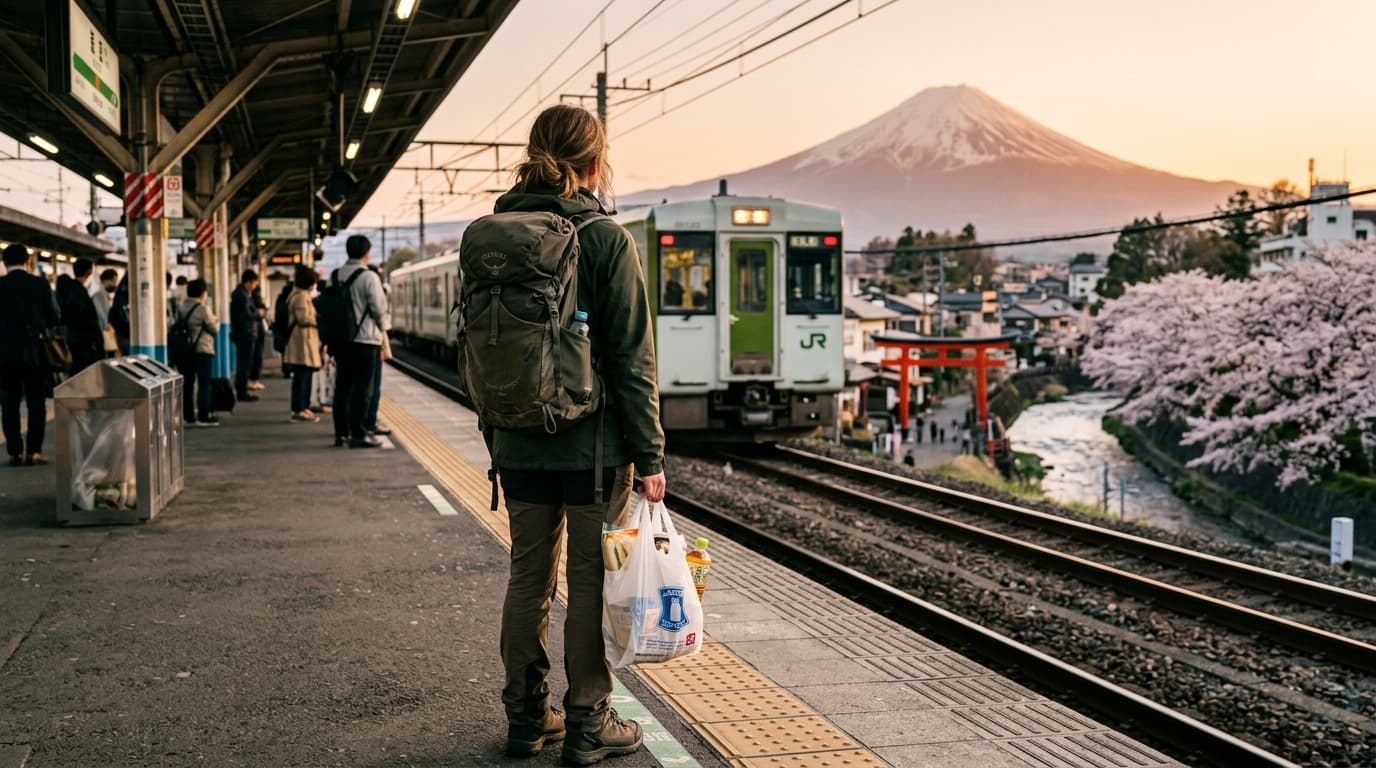
Family Mart, Lawson, and 7-Eleven are your best friends. A typical meal costs ¥500-800 ($3-5): onigiri (rice balls) at ¥100-150 each, bentos at ¥300-500, and instant ramen at ¥200-300. We've had dozens of satisfying breakfasts from convenience stores while traveling between cities.
Cheap convenience store meals:
- Onigiri (rice balls): ¥100-150 each
- Bentos (boxed meals): ¥300-500
- Instant ramen: ¥200-300
- Fried chicken: ¥200-400
- Salads & sides: ¥200-400
Ramen, Udon, and Soba Shops
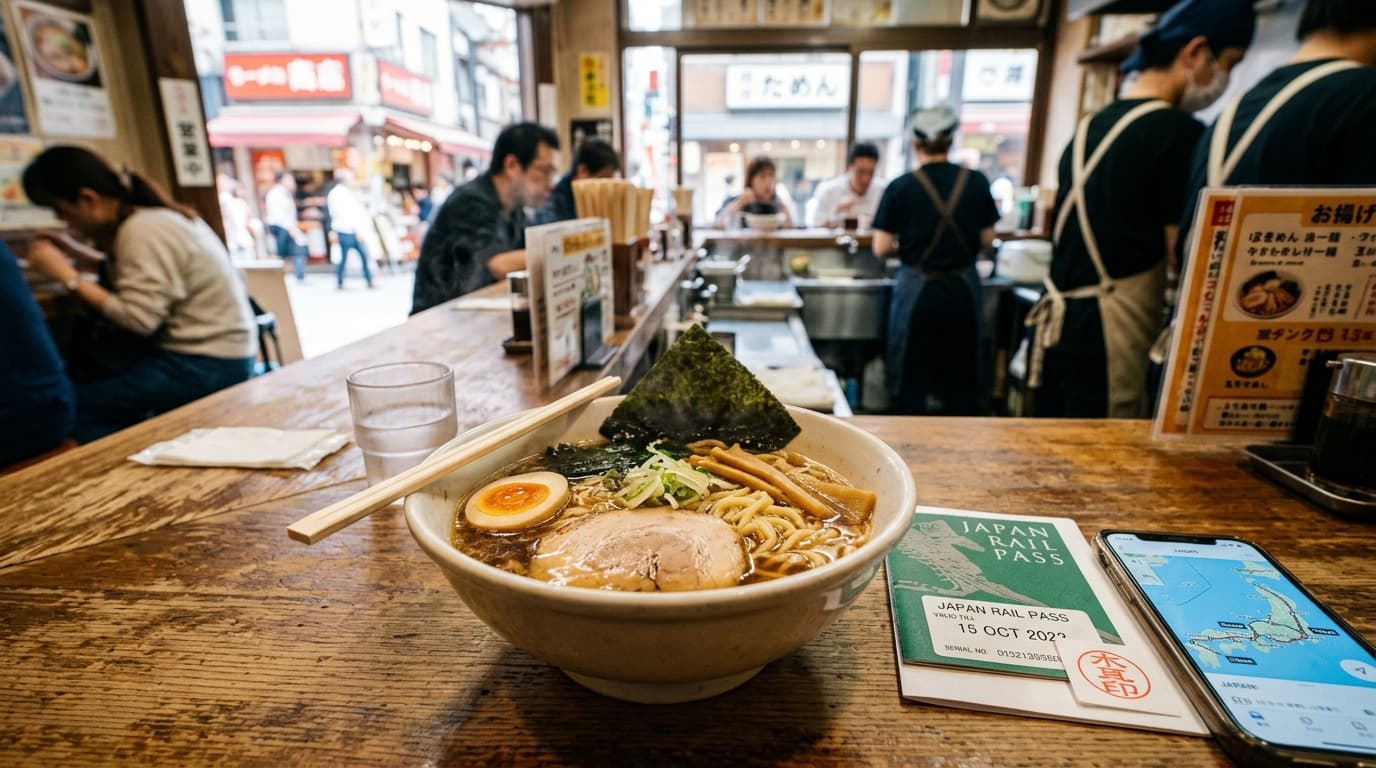
Standing ramen shops (立ち食いラーメン) serve a bowl for ¥700-900 ($5-6). Udon and soba shops are similarly cheap. During our week in Fukuoka, we ate ramen for lunch almost daily—it's delicious, filling, and costs less than a coffee in the US. Udon in Kagawa prefecture is even cheaper, often under ¥700 ($5).
Lunch Sets and Teishoku
Lunch sets (定食, teishoku) at casual restaurants offer incredible value: a main dish, rice, soup, and pickles for ¥800-1,200 ($5-8). Many restaurants offer lunch specials between 11am-2pm that are 30% cheaper than dinner prices.
Markets and Street Food
Visit local markets (shotengai) for fresh fruit, snacks, and prepared foods at 20-30% less than convenience stores. Street food like takoyaki (¥400-600) and okonomiyaki (¥600-1,000) are cheap and delicious. When we explored Osaka's Kuromon Market, we ate fresh sashimi, grilled scallops, and mango for under ¥2,000 total.
Did You Know? Japan's vending machines (自動販売機) sell everything from hot ramen to fresh juice. A cold drink costs ¥100-150 ($0.70-1), making them cheaper than convenience stores.
Source: Japan National Tourism Organization
4. Getting Around: Transport on a Budget
Transport costs vary dramatically depending on your strategy. A single train ride in Tokyo costs ¥170-310 ($1-2), but a long-distance shinkansen (bullet train) costs ¥13,320 ($90) from Tokyo to Kyoto.
The Japan Rail Pass Decision
The Japan Rail Pass is a 7-day pass costing around ¥29,650 ($200) for non-residents. It's only worth buying if you're doing multiple long-distance routes. A Tokyo-Kyoto-Osaka loop would cost ¥40,000+ ($270+) without a pass, making the JR Pass worthwhile. However, if you're staying in one region, skip it.
Buses and Budget Transport
Long-distance buses are your secret weapon. A Tokyo-Kyoto bus costs ¥2,500-4,000 ($17-27) versus ¥13,320 by shinkansen. Night buses save accommodation costs—you sleep while traveling. Companies like Willer Express and Neobus offer budget routes across Japan.
Transport cost comparison (Tokyo to Kyoto):
- Shinkansen: ¥13,320 ($90)
- Night bus: ¥2,500-4,000 ($17-27)
- Budget airline: ¥3,000-6,000 ($20-40)
- Local train: ¥8,000-10,000 ($54-67)
City Transport Cards
IC cards (Suica in Tokyo, ICOCA in Kyoto/Osaka) cost ¥2,000-3,000 ($13-20) and include a deposit. They work on trains, buses, and some shops. Buying a card saves time and gives small discounts on fares.
Walking and Cycling
Many Japanese cities are compact and walkable. We spent entire days in Kyoto and Nara on foot, visiting temples and shrines without paying a yen in transport. Bicycle rentals cost ¥500-1,000 ($3-7) per day—perfect for exploring smaller cities.
5. Free and Cheap Activities
Japan's best experiences don't require paid entry. Temples, shrines, gardens, and natural areas often charge nothing or minimal fees.
Temple and Shrine Visits
Many temples and shrines are free to enter. Paid attractions (like Fushimi Inari's inner sanctum or Kinkaku-ji) cost ¥400-800 ($3-5). During our Kyoto visit, we spent an entire day visiting free shrines in the Higashiyama district, then paid ¥600 ($4) to enter one major temple. The free ones were just as beautiful.
Natural Attractions
Hiking, beaches, and parks are free or nearly free. The Kanto region offers excellent day hikes near Tokyo—we hiked Mount Takao (near Tokyo) for free and saw stunning views. Hokkaido has incredible national parks with minimal or no entrance fees.
Museums and Cultural Sites
Many museums offer free entry one day per month. Check ahead—Tokyo's National Museum is free on certain Mondays. University museums and smaller galleries are often free or cost ¥300-500 ($2-3).
Festivals and Events
Japan's matsuri (festivals) are free to attend. Cherry blossom season (late March-early April), summer fireworks, and autumn festivals cost nothing to experience. We attended a summer matsuri in Osaka and enjoyed food, games, and entertainment for under ¥2,000 ($13).
Free/cheap activities by type:
- Temple visits: ¥0-800 ($0-5)
- Hiking: ¥0
- Museum visits: ¥0-500 ($0-3)
- Parks and gardens: ¥0-400 ($0-3)
- Festivals: ¥0
- Beach days: ¥0
6. Sample Daily Budgets: Real Numbers
Here's what actual days looked like during our budget travels in Japan.
Budget Day in Osaka (¥4,800 / $32)
- Accommodation: ¥2,600 (shared hostel room)
- Breakfast: ¥300 (convenience store onigiri)
- Lunch: ¥800 (ramen)
- Dinner: ¥700 (okonomiyaki from street vendor)
- Snacks: ¥200 (vending machine drink)
- Transport: ¥200 (IC card bus fare)
- Activity: ¥0 (free temple visit)
Mid-Range Day in Kyoto (¥6,200 / $41)
- Accommodation: ¥3,200 (hostel private room)
- Breakfast: ¥400 (convenience store)
- Lunch: ¥1,000 (lunch set at casual restaurant)
- Dinner: ¥900 (soba)
- Snacks: ¥300 (matcha ice cream)
- Transport: ¥400 (IC card train fares)
- Activity: ¥600 (temple entrance fee)
Splurge Day in Tokyo (¥7,500 / $50)
- Accommodation: ¥3,500 (nicer hostel)
- Breakfast: ¥500 (café)
- Lunch: ¥1,200 (lunch set)
- Dinner: ¥1,500 (yakitori restaurant)
- Snacks: ¥400 (dessert)
- Transport: ¥600 (IC card)
- Activity: ¥200 (museum)
These are real numbers from our travel journals. Notice how accommodation dominates the budget—optimize that, and everything else falls into place.
Did You Know? Japan's public bathhouses (onsen and sento) cost ¥400-1,500 ($3-10) and are a budget traveler's secret. You get a hot bath, cultural experience, and often meet locals—all for the price of a coffee.
Source: Japan National Tourism Organization
7. Money-Saving Hacks Only Locals Know
After two years in Japan, we've picked up tricks that shave 20-30% off typical budgets.
The Convenience Store Timing Strategy
Convenience stores mark down prepared food (bentos, sushi, fried chicken) by 30-50% after 8pm. We'd often grab dinner for ¥300-400 ($2-3) at 9pm. It's not fancy, but it's fresh and saves money.
Free WiFi and Staying Connected
Most hostels, cafés, and train stations offer free WiFi. Download offline maps before traveling. If you need mobile data, a prepaid SIM card costs ¥1,500-3,000 ($10-20) for a week—cheaper than roaming.
Discount Passes and Tourist Cards
Some cities offer tourist passes: Kyoto's ICOCA card includes a ¥2,000 deposit plus ¥1,500 credit (¥3,500 total), but gives discounts at 600+ shops and attractions. Tokyo's Suica card works similarly.
Cooking in Hostels
Many hostels have kitchens. Buying ingredients from supermarkets and cooking one meal per day saves ¥500-800 ($3-5). We'd buy fresh vegetables, rice, and nori from the market and make sushi rolls in the hostel kitchen.
Free Walking Tours
Many cities offer free walking tours (tip-based). We did a free walking tour in Osaka that covered 5km of neighborhoods, history, and food recommendations—tipping ¥1,000 ($7) felt like a steal.
Travel During Off-Season
Visiting during shoulder seasons (April-May, September-October) instead of peak times (cherry blossoms, New Year, summer) saves 20-40% on accommodation. We visited Kyoto in late May and paid ¥2,800 for a room that costs ¥4,500 in April.
8. Where to Splurge (And Why It's Worth It)
Budget travel doesn't mean never spending money. Strategic splurges enhance your trip without derailing your budget.
One Special Meal
Budget ¥3,000-5,000 ($20-33) for one memorable meal. We splurged on kaiseki (traditional multi-course dining) in Kyoto for ¥4,500 ($30) and it was unforgettable. One special meal per week is sustainable on a $50/day budget.
Onsen and Sento Experiences
Spend ¥1,000-2,000 ($7-13) on a proper onsen (hot spring) experience. It's culturally immersive and therapeutic. We soaked in an onsen in Hakone for ¥1,200 ($8) and it was worth every yen.
Paid Activities and Experiences
Budget ¥1,000-2,000 ($7-13) for one paid activity per city. A cooking class, tea ceremony, or guided tour creates memories that free activities can't match. We took a matcha tea ceremony class in Kyoto for ¥2,500 ($17) and learned skills we still use.
Comfortable Accommodation One Night
Every 4-5 nights, upgrade to a nicer hotel or private room for ¥5,000-7,000 ($33-47). You'll sleep better and have a break from hostel life. This costs more per night but averages out across your trip.
9. Avoiding Tourist Traps and Hidden Costs
Budget travel requires avoiding common pitfalls that drain money quickly.
Tourist Restaurant Markups
Restaurants near major attractions charge 2-3x normal prices. We paid ¥2,500 ($17) for a basic ramen near Fushimi Inari in Kyoto—the same bowl costs ¥750 ($5) two blocks away. Eat away from tourist zones.
Paid Toilet Usage
Most toilets in Japan are free, but some train stations and tourist areas charge ¥100-200 ($0.70-1.30). Use hostel or restaurant bathrooms when possible.
Overpriced Convenience Store Items
Convenience stores near tourist sites mark up prices. A drink that costs ¥100 at a regular Lawson costs ¥150 near Senso-ji Temple in Tokyo. Buy supplies in residential neighborhoods.
Unnecessary Transport Passes
Don't buy passes you won't use. Many travelers buy day passes costing ¥700-800 ($5-5.30) when their actual transport costs only ¥400. Calculate your actual needs first.
Expensive Luggage Storage
Coin lockers at train stations cost ¥400-800 ($3-5) per day. Hostels often store luggage for free. Plan accordingly.
10. Putting It All Together: A Week-Long Budget Itinerary
Here's a realistic week combining multiple cities while staying on budget.
Days 1-2: Tokyo (¥9,600 / $64)
- Stay in a hostel in Asakusa or Ikebukuro (¥2,600/night)
- Eat from convenience stores and ramen shops (¥1,000/day)
- Visit free temples and neighborhoods (¥0)
- Walk across the city (¥0 transport)
Days 3-4: Kyoto (¥9,200 / $61)
- Night bus from Tokyo (¥3,000, saves accommodation)
- Hostel in Higashiyama (¥2,800/night)
- Visit free shrines and temples (¥600 for one paid temple)
- Eat lunch sets and convenience stores (¥1,200/day)
Days 5-6: Osaka (¥8,800 / $59)
- Train from Kyoto (¥1,100)
- Hostel in Dotonbori (¥2,600/night)
- Street food and market meals (¥1,000/day)
- Free walking tour + paid activity (¥1,500 total)
Day 7: Return to Tokyo (¥3,000 / $20)
- Budget airline or night bus back (¥2,500-3,000)
- Minimal expenses on travel day
Total for 7 days: ¥30,600 / $204 ($29/day)
This itinerary includes accommodation, food, transport, and activities. It's tight but realistic—we've done similar trips multiple times.
Frequently Asked Questions
Can I travel Japan on $50/day as a couple?
Yes, but you'll need to share accommodation. A private room in a guesthouse costs ¥4,000-6,000 ($27-40) for two people, bringing per-person costs to ¥2,000-3,000 ($13-20). This leaves ¥2,000-3,000 ($13-20) per person for food and activities—doable but tight. Budget ¥60-70/day per person for more comfort.
What's the cheapest time to visit Japan?
June (rainy season) and January-February (winter) are cheapest. Accommodation drops 20-30%, and fewer tourists mean less crowding. Cherry blossom season (late March-early April) and summer holidays are most expensive.
Do I need a Japan Rail Pass on a $50/day budget?
Only if you're visiting 3+ cities with long distances between them. A 7-day JR Pass costs ¥29,650 ($200). If you're doing Tokyo-Kyoto-Osaka, calculate individual ticket costs first—buses and budget airlines often beat the pass.
Can I work while traveling to extend my budget?
Technically, tourist visas don't permit work. However, working holiday visas are available for citizens of participating countries (Australia, Canada, UK, etc.) and allow part-time work. This is a legal way to extend your trip.
What's the best way to exchange money?
Avoid airport exchange counters (poor rates). Use ATMs at 7-Eleven or post offices, which offer competitive rates. Credit cards with no foreign transaction fees are ideal. We typically withdrew ¥50,000-100,000 ($330-670) per week.
Is $50/day realistic for families with kids?
It's challenging. Kids' meals cost similar to adults', and family accommodation is harder to find cheaply. Budget ¥60-80/day per person for families. Hostels with family rooms exist but are rare—guesthouses and Airbnb shared apartments work better.
How do I stay healthy on a budget diet?
Japan's convenience stores stock healthy options: salads, fruit, yogurt, and whole grain bentos. Markets offer fresh produce cheaply. We ate well-balanced meals for ¥1,000-1,500 ($7-10) daily by mixing convenience store items with restaurant meals.
Conclusion
Japan on $50 per day is absolutely achievable—we've done it repeatedly, and so can you. The key is prioritizing accommodation (the biggest expense), eating where locals eat, and choosing strategic splurges over constant indulgence. You won't stay in luxury hotels or eat at Michelin-starred restaurants, but you'll experience authentic Japan, meet fellow travelers, and create memories that rival any expensive trip.
Start with our Japan travel guide 2026 for broader planning context, then dive into specific city guides like our Tokyo travel guide and Kyoto travel guide for localized budget tips. The cheapest way to travel between Japanese cities article is also essential reading.
Japan rewards budget travelers who are willing to be flexible, adventurous, and open to local experiences. Your $50/day will stretch further than you think—and the memories will last forever.
Ready to book your budget trip? Start with our getting around Japan by train guide to plan transport, then explore our Kansai region guide or Kanto region guide for multi-city itineraries.
Have you traveled Japan on a tight budget? Share your tips and experiences in the comments below—we'd love to hear your stories.
Sources & References
This article is based on first-hand experience and verified with the following official sources:

Go2Japan Team
Exploring Japan since 2021 | 35+ prefectures visited | Updated monthly
We are a team of travel writers and Japan enthusiasts who explore the country year-round. Our guides are based on first-hand experience, local knowledge, and verified official sources.
More about us →People Also Read
Japan on a Budget: How to Travel for Under $100/Day
Japan on a budget is entirely achievable. This guide breaks down real daily costs for accommodation, food, transport, and activities -- with a clear path to staying under $100/day.

Japan Travel Budget 2026: Real Daily Costs, Sample Budgets & Money-Saving Tips
Real 2026 Japan travel costs: daily budgets from ¥3,000–¥15,000+, accommodation, food, transport & activities. Save money without sacrificing experiences.
Konbini Food Guide: Eating Well in Japan for Under $10 a Day
Master Japan's konbini culture and eat well for under $10 daily. Real prices, sample budgets, and insider tips from our team.
Cheapest Way to Travel Between Japanese Cities: Budget Guide 2026
Save money traveling between Japanese cities. Compare trains, buses, flights with real prices in JPY/USD. Expert budget tips from our team.
Plan Your Japan Trip
Book hotels, transport, activities, and get connected with an eSIM
Some links are affiliate links. We may earn a commission at no extra cost to you.